🇨🇭 Swiss Languages: Demographic Distribution, Cultural Borders, and Identity of Consensus
Four National Languages, One National Will: The Map of Linguistic Identity
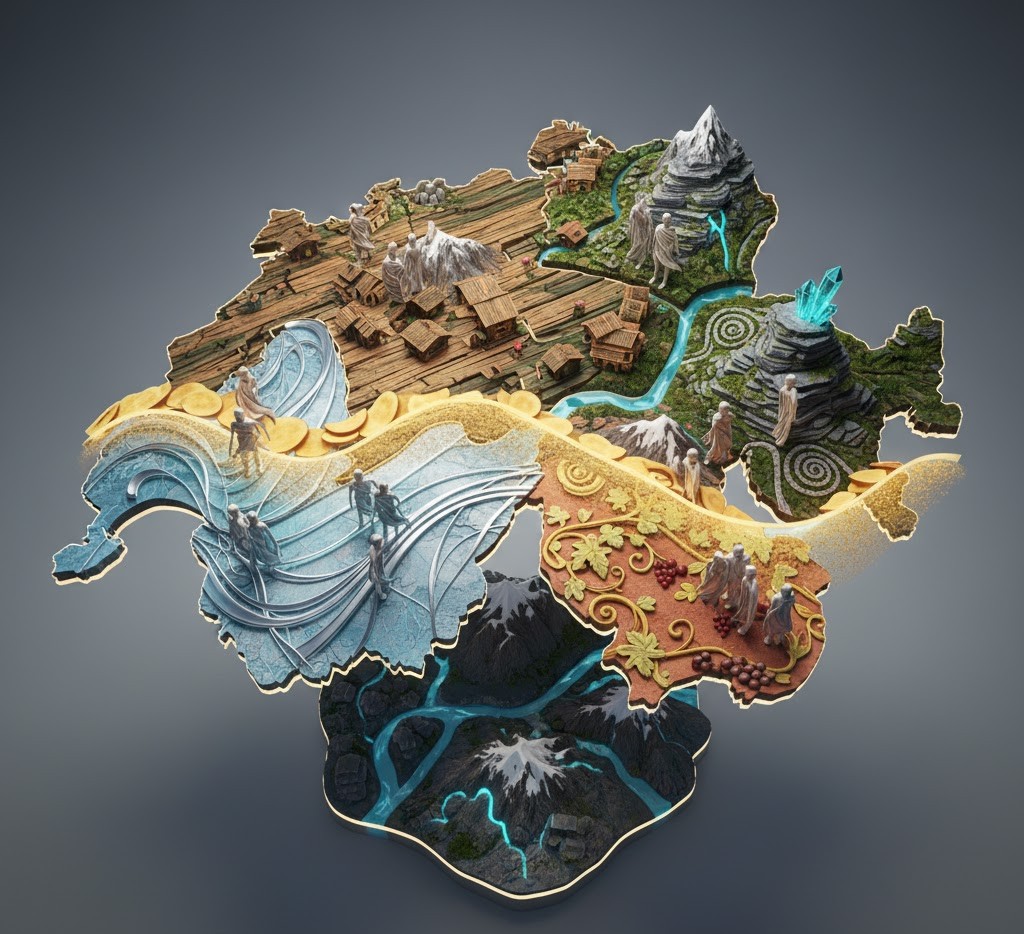
Switzerland is unique not only for its mountains and watches but also for its mosaic of four national languages: German, French, Italian, and Romansh. The demographic distribution of these languages draws sharp lines on the cultural map: According to official statistics, German accounts for 62.3%, French for 22.6%, Italian for 8.0%, and Romansh for 0.5%.
focusAnaliz: As someone who grew up bilingual, I don’t view this subject merely through the eyes of an analyst; I have also closely witnessed the complex nature of language. The process of language learning has always been a matter of necessity for me. I learned the languages of every country I emigrated to out of necessity, but unlike the land where I was born, no state I emigrated to imposed a compulsory path to learning. This opened the doors of language to me voluntarily. Over time, language learning ceased to be a compulsion and began to give me great pleasure. This situation, when I encountered Switzerland’s four-language, consensus-oriented structure, turned into a wonderful harmony. With deep respect and sympathy for every language I speak and don’t speak, I will often address the effects of language on integration and identity in this blog.
✅ Quick Summary Table
Switzerland’s linguistic structure and geographical areas of dominance:
National Language | Speaker Population Ratio | Area of Dominance | Critical Cultural Border |
|---|---|---|---|
German | 62.3% | Deutschschweiz (North, Central, East) | Röstigraben (Western border) |
French | 22.6% | Romandie (Western Switzerland) | Röstigraben (Eastern border) |
Italian | 8.0% | Ticino | Polentagraben (Northern border) |
Romansh | 0.5% | Graubünden (Partial Official Language) | Under Cultural Protection |
🎯 Core Definition:
Swiss Languages refers to the complex linguistic structure consisting of four national languages—German (62.3%), French (22.6%), Italian (8.0%), and constitutionally protected Romansh (0.5%)—which is maintained by political will (Willensnation) despite cultural fault lines (Röstigraben), protected by the regional principle based on cantonal linguistic sovereignty.
✅ Essential Information
Switzerland’s linguistic structure is a fundamental political consensus mechanism guaranteed by the federal constitution.
Equality at the Federal Level and the Regional Principle
At the federal level, German, French, and Italian have equal official status. However, the essential rule ensuring linguistic order is the “regional principle”, which allows each canton to determine the official language of its own territory. This principle plays a vital role in preserving cultural peace and linguistic identities. If you want to better understand what this complex system means for an immigrant, you should definitely check out our ultimate guide to living and working conditions in Switzerland, which provides an overview of all topics.
The Legal Status of Romansh
Despite being spoken by only 0.5% of the population, Romansh has been protected as a national language by the constitution since 1938. Furthermore, it was declared an “official language” in 1996, guaranteeing the right of Romansh speakers to correspond with the federal government in their own language. This demonstrates the country’s respect for its smallest language.
✅ Detailed Guide
📌 Legal Necessities and the Cantonal Lottery
The Cantonal Integration Programs (KIPs), introduced in 2014, are jointly financed by the Confederation and the cantons. Since KIPs grant cantons autonomy in adapting to local conditions, there can be disparities in social and professional integration between cantons. This situation is often referred to as a “postcode lottery” for immigrants. Non-compliance with the binding integration agreements made through these programs may negatively affect your residence status.
💰 Economic Performance and the Immigration Paradox
The Swiss labor market is governed by a Two-Door Model, which prioritizes EU/EFTA citizens. For third-country nationals, the system is stricter, allowing the admission of only a limited number of highly qualified workers who benefit the general economy.
This creates a paradox: The state demands financial independence for residency, yet even highly qualified immigrants may struggle with career advancement due to the rigidity and priority rules of the labor market. Although I live in Bern, even when visiting centers like Zurich, Basel, Geneva, I find that high salaries only counterbalance high expenses. In our guide to the cost of living, you can find out more about why you realistically need one and a half salaries per household, especially for those in lower-paying sectors.
🚦 Language Integration and Cultural Criteria
Language proficiency is the most fundamental prerequisite for integration and remaining in the country, occurring in two phases:
- Official Language: The Fide system standardizes language competence at the federal level, setting the minimum standard at written A2 and oral B1. Although I knew Italian, I was required to meet the German language requirement because I live in Bern, where I obtained my residence permit through marriage in 2015.
- Hidden Barrier: In German-speaking Switzerland (Deutschschweiz), understanding the local dialect (Schwiizerdütsch) is essential for social acceptance and daily life. Although the official language is High German, the majority of social interaction occurs in the dialect.
✅ Experience / Suggestion Section: Respect for Linguistic Wealth
focusAnaliz: In the geography where I was born, language was a necessity and a tool of political imposition; but in Switzerland, the doors of language were opened to me voluntarily. This allowed the obligation of language learning to begin giving me great pleasure.
As an immigrant, cultural dividing lines like the Röstigraben and Polentagraben are symbols that allow us to see Switzerland’s rigid order. However, the will of this country to give constitutional guarantee to Romansh, spoken by 0.5% of the population, even though it contradicts the bureaucracy’s paternalistic approach toward immigrants, forms the basis of my great respect for the country’s democracy and its languages. These critical aspects pertain to the functioning of the system and do not change my overall perception of prosperity and order, which is why I feel lucky to live in this country.
✅ Adaptation Roadmap
Strategic steps that international professionals seeking long-term residency and naturalization in Switzerland should follow:
- Prioritize Financial and Legal Impeccability: Make absolute financial and legal impeccability your top priority for maintaining your residence permit and naturalization. Avoid applying for social aid and prevent any debt collection records (Betreibungen) from occurring. This is especially vital for individuals in low-wage sectors who operate close to the minimum wage.
- Two-Tier Language Strategy: Rapidly achieve official language proficiency (written A2 / oral B1) through Fide-certified courses. In German-speaking areas like Bern, actively seek ways to expose yourself to the local dialect (Bärndütsch).
- Internalize Cultural Norms: Social acceptance depends on how quickly and meticulously you adopt the norms of civisme (civic duty). Take punctuality, adherence to neighborhood laws, and Sunday quiet hours seriously. Read our comprehensive guide to societal rules.
- Actively Build Social Capital: To overcome labor market difficulties and closed social circles, build active social networks and community ties through voluntary activities.
✅ Cost / Time Table
Swiss Languages Learning and Demography Data:
Element | Value/Ratio | Detail |
|---|---|---|
German Speaking Population | 62.3% | The dominant language and economic center in Switzerland. |
French Speaking Population | 22.6% | The Romandie region. |
Italian Speaking Population | 8.0% | Spoken in Ticino and Graubünden (Minority). |
Romansh Speaking Population | 0.5% | The smallest national language, protected by the constitution. |
Time to Reach B1 Level | 6 – 9 Months (Intensive Training) | The basic proficiency required for official integration and naturalization. |
❓ FAQs (Frequently Asked Questions)
Question: Is Swiss German (Schwiizerdütsch) an official language?
Answer: No. Legally, the official languages are German (Standard German), French, and Italian. Swiss Swiss German (Schwiizerdütsch) is the group of dialects used in daily life; therefore, Standard German is used for official correspondence and education.
Question: What do “Röstigraben” and “Polentagraben” mean?
Answer: These terms are political metaphors describing the cultural dividing lines in Switzerland. Röstigraben symbolizes the cultural and political boundaries between the German-speaking and French-speaking regions; Polentagraben marks the distinct differences between the Italian-speaking Canton of Ticino and the rest of the country.
Question: Why is Romansh (Rumantsch) still protected?
Answer: Romansh is protected as a national language by the constitution since 1938, despite being spoken by a small minority. This protection reflects Switzerland’s Willensnation (Nation of Will) identity and its consensus-oriented will to hold diverse linguistic identities together.
✅ Alternatives
Alternatives to official courses to overcome linguistic barriers and adapt to Switzerland’s multilingual structure:
- Local Language Clubs: Participating in language exchange (Tandem) programs or local social clubs offered by the cantons increases exposure to dialects like Bärndütsch (the dialect of Bern).
- Bilingual Media Consumption: Following the bilingual content of public broadcasters like SRF/RTS facilitates understanding cultural and political issues on both sides of the linguistic dividing lines.
- Volunteer Language Tutoring: Practicing the language through voluntary activities offers opportunities to practice the language while boosting social capital.
✅ Recommendations / Tips
- Be Dialect-Friendly: Focus on understanding dialects like Bärndütsch rather than learning them; this is the first step toward social acceptance.
- Appreciate Linguistic Diversity: Appreciating the country’s four-language structure, like the respect shown for the struggle of Romansh, contributes positively to the integration process.
- Specialize in the Cantonal Language: Rapidly aim for B1/B2 level in the main language of your resident canton (German for Bern).
- Understand the Röstigraben: Understanding the political and socio-economic effects of the cultural dividing lines keeps you informed about national votes and local discussions.
✅ Conclusion
Switzerland’s linguistic structure is not merely a table of demographic distribution; it is the essence of the Willensnation identity. Transforming the language learning process from a necessity into a pleasure is the key that unlocks the doors to this cultural wealth. To fully experience this cultural wealth, don’t forget to read our other in-depth analyses on the impact of language on integration and identity.