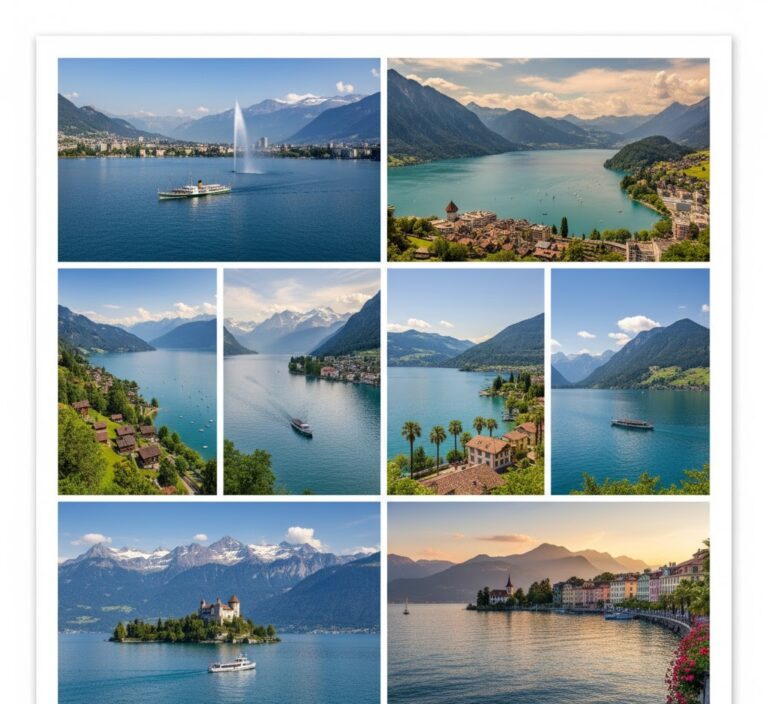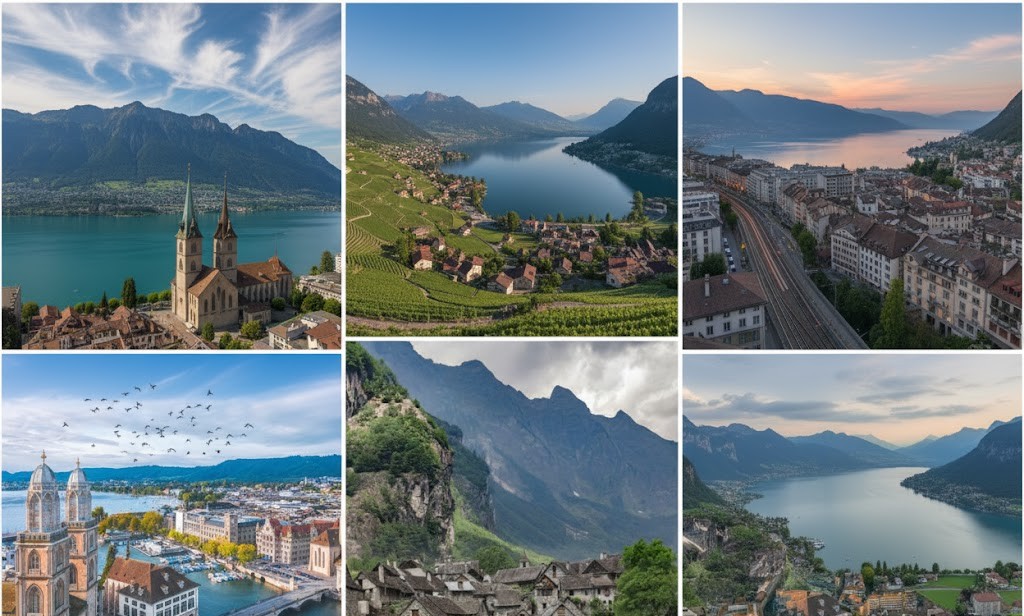
Life in Switzerland: The Comprehensive Guide to Differences Between the German, French, and Italian Regions
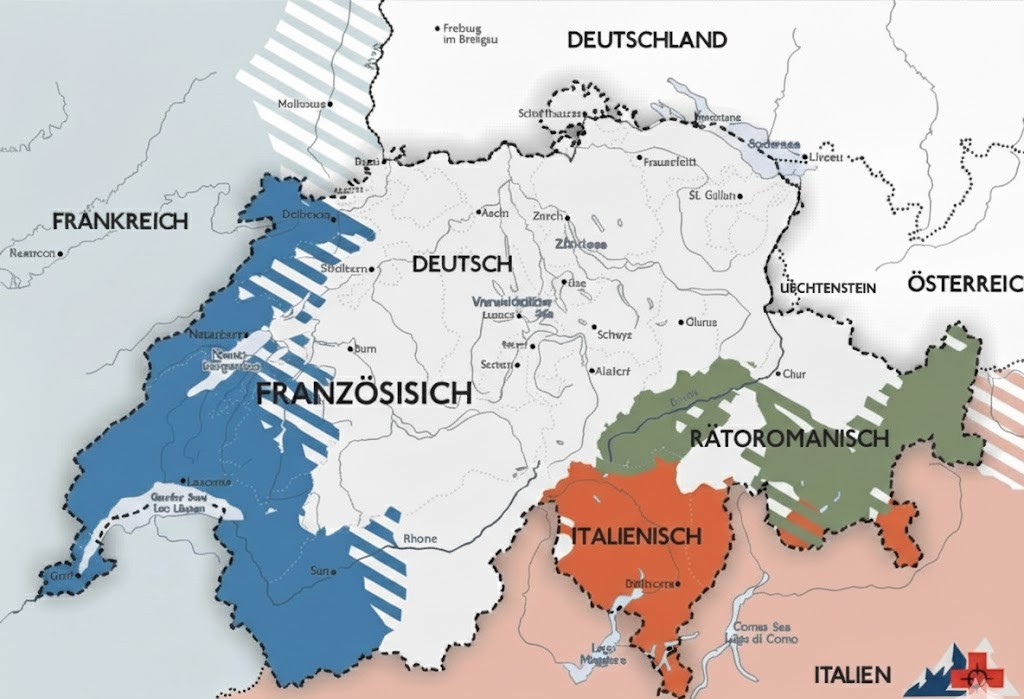
focusAnaliz: Three Regions, Three Different Philosophies of Life
Switzerland often projects a single image of prosperity, but within the country exist massive cultural, economic, and even climatic differences. These distinctions directly impact an immigrant’s decision when choosing the right canton. Although the language and culture of Switzerland change regionally (from German to French to Italian), you will clearly notice the panoramic natural beauty, the unique respect for nature, and the general disciplined way of life in all three regions; these are the most unmistakable common features of Switzerland, despite cantonal variations. The differences between the German work ethic in the North, the international flair in the West, and the Italian lifestyle in the South are not just geographic but reflect three completely different philosophies of life. You can gain a comprehensive insight into this reality by reading our guide [Switzerland: The Ultimate Guide – The Reality of Life, Work, and Cost from an Immigrant’s Perspective].
✅ Short Summary Table:
Criterion | North (German Region / Administrative Weight) | West (French Region / Romandie) | South (Italian Region / Ticino) |
|---|---|---|---|
Economic Center | High-paying finance, technology (Zurich) | High-paying diplomacy, luxury, trade (Geneva) | Tourism, small businesses, cross-border workforce (Lugano) |
All Key Cantons | Aargau, Appenzell (AI/AR), Basel (BS/BL), Bern, Glarus, Lucerne, Nidwalden, Obwalden, Schaffhausen, Schwyz, Solothurn, St. Gallen, Thurgau, Uri, Zug, Zürich | Geneva, Vaud, Neuchâtel, Jura, Fribourg, Valais | Ticino, Graubünden (Crossroads of three cultures) |
Lifestyle | Disciplined, rule-abiding, planned | More social, flexible, focused on cultural events | Relaxed, warm, Mediterranean |
Cost Level | High | Very High (Especially Geneva/Vaud Cantons) | Medium-High (Generally lower costs) |
Key Difference | Work discipline and rules | International identity and sociability | Climate and neighborhood relations |
🎯 Core Definition:
The Life in Switzerland shows clear differences in living costs, daily work life, and cultural codes across the three main language regions: the German-speaking North (Zurich focus), the French-speaking West (Geneva/Lausanne focus), and the Italian-speaking South (Ticino/Lugano focus). The biggest differences lie in the Finance Center discipline of the North, the international diplomatic structure of the West, and the Mediterranean soul of the South.
✅ Basic Information: The Legal and Administrative Basis of Regional Division
Due to Switzerland’s federal structure, which grants extensive autonomy to the cantons, regional differences are relevant not only culturally but also administratively and fiscally.
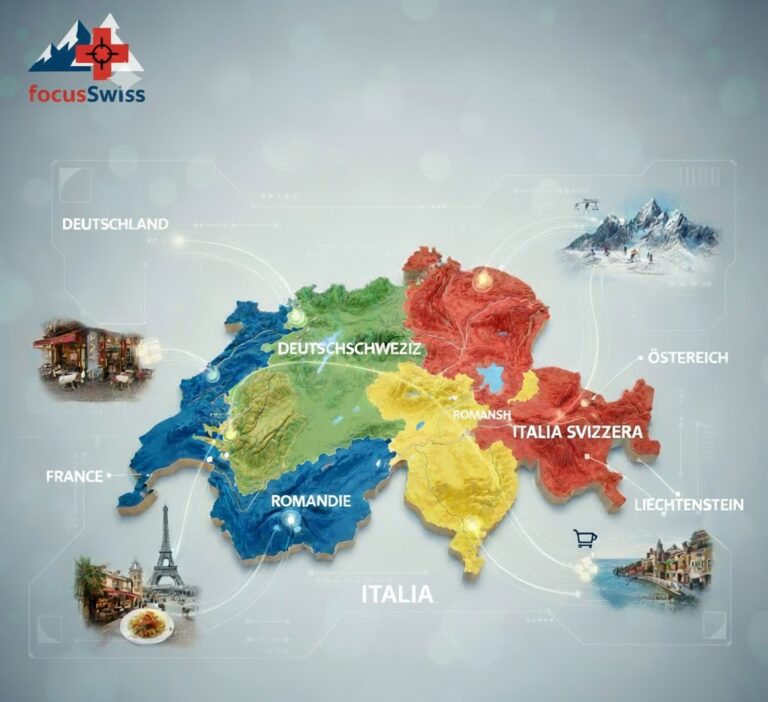
The Geographical Definition of the Three Main Regions
The North comprises the German-speaking regions, forming the heart of industry and finance. The Romandie or the West includes cantons like Geneva, Vaud, and Neuchâtel. The South mainly consists of the Ticino Canton and parts of the Italian-speaking valleys of Graubünden. This division directly influences the lifestyle. To understand this geographical division in detail, you can read our article [Switzerland’s Secret Map: Alpine Myth, Mittelland the Heart of the Economy, and Ticino the Gate to the Mediterranean].
The Influence of Language and Culture on Work Life
In the North, rule compliance, discipline, and time management are paramount, while in the West, international flexibility and the diplomatic network are important. In the South, however, a looser communication style and social networking, influenced by Italian culture, prevail. Detailed data on the linguistic and economic separation can be found at [https://www.bfs.admin.ch/verileri].
✅ Detailed Guide: Life and Cost Analysis of the Three Regions
- 📌 Architecture and Urban Planning: The orderly, Central European architecture and urban planning of the North (Zurich, Bern) promise you an organized life. In the South (Lugano), you will find lively, colorful, Mediterranean-inspired, and looser structures, also due to the warmer climate.
- 💰 Salary and Cost Balance: Official statistics show that living costs, rents, and school fees in the West (Geneva) are generally higher than in the North. Current figures on rent costs in Switzerland offer you [https://www.bfs.admin.ch/mietkosten].
- 🚦 Transport and Mobility Culture: The North and West are famous for their perfectly functioning and punctual train/bus systems; life without a car is easy. Information on travel times and standardization can be found at [https://www.sbb.ch/en/…].
- ☕ Social Life and Neighborhood Relations: People in the North are often more reserved, and social events are planned. In the West, the high international population ensures a more dynamic and multicultural social life. In Ticino, however, a warm, extroverted, and community-oriented café and neighborhood culture, influenced by Italy, dominates.
✅ Experience / Recommendation Section: Which Region Should You Choose?
focusAnaliz: Career Goals and Preferred Lifestyle
If you aim for a rapid career and strict financial discipline, the North is right for you. Success here comes from hard work, combined with hard work. You can learn more about [Swiss Work Culture] by reading our article. If you work for an international organization and prefer a multicultural social life, the West (Geneva/Lausanne) is the correct address. This region offers you the freedom to socialize while preserving your international identity. If you don’t want to give up a Mediterranean lifestyle and a slower pace, the South provides a warmer feeling of home. Do not forget: In the South, everything is a bit slower, more enjoyable, and closer to Italy.
✅ Step-by-Step Guide / Application: 3 Steps for a Regional Change
Step 1: Determine Language Proficiency:
Mastering the dominant language of the region (German/French/Italian) at a basic level is as crucial as putting the key to your home in your pocket – do not postpone it!
Step 2: Compare the Job Market:
Focus on Finance/IT job postings in Zurich in the North, international organizations/luxury goods in the West, and tourism, healthcare, and local trade postings in the South. You must look at these closely.
Step 3: Check Residence Regulations:
If you are going to live close to the border regions, inform yourself about the residence permits and cantonal [https://www.admin.ch/gov/taxes] regulations. These bureaucratic details should not give you headaches later.
✅ Cost / Salary / Duration Table:
Cost Item | North (Average) | West (Average) | South (Average) |
|---|---|---|---|
3-Room Apartment Rent | 1800 – 2800 CHF | 2000 – 3500 CHF | 1200 – 1800 CHF |
Average Net Salary (Skilled Labor) | 7800 – 9500 CHF | 8000 – 10000 CHF | 6000 – 7500 CHF |
Auxiliary Services Salary (Near Minimum Wage) | 4000 – 5500 CHF | 4200 – 5800 CHF | 3500 – 5000 CHF |
Basic Health Insurance | 350 – 550 CHF | 400 – 600 CHF | 300 – 400 CHF |
✅ Frequently Asked Questions (FAQ):
Q: Do the North and West show significant differences in the tax burden?
Answer: Yes, there are large differences. Although both regions offer high salaries, the tax burden in the West (especially Geneva) can be higher for higher income groups compared to some Northern centers. The tax burden is a decisive factor that balances the cost of living.
Q: What are the fundamental differences in education systems and school hours across the three regions?
Answer: The differences begin with the principle. Summer holidays in the South (Ticino) are longer (closer to the Italian system). In contrast, school hours and holiday regulations in the German-speaking cantons (North) are regionally stricter.
Q: How much more salary do workers in the North and West receive compared to the South?
Answer: Statistically, employees in the finance and technology sectors in the North and the international sectors in the West can earn between 15% and 40% higher gross salaries than in comparable positions in Ticino. However, salary analyses for specific professional groups may deviate from these averages.
Q: Is it practical to live in the South and commute daily or weekly to the North for work?
Answer: This is not practical and is not recommended. A single train journey from Lugano (South) to Zurich (North) takes about 3 hours. Therefore, it is only feasible for weekly or monthly visits, not for daily commuting.
✅ Alternatives: A Third Way of Life: Bern
- Bern is the intersection of German and French culture and offers a more affordable life compared to Zurich/Geneva.
- As the Capital, the pace of life in Bern is calmer, and access to nature is very easy.
✅ Recommendations / Tips:
- Before choosing the region, take a vacation of at least 1 week in all three regions to absorb the atmosphere.
- Be sure to check the Tax Advantages offered by the cantons; the tax burden can be more important than the salary difference.
- When quickly skimming, focus on the bolded highlights in this guide to quickly grasp the main idea.
✅ Conclusion: Three Faces, One Quality
Although the North, West, and South of Switzerland have different economic and cultural structures, they all offer high quality of life and strong legal guarantees. The final choice entirely depends on your career goals and your desired social lifestyle. But whatever your choice and desire, your first and most important goal should be to learn the language of that region down to the smallest detail.