Family Life in Switzerland: Raising Children, Parental Rights, and the Education System
focusAnaliz: Individual-Centric Parenting to High Care Costs: Swiss Family Dynamics
Switzerland is known for its high quality of life and solid social structure; consequently, it is regarded as one of the most attractive places in the world to raise children. However, integrating into family life here as an immigrant involves more than just adapting to high standards. It also requires understanding deep cultural norms and a costly structure. Parenting in Switzerland fundamentally focuses on raising children as independent individuals from an early age.
Based on my personal observation, the fact that children are encouraged to make their own decisions from kindergarten age and often walk to school alone may seem foreign to us. Yet, this is a reflection of the parents’ deep trust in their children and their effort to establish a balance of freedom with responsibility. Furthermore, effective communication with children is essential for home-based balance. Families with insufficient language skills are strictly advised against speaking their local native language at home. This is because it can undermine what the child learns at school.
This article will detail the cultural expectations of being a family in Switzerland, parental legal rights and obligations, and the practical challenges, such as the education system and care costs, that families face. Our article Swiss Immigrant Rights and Obligations contains the necessary information about the parents’ legal framework.
1. Swiss Parenting Culture: Independence and Trust
The Swiss philosophy of parenting is based on ensuring children become self-confident and independent from a young age. This approach avoids the culture of “Helicopter Parenting” (over-intervention in the child’s life).
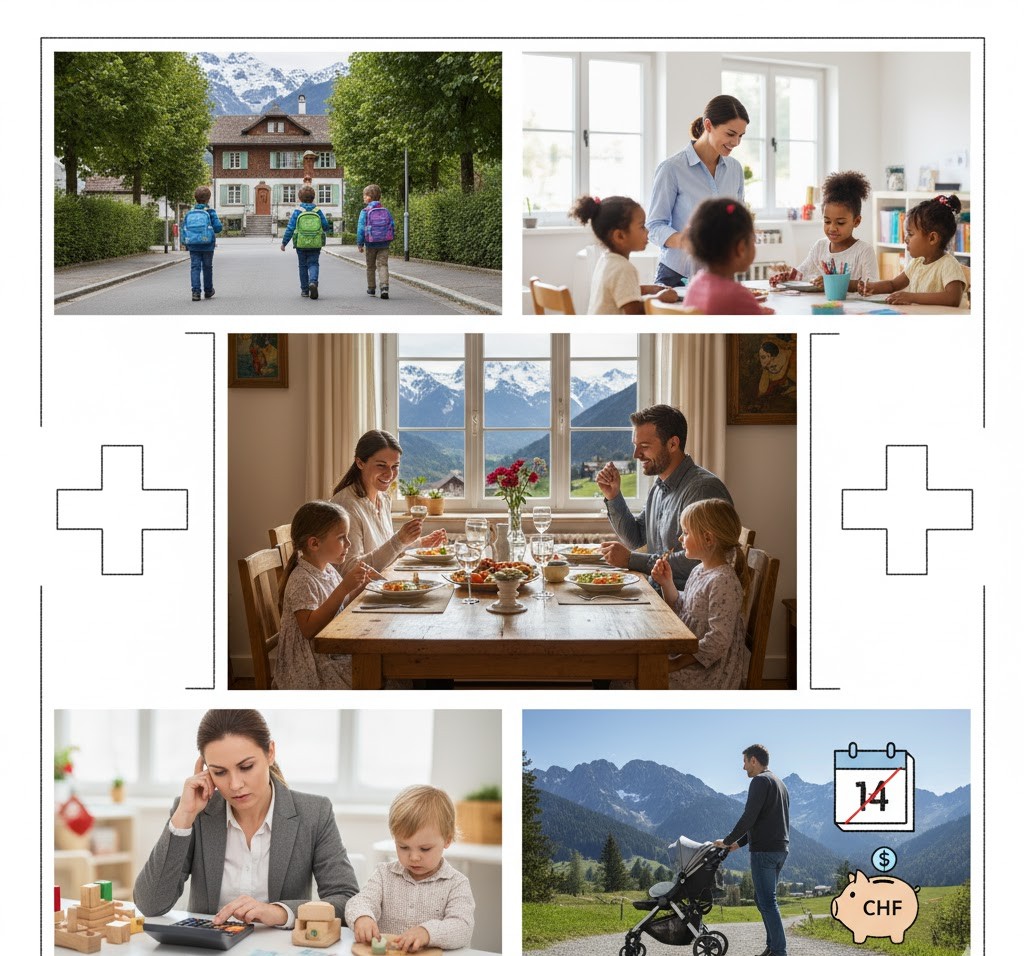
- Early Independence: It is common for children to walk to primary school or kindergarten alone or with friends. This provides them with an opportunity to explore their own boundaries within a safe environment.
- Open Communication: Parents prefer to talk openly with their children about conflicts or expectations. Love is shown through trust and accepting their children’s opinions, rather than restriction. Physical punishment is not accepted.
- Mealtime and Traditions: Due to the culture of group affiliation, mealtimes like dinner are important rituals where the family gathers to chat about daily life. Sundays are generally spent outdoors and family-focused.
- Gender Roles: Gender roles within the family are quite equal; housekeeping and childcare responsibilities are shared among parents.
2. Parental Rights and Obligations: The Legal Framework
Swiss law centers on the welfare and development of children. It imposes both rights and significant obligations on parents in this regard.
- Parental Responsibility (Elterliche Sorge): Parental responsibility is the right and duty to make important decisions concerning the minor child’s welfare and education (place of residence, education, health, religion, and property management). This responsibility is automatically joint for married couples. However, unmarried fathers must take legal steps to assume joint responsibility.
- Financial Support Obligation (Unterhalt): Both parents are obligated to contribute to the child’s needs according to their financial means, regardless of whether they have personal contact with the child. This obligation continues until the child reaches the age of majority (18). Furthermore, the support obligation may continue if the child has not completed their education after turning 18.
- Child Protection Authority (KESB): The Child and Adult Protection Services (KESB) intervenes when parental rights need regulation or when a child’s development is at risk. KESB approves or regulates care arrangements and custody, focusing on the child’s best interests in cases of dispute.
3. Education System and Early Childhood (Crèche/Kindergarten)
The Swiss education system varies by canton, but mandatory schooling starts at age 4 and includes two years of kindergarten (Kindergarten). For detailed information on the general structure of the education system, you can consult our content on [Swiss Education System].
- Teachers’ Role and Guidance: One of my favorite aspects of Switzerland is that teachers take responsibility, intervening not just in learning but in the child’s overall life. Their willingness to share deficiencies and problems with the family promptly and advise on necessary institutional referrals is commendable. Their willingness to assume responsibility, such as making joint decisions with the family on observed shortcomings, is wonderful. For people like me, who came here later, attempting to guide the child without knowing the system can make the teachers’ work harder; therefore, my recommendation is to respect and comply with the teachers’ advice.
- Language Support and Family Balance: To prevent undermining what the child learns at school, families with insufficient language skills are advised not to speak the language of the canton at home. Otherwise, the child may grow up confused between family and school, which could harm their learning life.
- Crèche and Early Childhood Education: Crèche is more of a daycare center for ages preceding kindergarten and is very expensive. Switzerland stands out for its high crèche fees and limited capacity compared to other European countries. A full-time crèche spot can cost 13% to 20% of a family’s income. Our article SWISS SALARY STRUCTURE 2024/2025 will help you compare these costs.
4. Challenges and High Cost of Living for Families
Although raising children in Switzerland has many advantages, there are significant practical and financial barriers for families.
Challenge Area | Details | Supporting Data |
|---|---|---|
Childcare Cost | Crèche fees are excessively high. This makes it difficult for mothers, in particular, to work full-time. Childcare costs can make financial growth nearly impossible for the family. | Swiss Federal Statistical Office (FSO) data shows the majority of mothers work part-time (average 53% workload for children under 9). |
Parental Leave | Statutory Maternity Leave is limited to 14 weeks, and only two weeks of statutory paternity leave were introduced in 2021. These periods are quite short compared to the EU average, straining the work-family balance. | Below the EU average; made it difficult for mothers to take the 6 months recommended for breastfeeding. |
School Hours and Lunch | Many schools do not have lunch services (canteens); consequently, children are sent home for lunch. This creates a logistical challenge for families where both parents work. | Necessity for a parent or caregiver to be at home during lunchtime. |
Conclusion: Raising children in Switzerland offers a cultural environment that supports individual development and independence. However, due to the high cost of childcare and relatively short parental leave, managing the work-family balance requires significant planning and financial discipline, especially for working mothers.