SWISS RETIREMENT AND SOCIAL SECURITY SYSTEM: HOW DOES IT WORK?
focusAnaliz: Three-Pillar Security Net: AHV, Occupational Pension, and Tax-Advantaged Individual Savings
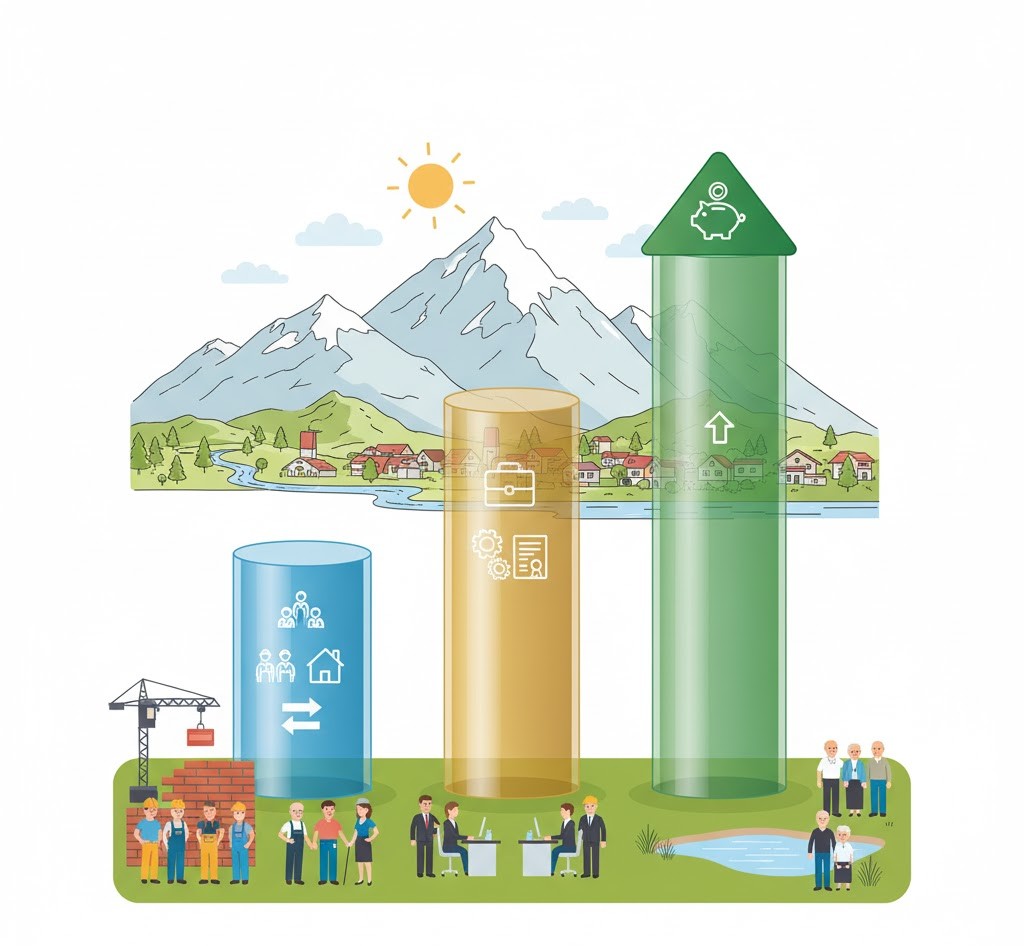
The core of Switzerland’s social security system is based on the world-renowned “Three-Pillar (Drei Säulen)” principle. This structure aims to provide financial security gradually in cases of retirement, death, and disability. However, the system’s complex structure can be difficult to grasp, especially for newcomers.
From my own observation, consistently working and paying premiums in Switzerland for many years provides a great sense of financial peace and independence, despite the system’s complexity. The system offers comprehensive protection not only to current workers but also to the elderly and the bereaved (widows/orphans), making it one of the main pillars of Switzerland’s high quality of life.
This guide will detail the operation, mandatory requirements, and roles of the three pillars that form the foundation of the Swiss social security system in shaping your personal financial future.
1. The Foundation of Social Security: The Three-Pillar Principle
Retirement and social security in Switzerland are financed by income from three different sources.
Pillar | Name (German/English) | Purpose | Obligation |
|---|---|---|---|
Pillar 1 | AHV/IV (Old Age, Survivors’, and Disability Insurance) | To Guarantee the Subsistence Level. (Covers basic living expenses.) | Mandatory (Covers everyone living or working in Switzerland.) |
Pillar 2 | BVG (Occupational Pension) | To Maintain the Previous Standard of Living. (Aims for continuation of income from working life.) | Mandatory (For all employees above a certain salary threshold.) |
Pillar 3 | Individual Pension (3. Säule) | Personal Financial Independence and Supplementary Income. (Tax-advantaged savings.) | Voluntary (Recommended for everyone.) |
2. First Pillar (1. Säule): AHV/IV
AHV (Old Age and Survivors’ Insurance) and IV (Disability Insurance), form the core of the Swiss social insurance system and operate on the principle of solidarity (workers finance retirees).
- Scope: Everyone living or working in Switzerland is obliged to pay premiums, regardless of age and income.
- Financing: Premiums are split equally between the employee and the employer.
- Purpose: The amount of the pension depends on the number of premium years and income. The goal is to secure the individual’s basic livelihood.
- Retirement Age: Currently 64 for women and 65 for men (subject to reform changes).
Note: Everyone legally residing in Switzerland, regardless of their type of residence permit (B, C, or L), is obliged to pay AHV premiums. For detailed information on residence permit types, you can check our article: [SWISS RESIDENCE PERMITS (B, C, L): WHICH ONE IS RIGHT FOR YOU?]
3. Second Pillar (2. Säule): Occupational Pension (Pensionskasse)
The Second Pillar complements the basic income provided by the First Pillar and largely aims to maintain the retirees’ previous standard of living.
- Mandatory Nature: It is mandatory for all employees earning above a certain minimum annual income (around CHF 22,050 – 2024 data) and is currently being revised.
- Financing: Premiums are paid equally by the employee and the employer and accumulate in a pension fund.
- Transfer: In the event of a change of employer, the accrued fund (pension asset) must be legally transferred to the new employer’s pension fund.
- Withdrawal: The accrued fund can be withdrawn as a monthly pension or as a one-time capital payment upon retirement.
4. Third Pillar (3. Säule): Individual Pension (Tax-Advantaged Savings)
The Third Pillar is entirely voluntary and individual. It is divided into two main sub-pillars: Tied (3a) and Untied (3b).
- 3a (Tied Pillar): This is the most popular form of individual savings, offering tax advantages where premiums paid (approx. CHF 7,056 limit for employees) are deductible from taxable income.
- 3b (Untied Pillar): This is a more flexible, optional savings form with no limits (insurance or bank account). The tax advantage is not as high as with 3a.
- Importance: It is critical for a comfortable life in retirement. Especially for high-earning professionals, the 3rd Pillar is key for both future security and a significant tax optimization tool. To learn more about high salaries and professional groups in Switzerland, you can review our article: [THE HIDDEN JOB MARKET, SKILL WARS, AND TURNING THE RIGHT KEY]
5. Other Elements of the Social Security System
The social security system is not limited to retirement. It also covers:
- ALV (Unemployment Insurance): Provides temporary income to individuals who lose their jobs.
- Accident Insurance (UVG): Provides coverage for occupational and non-occupational accidents.
- Family Allowances (Familienzulagen): Provided to support families with the costs of raising children.
Conclusion: The Swiss Retirement System creates a comprehensive safety net by combining mandatory basic insurance (1st Pillar) with occupational savings (2nd Pillar) and voluntary individual savings (3rd Pillar). Long-term planning and the intelligent use of the 3rd Pillar are the keys to a financially independent retirement in Switzerland.