Buying a Car in Switzerland: Prices, Taxes, Traffic Rules, and Insurance Guide
focusAnalysis: Is a Car a Luxury or a Necessity? Prepare for the Cost Shock
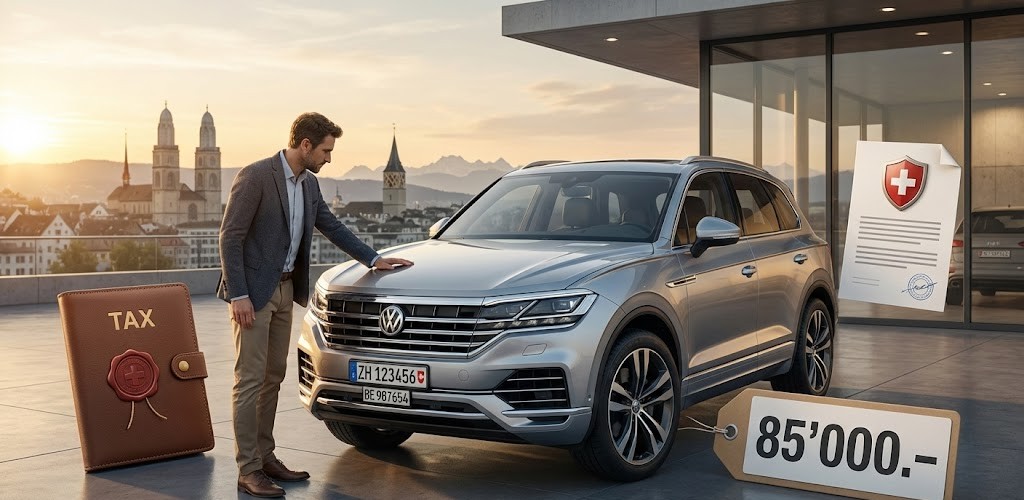
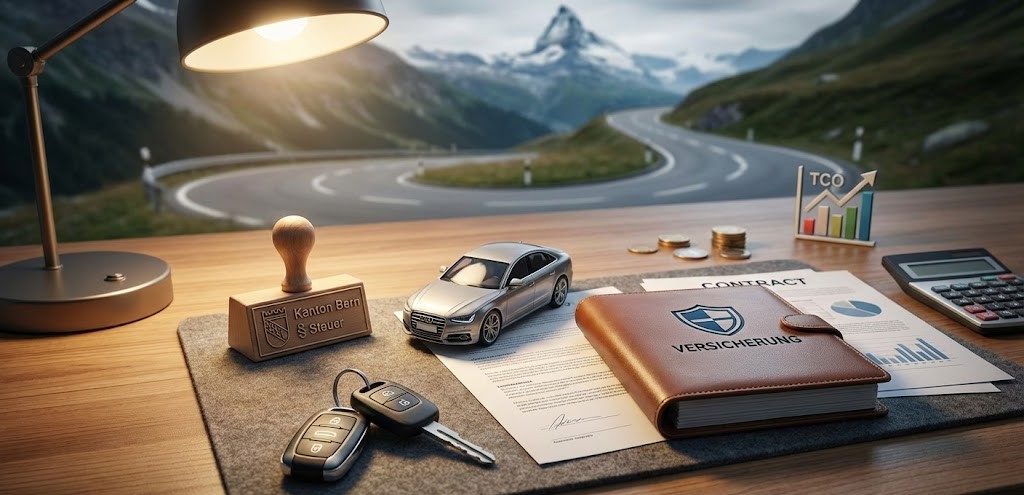
Switzerland is renowned for its order and high quality of life, but this order comes at a price. Buying a vehicle is a multilayered and expensive commitment that is entirely different from what you may be used to. When you purchase a car, you commit not only to the sticker price but also to cantonal taxes, high mandatory insurance premiums, and subjection to one of the strictest traffic fine systems in the world.
As a chef working in Bern, I know that the hard-earned money must go not only towards the car’s sticker price but also towards cantonal taxes, high insurance premiums, and terrifying traffic fines.
This guide will not just answer the question “How much?” It will also reveal the hidden traps and high risks that make up the Total Cost of Ownership (TCO), providing the realistic guidance necessary for making an informed decision.
The Total Annual Cost of Car Ownership in Switzerland: Quick Summary Table
The true financial burden of owning a car in Switzerland is determined by annual compulsory expenses beyond the initial purchase price.
Cost Item | Detail | Risk / Variability |
|---|---|---|
Purchase Price | Generally higher than in EU neighbors. | Resale value depreciation is slow. |
Annual Motor Vehicle Tax | Varies cantonally. The canton enforces environmental policy via taxation. | Very High. Depends on vehicle weight and energy efficiency (Bern). |
Insurance (Vollkasko) | Nearly mandatory for leasing or new vehicles. | High premiums, unavoidable due to high repair costs. |
Maintenance/Service | Costly due to mandatory authorized dealer servicing. | High labor and spare parts costs. |
Parking/Garage | Mandatory in large cities (incl. Bern). | Monthly supplementary cost (e.g., in addition to Guide to Renting a House in Switzerland). |
🎯 Main Definition:
Buying a car in Switzerland is a high Total Cost of Ownership (TCO) financial commitment due to high starting prices, cantonal taxation differences based on environmental factors, and high-premium mandatory Comprehensive Insurance, requiring absolute adherence to rules due to the Raservorwurf (excessive speeding) risk.
✅ Basic Information
The price of a car in Switzerland is higher than in EU neighbors due to the strong Swiss Franc and the small, premium-focused market. A prospective buyer must calculate the Total Cost of Ownership (TCO), which includes the annual motor vehicle tax, high insurance premiums, and garage fees, not just the purchase price.
This high TCO is a significant burden, especially for low-wage earners, as discussed in our article on SWISS WAGE STRUCTURE 2024/2025. Car ownership requires preparation for this financial shock.
✅ Detailed Guide: Financing, Taxes, and the Insurance Trap
📌 Market Dynamics and the Annual Tax Shock
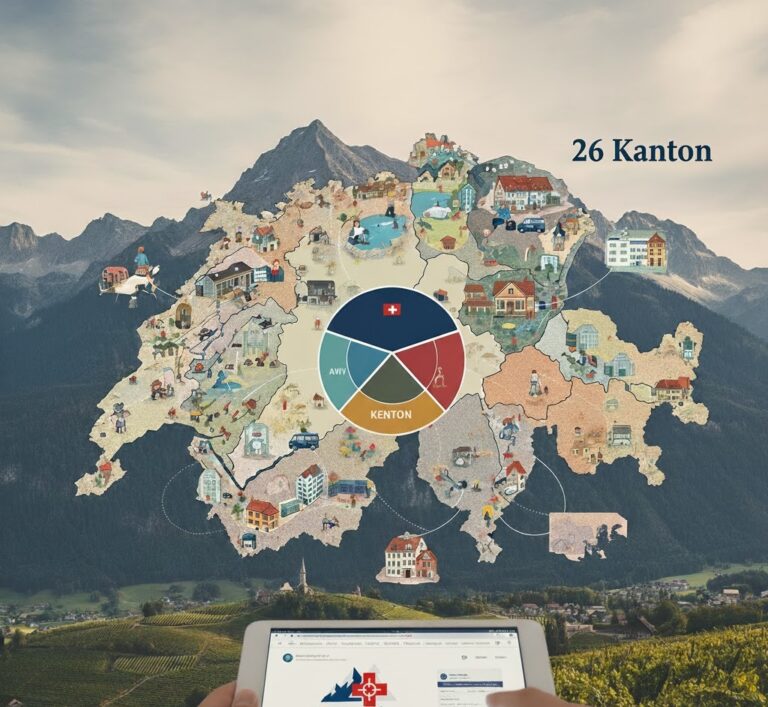
Even used cars are expensive in Switzerland, though well-maintained vehicles depreciate slowly. The financial trap lies in the annual Motor Vehicle Tax (Strassenverkehrssteuer). Administrative differences between 26 Cantons, 26 States directly affect tax rates.
- Cantonal Surprise: In the Canton of Bern, the tax amount depends on the total weight and particularly the energy efficiency category (environmental factors). Older vehicles with low efficiency are penalized with high taxes.
💰 The Restrictive Leasing Model and Rising Interest
Private leasing is the most common financing route. While attractive because it eliminates the need for a high down payment, rising interest rates have severely increased leasing costs.
- Interest Trap: It is difficult to find interest rates below 4%. Despite paying high interest, ownership remains with the leasing company.
- Return Risk: The biggest financial risk emerges at the contract’s end: Mileage Limits (high extra fees if exceeded) and the Flawless Return Clause. Even minor scratches or damage can be billed to you as high repair invoices.
🚦 Motor Vehicle Insurance: Fully Comprehensive is Not a Luxury
Motor Vehicle Liability Insurance (Haftpflichtversicherung) is a legal requirement for every registered motor vehicle in Switzerland. However, this insurance only covers damage to the third party.
- Full Comprehensive (Vollkasko) Requirement: Given the extremely high costs of spare parts and labor in Switzerland, paying for damage to your own vehicle out of pocket is financially devastating. Vollkasko is practically unavoidable for expensive vehicles and is often a mandatory term in leasing contracts.
✅ Adaptation Roadmap: Purchasing and Legal Processes
📝 Direct Purchase and Risk Management
Direct purchase (cash or bank loan) gives you full ownership and no mileage restrictions. Private buying/selling (Privat Kauf/Verkauf) can offer better prices but carries higher risk.
- Protection Against Risk: Private sellers often use the phrase “sold as seen.” To protect your investment, have the vehicle inspected by an independent expert (like TCS) before purchasing.
🗓️ Legal Processes and License Deadlines
A newcomer must adhere to a strict timetable.
- 12-Month Countdown: A foreign driver’s license authorizes driving for a maximum of 12 months from the date of entry. Before this period expires, the license must be exchanged for a Swiss license at the cantonal Strassenverkehrsamt. Missing this deadline leads to severe consequences, such as the total loss of the right to drive. General advice on Step-by-Step Guide to Moving to Switzerland can be found by reading our article.
✅ Fee / Duration Table
Cost Item | Average Cost in Switzerland (CHF) | Details |
|---|---|---|
Annual Motorway Vignette | 40 CHF | No short-term options; mandatory annually. |
License Exchange Fee | 100 – 200 CHF | Varies by canton (administrative for EU/EFTA). |
Annual Motor Vehicle Tax | 150 CHF – 1,000+ CHF | Varies significantly based on weight and environmental class. |
Garage/Parking Rent (Monthly) | 120 CHF – 300 CHF | A supplementary cost to Guide to Renting a House in Switzerland (house rental costs). |
Vollkasko Premium (Annual) | 800 CHF – 2,000+ CHF | Varies based on vehicle value and driver profile. |
✅ Recommendations / Tips
- Public Transport Comparison: When calculating TCO, also consider the potential cost advantage of Switzerland’s excellent public transport system. For more on Public Transportation in Switzerland: Swiss Travel Pass and the Culture of Mobility you can read our article.
- Buying Decision: If you drive high mileage or plan to use the car for more than 5 years, direct purchase may be more logical than leasing.
- Zero Tolerance: Accept that rule violations on Swiss roads have irreversible legal and financial consequences. Excessive speeding (Raservorwurf) carries penalties like imprisonment, license revocation, and vehicle confiscation.
✅ Alternatives and Legal Risk Management
⚠️ The Threat of Raservorwurf (Excessive Speeding) and Confiscation
The legal application that most increases the risk of car ownership in Switzerland is the “Raservorwurf” (Excessive Speeding) charge.
- The Threshold: The charge begins when the speed limit is exceeded by 40 km/h or more in built-up areas (50 km/h zone).
- Financial Consequence: The most critical point is the risk of VEHICLE CONFISCATION. If excessive speeding occurs in a leased vehicle, the lessee not only loses the car but must also pay all remaining installments due to breach of contract. The Swiss Rules of Life: Order, Silence, and Adaptation Guide applies here uncompromisingly.
🚗 Financing Comparison
Feature | Direct Purchase (Cash/Loan) | Private Leasing (Rent) |
|---|---|---|
Ownership Status | Belongs to the buyer | Belongs to the leasing company (Right of use) |
Mileage Limit | No | Yes (High extra fees if exceeded) |
Contract End Risk | Belongs to the buyer (Depreciation) | Obligation to return with high repair/mileage penalty risk |
❓ Frequently Asked Questions (FAQ)
❓ Question: What should I look out for when buying a used car privately (outside a dealership)?
✅ Answer: Private buying/selling can be cheaper but carries higher risk. Sellers often use the phrase “sold as seen.” To protect your financial investment, take the vehicle to an independent expert (like TCS) before payment and have a comprehensive technical inspection.
❓ Question: Is there a short-term alternative to the annual Vignette (Motorway Sticker)?
✅ Answer: No. The Swiss motorway system does not offer short-term options (weekly or monthly); it is only sold as an annual adhesive sticker. Driving without a Vignette results in high fines.
❓ Question: Why might the Motor Vehicle Tax be different in Bern compared to Zurich?
✅ Answer: This stems from the administrative autonomy between 26 Cantons, 26 States. Cantons implement their environmental policies through the tax system. While the tax in Bern is linked to the vehicle’s weight and environmental efficiency, a different formula may apply in another canton. Therefore, you must check your canton’s tax system before purchasing.
✅ Conclusion
Car ownership in Switzerland is an attractive option for personal freedom despite the easily accessible public transport. However, this freedom comes at a price: high taxes, expensive insurance, and the need for uncompromising adherence to rules due to the Raservorwurf threat. Calculate the TCO to make the best financial decision and carefully analyze the return and mileage risks before opting for leasing. Adherence to traffic rules is the only way to protect your investment on Swiss roads, not just your safety.
Sources
All legal and technical references cited in this article are based on high-authority official sources such as the Federal Road Traffic Act, the Traffic Licensing Ordinance, Raser-provisions, official cantonal data, and popular market and comparison platforms.
**Official Rules for Foreign Driver’s License Exchange (Canton Zurich): https://www.zh.ch/de/mobilitaet/fuehrerausweis-fahren-lernen/auslaendischer-fuehrerausweis.html
**Analysis of Excessive Speeding (Raservorwurf) and Vehicle Confiscation Law (Comparis): https://www.comparis.ch/carfinder/autofahren/raserdelikt-schweiz
**Cantonal Tax and Road Traffic Office Rules Bern (Official): https://www.svsa.sid.be.ch/de/start/fahrzeuge/steuern-gebuehren/fahrzeugsteuer.html
**Swiss Marketplace for Buying and Selling Vehicles (AutoScout24): https://www.autoscout24.ch/de/autos/kaufen