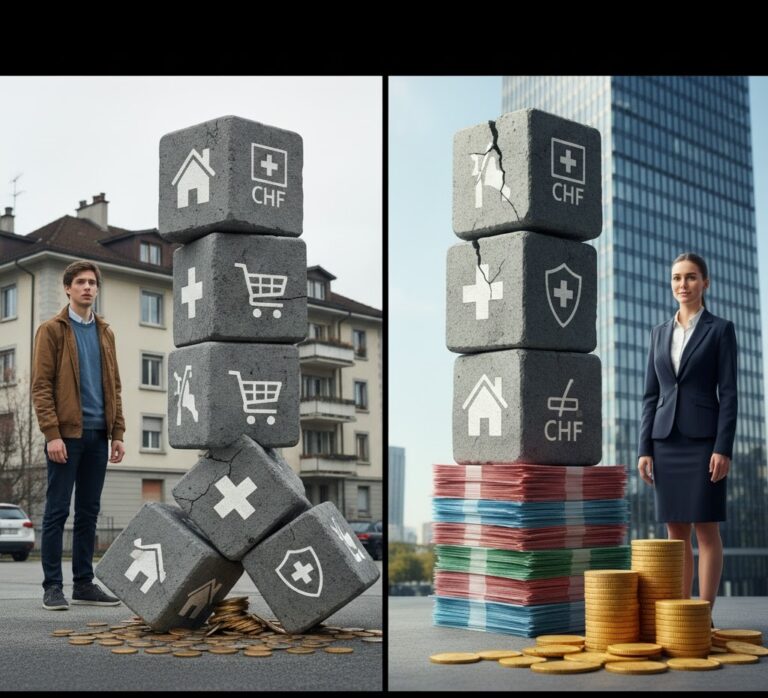
SWISS WAGE STRUCTURE 2024/2025
The Swiss Labor Market: Nominal High Wages and Real Disposable Income
The Swiss labor market is characterized by a stable and strong economic structure, boasting some of the highest gross wages in the world. However, from our perspective, this article will not just focus on the gross figures; it will also reveal the truth of the net disposable income, regional inequalities, and the full tax burden. It is critical to understand the relationship between wages and disposable income, especially in global financial centers where the cost of living is one of the highest. Remember: success is not defined by what enters the till, but by what remains in your pocket.
focusAnalysis: Transparency Manifesto: What the Figures Tell and the Reality of the Residents
If you genuinely earn a good salary in Switzerland, you can, in my view, live very comfortably and progress without economic hardship. However, the focus of criticism in the figures and reports presented here is the unjust inequality between the cantons. Frankly, this system harbors great unfairness.
The figures explain everything to you, but the reality for me is that the salaries you receive here in Switzerland are more than enough to sustain your life. However, as a resident of Bern, I have observed that when balancing rent and general costs in places like Zurich or Geneva, the money remaining in your pocket can be proportionally similar. As I mentioned before, achieving a good life in this country genuinely requires one and a half salaries entering a household.
This situation clearly shows how a large segment of the population that is unfortunately living on low wages in Switzerland is rendered invisible in the statistics. In following articles, I will also delve into the deep-seated structure of salary differences.
🎯 Core Definition
The Swiss wage structure is a complex economic equilibrium system that, despite the high nominal gross income, creates regional inequalities in net disposable income due to large differences in cantonal taxes and compulsory health insurance premiums (KVG).
Cantonal Inequality: Minimum Wage and Compulsory Premiums
There is no national minimum wage in Switzerland; this authority is left to the cantons and sectoral Collective Bargaining Agreements (CBAs/GAV).
Table I: Cantonal and Communal Minimum Wage Floors (Comprehensive 2024/2025)
Canton/City | Minimum Wage (CHF/Hour) | Estimated Monthly Gross (42h/Week) | Context |
|---|---|---|---|
Geneva (GE) | 24.48 CHF | ~4,400 CHF | Highest minimum wage, indexed in 2025 |
City of Zurich (ZH) | 23.90 CHF | ~4,300 CHF | Communal Standard |
Basel-Stadt (BS) | 21.70 – 22.00 CHF | ~3,900 – 4,000 CHF | Sector Dependent |
Vaud (VD) | 23.27 CHF | ~4,180 CHF | High Floor |
Jura (JU) | 21.00 CHF | ~3,780 CHF | Cantonal Standard |
Valais (VS) | 19.95 CHF | ~3,590 CHF | To be applied in 2025 |
Neuchâtel (NE) | 21.31 CHF | ~3,850 CHF | Cantonal Standard |
Ticino (TI) | 19.00 – 19.50 CHF | ~3,400 – 3,500 CHF | One of the lowest cantonal floors |
✅ Essential Information: KVG Premiums and Disposable Income
Compulsory social security deductions account for approximately 13–16% of gross income, which is acceptable by European standards. However, the actual source of inequality lies in the Compulsory Health Insurance Premiums (KVG), which are not deducted from the salary but paid directly.
The amount of these premiums varies wildly between the cantons. This situation harbors great injustice; because the fact that someone doing the same job in another canton pays less in premiums is an annoying reality that diminishes the real value of your salary. You can find all our criticisms and details on the inequality in health insurance premiums via a more comprehensive review in our article.
If you would like to see a more comprehensive table on these regional differences and all other expense items, you can read more to learn more.
Canton | Average Monthly KVG Premium (Report Data) | Economic Position (Regional Risk) |
|---|---|---|
Ticino (TI) | 583 CHF (Highest in the country) | Low Minimum Wage / High KVG Burden (Double Pressure) |
Zurich (ZH) | 452 CHF (High) | High Salary / High Cost |
Zug (ZG) | 312 CHF (Among the lowest in the country) | High Salary / Low KVG Burden (High Net Purchasing Power) |
Emphasis on Inequality: A person in Ticino must pay 3,252 CHF more annually just for the KVG premium compared to a similar person in Zug. This demonstrates how regional autonomy creates serious inequality in disposable income, even if gross salaries are the same.
✅ Detailed Guide: Wage Analysis, Sector Gap, and Specialist Premium
💰 Income Analysis: Wages and Inclusion
The Swiss wage structure presents a complex balance that varies by geography and qualification.
Occupation Group | Bern (CHF) | Zurich (CHF) | Geneva/Vaud (CHF) | Basel (CHF) | Ticino (TI) | Zug (ZG) | Jura (JU) | Valais (VS) | Neuchâtel (NE) |
|---|---|---|---|---|---|---|---|---|---|
Unskilled Worker/Auxiliary | 4,000 – 5,000 | 4,500 – 5,500 | 4,200 – 5,200 | 4,300 – 5,300 | 3,500 – 4,500 | 4,600 – 5,600 | 3,800 – 4,800 | 3,800 – 4,800 | 4,000 – 5.000 |
Skilled Worker (Service, Construction, etc.) | 5,000 – 6,000 | 5,500 – 6,500 | 5,300 – 6,300 | 5,200 – 6,200 | 4,800 – 5,800 | 5,600 – 6,600 | 5,000 – 6,000 | 5,000 – 6,000 | 5,100 – 6,100 |
Mid-Level Office Employee | 6,000 – 8,000 | 7,500 – 9,500 | 7,000 – 9,000 | 7,200 – 9,200 | 6,500 – 8,500 | 8,000 – 10,000 | 6,200 – 8,200 | 6,200 – 8,200 | 6,500 – 8,500 |
Experienced Professional (IT, Finance, Eng.) | 8,000 – 11,000+ | 10,000 – 15,000+ | 9,500 – 14,000+ | 9,000 – 13,500+ | 8,500 – 12,500+ | 11,000 – 16,000+ | 8,500 – 11,500+ | 8,500 – 11,500+ | 9,000 – 12,000+ |
💰 Specialist Premium and Certification Value
Switzerland’s high wage structure values not only academic diplomas but also practical and certified skills.
Occupation | Education Level | Entry (0-2 Years Exp.) | Experienced (12+ Years Exp.) | Average Salary | Source/Note |
|---|---|---|---|---|---|
Doctor (Physician) | Graduate (University) | 120,000 CHF | 250,000+ CHF | 150,000 – 300,000 CHF+ | [High Specialist Premium] |
Financial Engineer | Graduate (Master/Specialization) | 113,000 CHF | 152,500 CHF | 130,000 CHF | [Specialization Report] |
IT Engineer | Graduate/Specialization | 92,500 CHF | 130,000 CHF | 105,704 CHF | [IT Sector Report] |
Veterinarian | Graduate (University) | 69,067 CHF | 106,400 CHF (Expected Max) | 95,100 CHF | [Veterinarian Report] |
Certified Vet Technician | Non-Graduate (Vocational/EFZ) | ~54,000 CHF | ~73,400 CHF (Senior) | 73,386 CHF | [Vocational Report] |
Technician (General) | Non-Graduate (Vocational/EFZ) | 70,000 CHF | 88,000 CHF (Expected Max) | 75,972 CHF | [Vocational Report] |
✅ focusAnalysis: Experience / Recommendation
You can easily see why the Swiss average salary is so high by looking at the table above. The extremely high salaries in fields like Financial Engineering and experienced IT Engineers are the main factors pulling the average up. In my view, this situation clearly shows how a large segment of the population that is unfortunately surviving on low wages in Switzerland is rendered invisible in the statistics. This structure compels you to understand the real value of your salary. Because success is defined by what remains in your pocket, not what enters the till.
✅ Step-by-Step Guide
- Local Value of Gross Salary: Check the ratio of the gross salary offered (Table I) to the minimum cost of living (rent + KVG) in your canton. 9,000 CHF in Zurich may offer less net purchasing power than 7,000 CHF in Zug.
- KVG Premium Calculation: Calculate the annual compulsory health insurance premium (Table II) for your canton of residence. This is the largest additional expense not deducted from salary.
- Tax Comparison: Use tools to compare the tax burden of different cantons for the same gross salary (Zug generally has low taxes).
- Net Disposable Income: Find your real disposable income by subtracting the KVG premium and estimated rent from your net salary remaining after all compulsory deductions (AHV, UVG, ALV).
✅ Cost / Time Table
Comparison Item | Ticino (TI) (Double Pressure) | Zug (ZG) (High Purchasing Power) | Difference (Annual Loss) |
|---|---|---|---|
Average Monthly KVG Premium | 583 CHF | 312 CHF | 271 CHF (Monthly) |
Annual Extra KVG Burden | 6,996 CHF | 3,744 CHF | 3,252 CHF (Against Ticino) |
Regional Position | Lowest Minimum Wage / Highest KVG | High Salary / Lowest KVG | Ticino experiences significant purchasing power loss compared to Zug. |
✅ FAQ (Frequently Asked Questions)
1. Q: Why are KVG Premiums not automatically deducted from salary?
Answer: The KVG (Health Insurance Law) is compulsory private insurance. Deductions on your payslip (AHV, ALV, UVG) are social insurance. The KVG payment is made directly to the health insurer and is your responsibility. Therefore, you must never forget this when budgeting.
2. Q: Does a higher salary mean higher KVG premiums?
Answer: No. The KVG premium is independent of your income; it depends on your canton, age, and the chosen Franchise (deductible) model. However, the fact that your canton demands high premiums increases the burden, regardless of your income.
3. Q: What is the legal obligation of the “usual wage” for foreign workers?
Answer: When hiring employees from abroad, especially from non-EU countries, it is legally required that the salary offered corresponds to the customary local and professional conditions, meaning it must at least meet the average salary level in that region and sector. This aims to prevent the importation of low-wage labor.
✅ Alternatives
- KVG Alternative: Consider choosing a high Franchise (2,500 CHF) to save on KVG premiums. This reduces the monthly premium, but increases your initial cost in case of serious illness.
- Residence Alternative: If you earn a high salary but don’t want to live in Zurich, you can consider moving (commuting) to neighboring cantons with low tax and low KVG, such as Zug or Schwyz. This optimizes your net disposable income.
- Certification Alternative: Focus on Swiss-recognized vocational certificates like the EFZ (Federal Certificate of Competence) to compensate for the lack of academic diplomas. As seen in the tables, certified technicians earn significantly more than unskilled workers without diplomas.
✅ Recommendations / Tips
- Check Salary in the Sector: Before accepting a salary offer, check the cantonal average for your profession on platforms like Arbeit.swiss or Comparis.
- Utilize Tax Deductions: Legally reduce your tax burden by claiming deductions such as childcare, travel expenses (SBB tickets), and compulsory training costs.
- Low-Wage Support: If your salary is low, be sure to inquire about your right to a premium reduction (Prämienverbilligung) for the KVG premium for low-income households.
✅ Conclusion
The key to the Swiss wage structure lies in understanding the regional inequalities and compulsory costs beyond gross income. Success lies in combining high wages and low obligations (like in Zug) or managing the double pressure (like in Ticino). Therefore, you must be constantly strategic to maximize your purchasing power.
If you found this guide helpful, please share it with other immigrants who are at the beginning of their professional journey!
Sources
Source Authority (German) | URL (Official Source) |
|---|---|
BFS Lohnstrukturerhebung (LSE) 2022 | |
BFS Lohnstrukturerhebung (LSE) Geschlechterlohnlücke | |
Genf Kanton Offizielles Arbeitsgesetz |