Swiss Shopping Culture: Grocery Prices, Discount Days, and Local Products
focusAnaliz: The Grocery Shock, Sunday Closures, and Budget Management Tactics
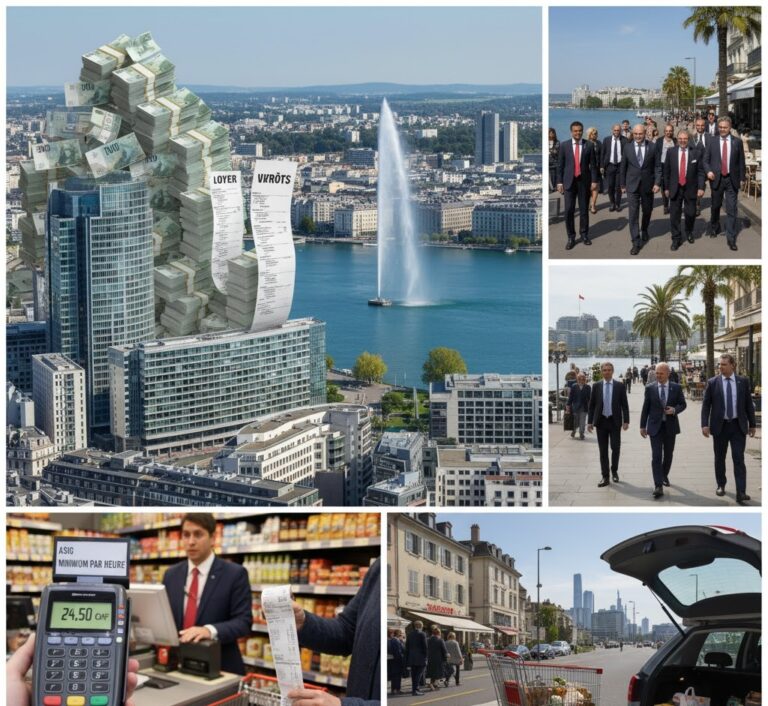
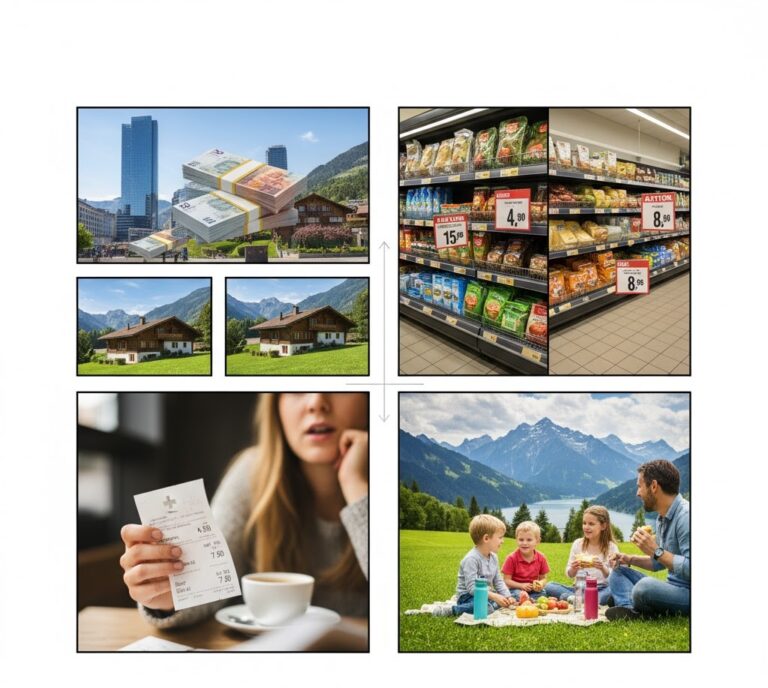
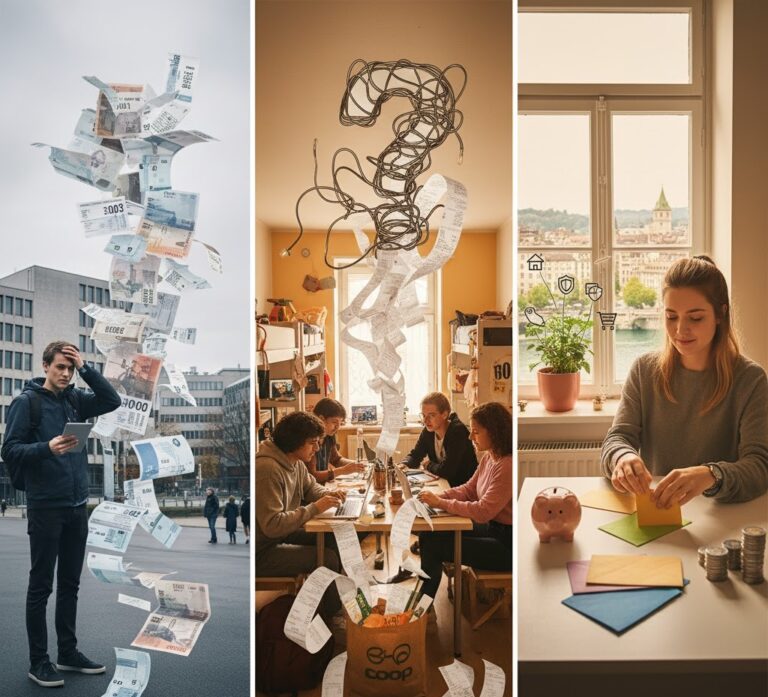
The grocery (food) prices are undoubtedly one of the biggest shocks a new immigrant experiences in Switzerland. Although the Swiss economy boasts high salaries, this is reflected as a high price premium on food and basic consumer goods. Our observations show that the cost of a grocery basket in Switzerland is up to 91% more expensive compared to neighboring France or Germany.
This article will address the cross-border shopping trend as a cultural phenomenon, driven by Switzerland’s strict Sunday closing rule and high prices. Our goal is to provide the necessary savings tactics to manage food expenses, which become the largest variable pressure on your budget, after fixed and high costs like those detailed in [Swiss Rental Housing Guide: Contract, Deposit, and House Hunting Tactics] and [How Does the Healthcare System Work in Switzerland? Insurance, Doctor Selection, and Emergencies].
1. Supermarket Chains and Price Comparison
The supermarket structure in Switzerland revolves around two giant players (Migros and Coop) and discount stores (Aldi and Lidl). Price differences can change dramatically from store to store.
- “Inflation Diversity” and Class Division: In Switzerland, the same product has varying prices according to different budgets; this can be termed “Inflation Diversity.” When shopping, you can observe the income classes of the people. For example, when differentiating between cheap, medium, and expensive milk, you unfortunately also have to question the quality. This is a bitter truth reflected clearly on the shelves of market giants like Coop and Migros, who hold the market in their hands. This highlights the extent to which the quality and standards of products differ; people need to know why they are forced to allocate vastly different budgets for the same product.
- Premium Segment (Coop and Migros): These markets dominate a large part of the Swiss market. They offer a wide range of products.
- Discount Stores (Aldi and Lidl): These international chains offer a price advantage for basic foodstuffs.
- Price Shock and Cross-Border Shopping: Immigrants living near major cities (Basel, Geneva, Lugano) often see shopping in Germany, France, or Italy as a necessary saving tactic.
2. Discount Days and Smart Shopping Tactics
Despite high prices, culturally accepted ways to save money exist in Switzerland.
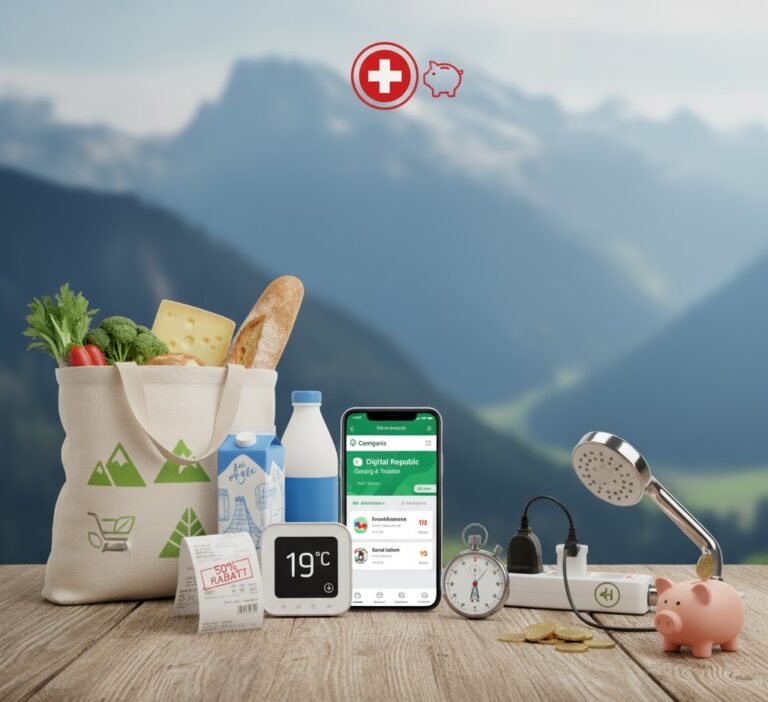
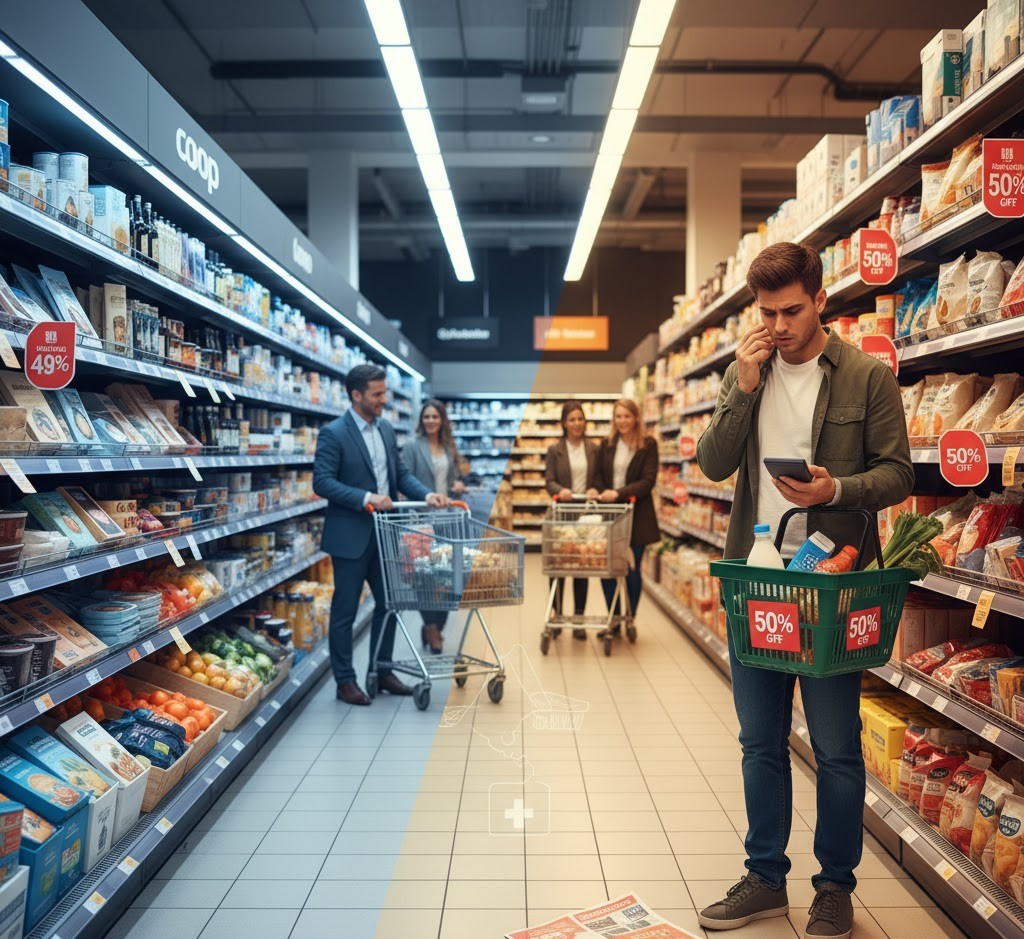
- Half-Price Products (50% Off): Many Migros and Coop stores sell products nearing their expiration date (MHD) at a 50% discount, usually shortly before closing time. This is a popular and key strategy for budget-friendly shopping.
- Waste Reduction Apps: If you are eating out, you can use mobile applications like Too Good To Go, which allow restaurants and markets to sell surplus food at very affordable prices.
- Loyalty Cards (Cumulus/Supercard): The loyalty programs of Migros (Cumulus) and Coop (Supercard) offer the chance to collect points and win discount vouchers.
3. Unique Swiss Shopping Culture and Rules
Swiss shopping culture is more regulated compared to neighboring countries.
- The Sunday Closing Rule: Due to Switzerland’s strict labor laws, markets (and most stores) are closed on Sundays. The only exceptions are markets inside major train stations (Zurich HB, Geneva Cornavin) and airports. This means you must complete your weekly shopping on Saturday.
- Focus on Local Products: Although I support the local production movement, these products are quite expensive. They can genuinely harm people’s budgets. These products are often subjected to price reductions after a few days; therefore, I cannot say they are among the most frequently chosen by all customers.
4. Budget Strategy: Managing the Cost Shock
A proactive approach is mandatory for managing food and shopping costs. Since Switzerland’s established supermarkets hold the market in their hands, prices develop as they wish. They are everywhere and have branched into every sector. This gives them immense power.
Expense Item | Swiss Reality | Management Tactics |
|---|---|---|
Meat and Fresh Produce | Some of the most expensive meat and vegetable prices in Europe. | Focus on the 50% discounted sections in Migros and Coop, or choose Aldi/Lidl products. |
Personal Care | Cosmetics and pharmacy items are expensive. | For personal care items, cross-border shopping in Germany (DM/Rossmann) or France (Monoprix) saves significantly. |
Alcohol and Tobacco | Very expensive due to taxes. | To lower basic costs, it is legal to bring in limited quantities of alcohol and tobacco from outside Switzerland (be aware of customs rules). |
Conclusion: The shopping culture in Switzerland is a blend of discipline, rule-following, and high cost. However, with smart strategies (following discounts, using loyalty cards, and segmenting markets), you can control your budget and minimize the cost shock.