Switzerland’s Hidden Map: Alpine Myth, the Economic Heart of Mittelland, and Ticino, the Gate to the Mediterranean
focusAnaliz: Four Distinct Worlds Compressed into 41,000 Square Kilometers and the Secret of Swiss Identity
Switzerland is a global phenomenon, not only for the punctuality of its watches, but also for its geographical fragmentation. This small country, spanning approximately 41,000 square kilometers, seems to have been divided by a geographical genius into three main regions (Alps, Mittelland, Jura) and a unique “Mediterranean front” (Ticino). Behind the image of uniform stability that you perceive as an outsider, four distinct worlds are hidden, separated by mountains, hills, and valleys. Indeed, each region creates worlds and cultures so different from each other, which gives me the feeling that I am talking about separate countries.
This geographical separation has radically shaped not only the landscape, but also the spoken languages, the cheese consumed, the architecture of the houses, and even the mood of the regional population. The country’s strength relies on its ability to unite these four opposing faces under a common identity. My fascination with Switzerland grows the deeper my research goes; it is an incredible cultural mosaic and, above all, the perfect example of coexistence. Let us follow the traces of this hidden map that makes Switzerland what it is.
Section I: The Alps – 60% of the Country and the Source of Legends
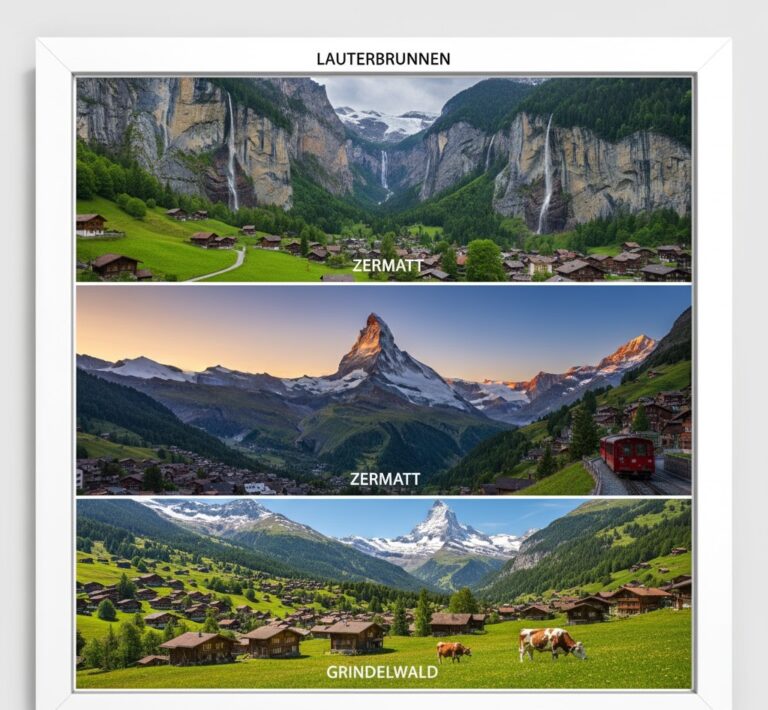
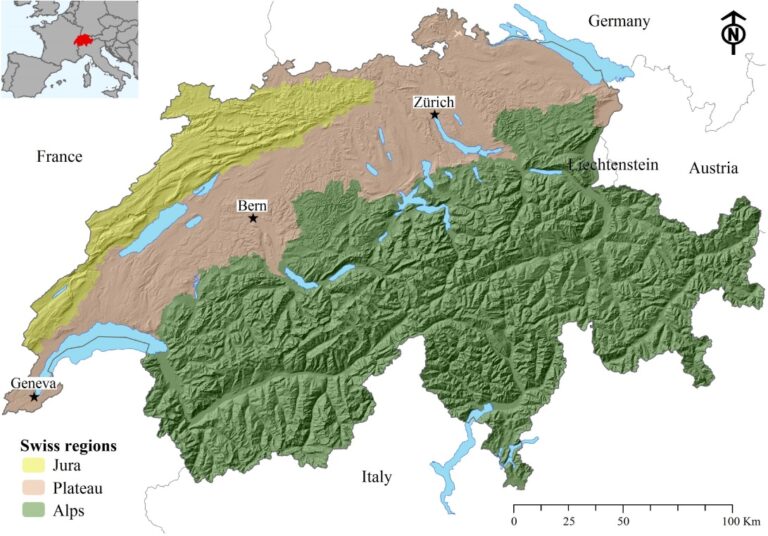
The majestic landscape that comes to mind when you imagine Switzerland is the Alps. They cover about two-thirds (60%) of the country. However, this vast area is home to only a very small fraction of the Swiss population.
The Language of Altitude and Geopolitical Power
The Alps are more than a geographical boundary. They are a historical and geopolitical force that shapes the country’s identity.
- Europe’s Water Tower: The Alps do not only consist of glaciers and 48 peaks exceeding 4,000 meters. They are the source of Europe’s two main rivers (the Rhine and the Rhône). Thus, they assume the role of the continent’s “water tower.”
- Transit Routes: Despite the difficulty of crossing them, the Alps are the key transit routes between Northern and Southern Europe, thanks to passes and tunnels like the Gotthard and Simplon. This has given Switzerland strategic importance throughout history.
- Tourist Paradise: The Alps, once regarded only as difficult passages, have transformed into an economic asset with the rise of mountaineering and modern tourism. Today, they make a significant contribution to the national economy through tourism.
Section II: The Swiss Plateau (Mittelland) – The Centre of Economy and Life
Immediately north of the Alps stretches the Mittelland (Middle Country). It is sandwiched between the Jura Mountains and the Alps and covers about 30% of the area. Contrary to its name, this region is not entirely flat, but mostly hilly and uneven.
Density and Dynamism
The Mittelland is considered the heart and brain of Switzerland:
- Population Centre: Although it covers only one-third of the country’s surface area, more than two-thirds of the Swiss population lives in this region. That makes the Mittelland by far the most densely populated region in the country.
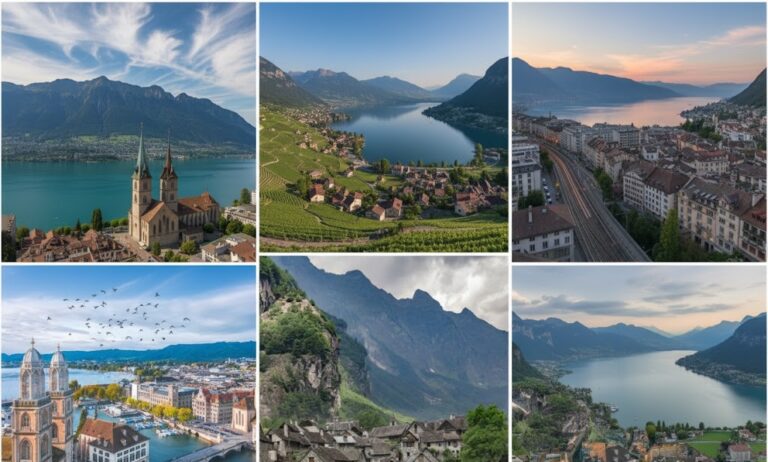
- Economic Locomotive: Major urban centres like Zurich, Bern, Basel, and Geneva are located here. Due to the concentration of sectors such as trade, industry, banking, and technology, the Mittelland is the economic locomotive of Switzerland.
- Transport Network: The region has the densest transport network in the country. It exhibits a dynamic but fragmented landscape where agricultural lands, settlement areas, and industrial centres converge.
Section III: The Jura Mountains – The Winter Slumber of History and Craft
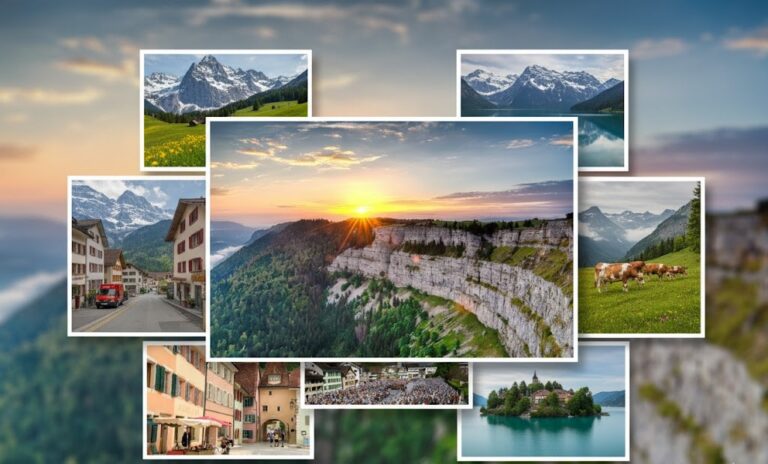
The Jura Mountains, located on Switzerland’s northwestern border, beyond the Mittelland, constitute the smallest geographical region of the country (10%). The name Jura, which means “Forest” in Celtic, is characterized by long, parallel ridges and deep valleys.
Rural Charm and the Birth of Watchmaking
Although the Jura does not possess the dramatic grandeur of the Alps, it captivates with its own culture and history:
- Winter Workshops: The rural lifestyle of the Jura required farmers to stay indoors during the long, snow-covered winters. This allowed them to develop their fine motor skills. Therefore, it played a key role in the adoption of precision crafts like watchmaking as a cottage industry (établissage). Today, this region is the spiritual home of Swiss watchmaking and the birthplace of its most famous brands.
- Quiet Tourism: The Jura is a paradise for those seeking tranquility rather than intense tourist facilities. It is ideal for activities like cross-country skiing and mountain hiking. The lifestyle here is traditional and closer to nature.
Section IV: Ticino – The Mediterranean Child of the Alps
The Canton of Ticino, located at the southern tip of Switzerland, beyond the Alps, is a geographical and cultural exception. As the only entirely Italian-speaking canton, Ticino is the fusion of Swiss efficiency and Mediterranean creativity.
Palm Trees and Grotto Culture
Ticino’s unique atmosphere stems from its geography:
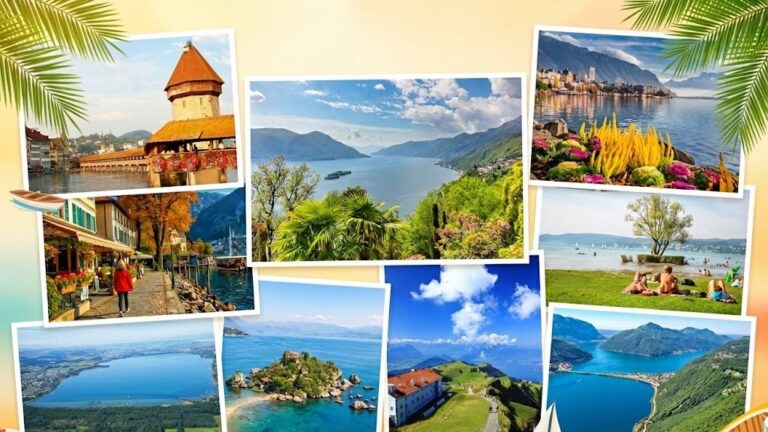
- Mediterranean Climate: Sheltered from cold northern winds by the San Gottardo massif, Ticino enjoys a milder, almost Mediterranean climate than the rest of Switzerland. Here, you can see palm trees and olive groves alongside snow and Alpine glaciers in winter.
- Finance and Logistics: Due to its location between two major economic centres like Milan and Zurich, Ticino has become an important logistical and financial hub. Lugano is the third-largest financial centre in the country.
- Grotto Tradition: The Grotti (rustic buildings of the region) offer ideal retreats to experience Ticino’s culinary traditions and local Merlot wine. This is where the Latin soul of Switzerland is most palpable.
Conclusion: Every region of Switzerland—the majestic Alps, the bustling Mittelland, the serene Jura, and the sunny Ticino—adds a unique layer to the country’s character. The harmony of these geographical contrasts makes Switzerland not just a country, but a successful testing ground where different lifestyles and cultural colours converge. Understanding this geographical diversity is the first step to unlocking the secret of Swiss identity. If, after discovering the major regions of Switzerland, you want to see the real secret hidden in the remotest corners of the country, you can also read our article on Switzerland’s Unknown Face.