🧀 Fondue and Raclette: Switzerland’s Two National Cheese Rituals
focusAnalysis: The Dilemma of Melted Cheese: Global Symbol (Fondue) vs. Stay-at-Home Ritual (Raclette)
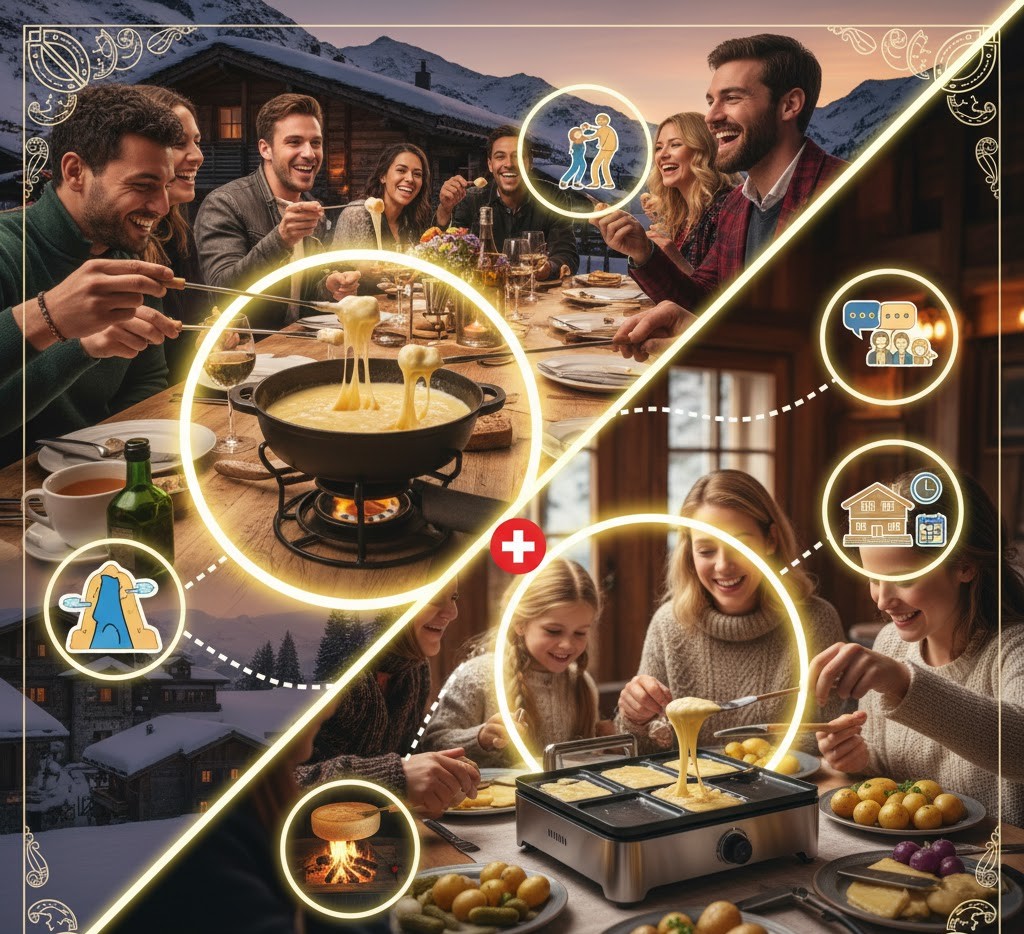
Swiss culinary culture revolves around melted cheese during the winter months. However, the two national dishes, Fondue and Raclette, have followed different paths in terms of global versus regional identity. While both are Alpine in origin, Raclette has remained a more regional and traditional ritual, spreading mainly from Valais.
The distinction between these two dishes stems not only from their taste but also from their serving mechanics and historical roots. If you are curious about how these cultural differences translate into daily life and social interactions, you can find out more by reading our article on [Social Life in Switzerland: Neighborhoods, Festivals, and Leisure Activities].
✅ Quick Summary Table: The Essence of the Dilemma
Dish | Origin | Serving Style | Cultural Significance |
|---|---|---|---|
Fondue | 1699 (Documented) | Shared Caquelon, Quick Consumption | Global Symbol, Social Sharing Icon |
Raclette | A.D. 1291 (Valais) | Slow Scrape, Personal Pan (Coupelle) | Traditional Home Ritual, Patience |
🎯 Main Definition:
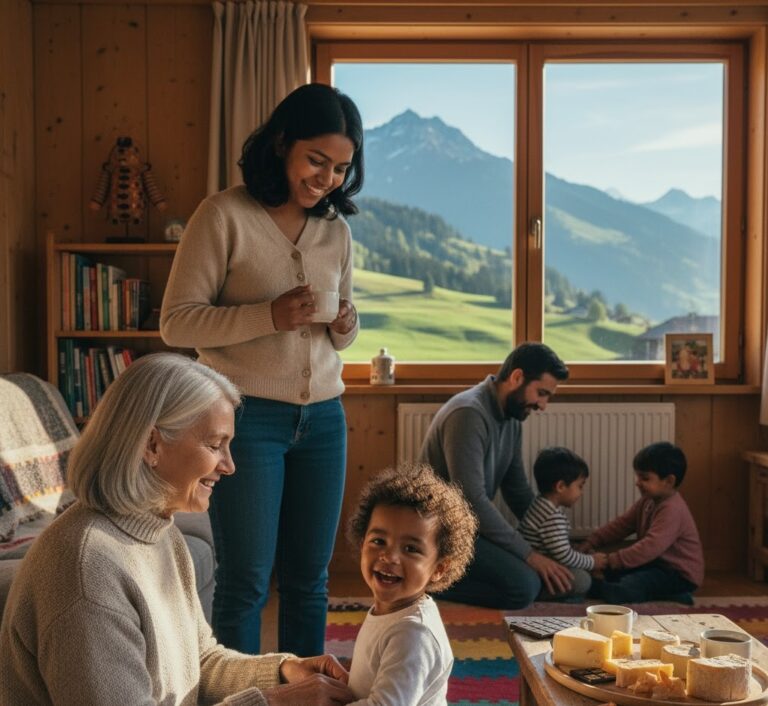
Fondue and Raclette are Switzerland’s national winter dishes, reflecting the quality of Alpine milk; Fondue is a global social sharing meal where cheese is melted in a communal pot for dipping bread, while Raclette, originating from the Valais canton, is a more personal and prolonged stay-at-home ritual where cheese is slowly scraped onto potatoes.
✅ Key Information:
Fondue: The Ritual of Sharing and Global Symbol
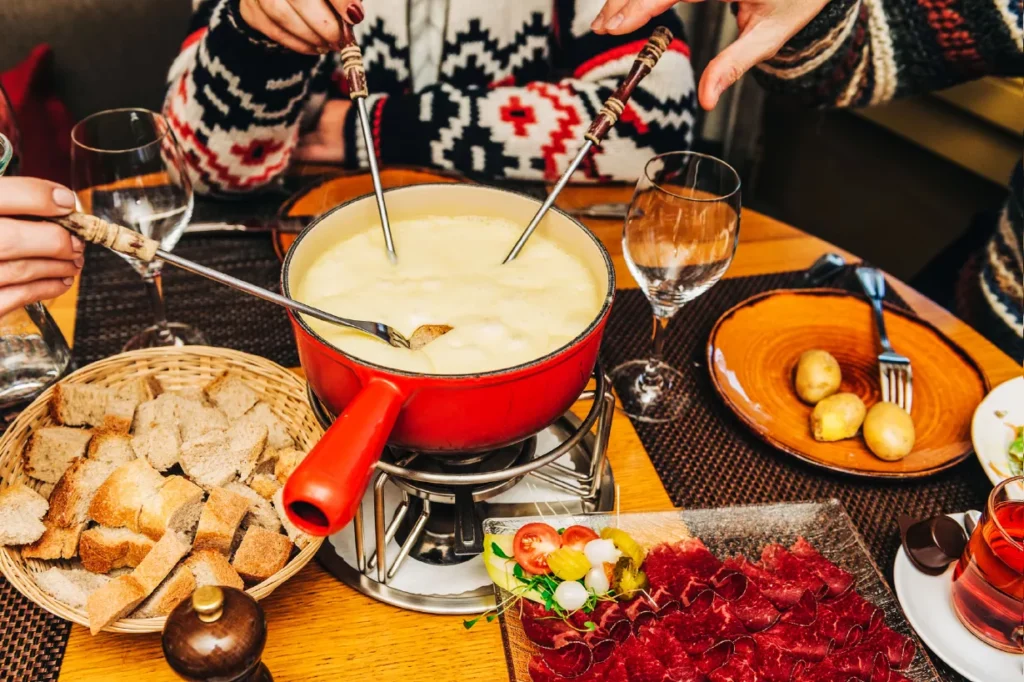
Fondue is the most internationally recognized culinary concept of Switzerland.
From the Chef’s Perspective
I generally love both types of cheese. Initially, especially the smell of Fondue, was quite strong for me as a chef, but over time, I got used to the unique acidic flavor balance created by the cheese-and-wine mix in the Caquelon. Working in a restaurant, I would overhear the cheerful conversations and sense of communal activity among customers. Both dishes, but especially Fondue, truly foster a social bond. To learn the entire mysterious history of Swiss cheeses, in addition to Fondue, you can find out more by reading our article [Swiss Chocolate and Cheese Culture: From the Mysterious Alpine Peaks to a Global Flavor Empire].
The Fondue Preparation Ritual
Fondue is the harmony of cheese and wine. First, the inside of a special ceramic pot called a Caquelon is thoroughly rubbed with garlic. Then, white wine (usually Fendant or Riesling) is added to the pot and heated. Cheeses (mostly a mix of Gruyère and Fribourg Vacherin) are slowly added and stirred continuously until melted.
✅ Detailed Guide:
📌 Raclette: The Valais Tradition and the Legacy of 1291
Raclette is the traditional dish, especially of the Valais (Wallis) Canton, and requires a unique presentation. Raclette’s origin dates back to A.D. 1291. This date coincides with the period when the founding legend of the Swiss Confederation took place. To deeply explore the roots of Raclette, you can find out more by reading our article [1291 Founding Legend: Uri, Schwyz and Unterwalden Treaty].
💰 The Raclette Preparation Ritual: The Art of Patience and Scraping
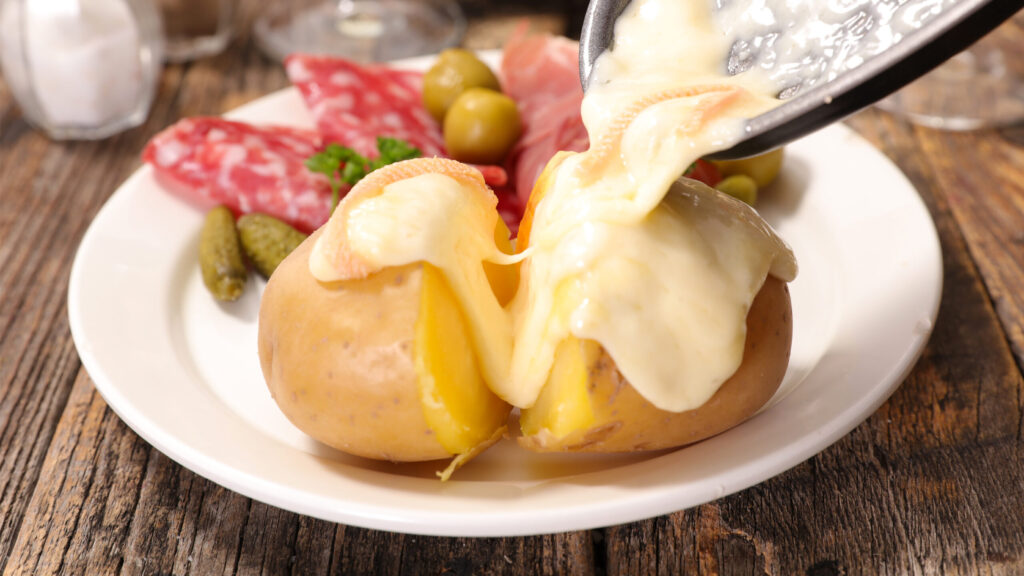
Raclette gets its name from the French word “racler” (to scrape). Traditionally, half a wheel of cheese is placed near a fire or a special Raclette heater. The melting top layer of the cheese is scraped with a knife or spatula onto a plate of boiled potatoes, pickles, and small onions. Today, this ritual is often performed with electric machines where each guest melts their cheese in small pans (coupelles). Even though I live in Bern, during my visits to Valais, I observed that this traditional scraping ritual is still preserved, particularly in small village markets.
🚦 Consumption and Cultural Economy
The importance of these two cheese rituals to the Swiss economy and cultural life is substantial. Generally, the annual cheese consumption per capita in Switzerland is around 22 kg. The consumption of cheeses specifically produced for Fondue and Raclette peaks during the winter months. While Fondue becomes an après-ski icon and a global comfort food, if you wish to learn detailed information about managing your budget for your next trip, you can find out more by reading our article [Swiss Ski Resorts Price and Activity Guide: Zermatt, Jungfrau, Arosa]. To look at the economic impact of these two meals from a broader perspective, you can find out more by reading our article [How Expensive Is Life in Switzerland? 2025 Current Cost Guide].
✅ Experience / Recommendation Section:
focusAnalysis: The Social Bond in Fondue and the Domesticity of Raclette
Even though I live in Bern, on a winter evening in Zurich, Fondue is always the first thing that comes to mind as the showy face of tourism, as it can be ordered at a restaurant. Raclette, on the other hand, is a ritual; you need the machine, the cheese must be sliced, and it must be spread over a long period. Therefore, for me as an immigrant, Raclette represents the country’s “heavy and traditional” stay-at-home culture. Tourists seek Fondue; residents (or those trying to settle) look for a Raclette machine. In my opinion, balancing the wine and kirsch in Fondue is an art, even for a chef. As a personal impression, when I first arrived in Switzerland, I was so obsessed with Raclette that I was eating it almost every meal; my passion for Raclette continues even as I write these lines.
✅ Step-by-Step Guide / Application: Performing the Ritual Correctly
✅ Step 1: Choose the Right Bread
For Fondue, the bread should be crusty and cut a day in advance. Fresh bread tends to crumble when dipped into the cheese mixture.
✅ Step 2: Enforce the Fondue Court Rules
The fun social penalties (the Fondue Court rule) applied to the person who drops their bread into the pot are part of the experience. Traditionally, the penalty is buying a bottle of wine or paying for the meal. To understand the relationship between such social rituals and Swiss rules of life, you can find out more by reading our article [Swiss Rules of Life: Order, Silence, and Adaptation Guide].
✅ Step 3: Know the Cheese Mix
The standard mix for Fondue is Vacherin and Gruyère. For Raclette, Raclette du Valais AOP cheese, which is specific to Valais and has a more intense aroma, should preferably be used. To find out where cheeses are cheap, you can find out more by reading our article [Swiss Shopping Culture: Grocery Prices, Discount Days, and Local Products].
✅ Cost / Fee / Duration Table: (Per Average Serving)
Item | Description | Average Cost (CHF) |
|---|---|---|
Restaurant Fondue | (Average per person) | 35 – 45 CHF |
Home Preparation Cost | (Per person, ingredients) | 12 – 18 CHF |
Standard Fondue Cheese Mix | Gruyère AOP and Vacherin Fribourgeois (200g/person) | 6 – 9 CHF |
Raclette Serving Time | Minimum duration of the ritual | 1.5 – 2 Hours |
Cheese Acquisition (Minimum Income Level) | During supermarket discount days (e.g., Coop/Migros 50%) | 4 – 6 CHF |
✅ Frequently Asked Questions:
Q: Why is wine important when eating Fondue?
Answer: Wine is important not just for flavor but also for aiding digestion. This is because melted cheese is a heavy meal. Therefore, drinking cold beverages (water, etc.) with Fondue is discouraged, as it can cause the cheese to solidify in the stomach.
Q: Which types of cheese are used for Raclette and Fondue?
Answer: The main cheeses for Fondue are Gruyère AOP and Vacherin Fribourgeois AOP. However, Raclette du Valais AOP cheese, which is oilier and more intense, is used specifically for Raclette.
Q: Is the darkened crust at the bottom of the Fondue pot edible?
Answer: Yes, this part is called La Religieuse (The Nun), and in my opinion, it is the most delicious, crispiest part of Fondue.
✅ Alternatives:
- Shopping from Local Farms (Alpkäse): Support local production by buying Alpkäse (Alpine cheese) directly from small farms, especially in Alpine regions, instead of supermarket chains. This is an authentic activity you can experience during a visit to the Bernese Oberland region. You can find out more by reading our article [Bernese Oberland: A Natural Wonder in the Heart of Switzerland—Legendary Routes from Eiger to Interlaken].
- Fondue Variations: You can continue the ritual by trying Bourgignonne (meat) or Chinoise (vegetable and broth) Fondue types instead of the classic cheese Fondue.
✅ Tips / Suggestions:
- Managing the Smell: Ventilating the house after Fondue is especially important. Remember that not disturbing the neighbors is essential in the Swiss Rules of Life, as emphasized in the article [Swiss Rules of Life: Order, Silence, and Adaptation Guide]. This is the most fundamental rule of apartment living in Bern.
- Consumption Order: After scraping the cheese in Raclette, immediately balance your plate with cheese, potatoes, and pickles.
- Social Limit: For the person who drops the bread twice in Fondue, set fun but cautious penalties, such as taking charge of the budget management for the next trip.
✅ Conclusion:
Switzerland’s national cheese rituals, Fondue and Raclette, reflect the quality of Alpine milk and Swiss culinary history. In my opinion, while Fondue’s global spread represents the country’s tourism face, Raclette embodies the nation’s authentic and traditional soul with its roots in Valais and its culture of slow consumption. These rituals are more than just filling your stomach; they are the most important winter legacies that strengthen social bonds and ensure the continuation of Swiss cultural identity.