

Everything You Need to Know About Switzerland — The Comprehensive Guide
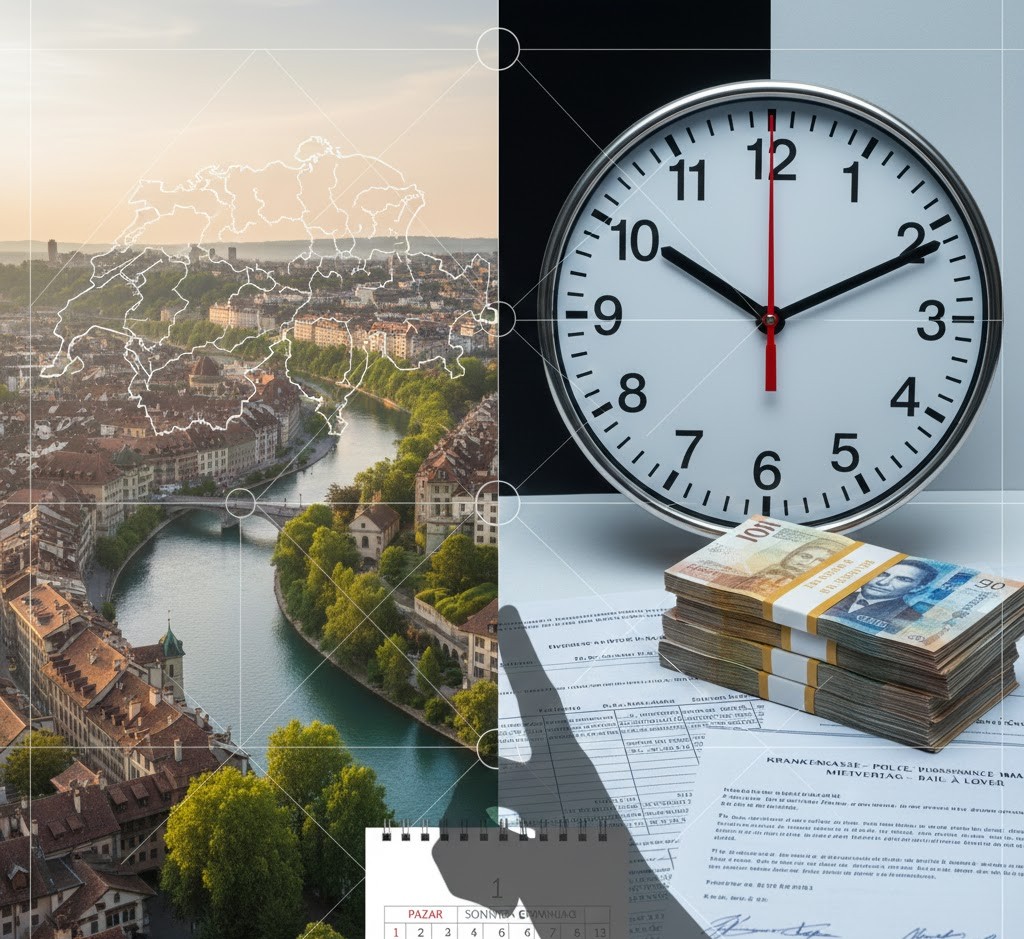
When I first arrived in Bern, I was astonished that the trains did not deviate a single second from their scheduled departure time. Walking with my children in a park on a Sunday morning, the near-absolute silence gave me the feeling that time had momentarily stopped. In the culture I came from, Sunday meant the buzz of neighbors, the sound of street vendors. Here, it was as if the entire city was holding its breath. This quietude initially felt alien and even emotionally cold to me. Yet, this observation was the first critical clue to understanding the soul of Switzerland: Invisible rules, punctuality, and order are not just a feature of life here, but its foundational backbone. What may seem at first glance to be just about chocolate and mountains is, after ten years of living here, revealed to be a complex box with many layers.
Switzerland Overview: A Cultural Mosaic
It’s easy to locate Switzerland on a map, but hard to grasp its spirit. Most people associate the country with high costs, banking, and Alpine views. However, for an immigrant who has lived in Bern for over 10 years, Switzerland is much more than these clichés; it is a laboratory where German, French, and Italian cultures merge in a delicate balance. Every canton has its own laws and even tax systems, making it a miniature continent. Whether you are coming for work or planning to settle down, understanding Switzerland means not only learning its rules but also deciphering the cultural mechanics behind this meticulous order. This comprehensive guide aims to reveal the general framework, history, economy, and unknowns of daily life through the eyes of a foreigner. As a reader, you will gain access not just to information, but to reliable testimony gained from living on the ground.
Geography and Regions: The Power of the 26 Cantons
It is insufficient to simply divide Switzerland into four language regions, because the real administrative power lies in the 26 Cantons, each functioning almost like an independent state. Living in Bern implies encountering completely different tax rates, school systems, and even bureaucratic procedures than living in Zurich. In my experience, even a simple change of residence can turn into a paper-based torture lasting hours, due to the varying document requirements across cantons.
- Language Regions: The main regions (German 63%, French 23%, Italian 8%, and Romansh 0.5%) determine not only the language but also the culinary and social habits.
- Cantonal Differences: Every canton has its own tax, education, and social welfare policies. This necessitates making serious financial calculations when moving from one region to another.
- Local Anecdote: Smaller cantons like Appenzell are often stricter in preserving their historical traditions than others. This demonstrates Switzerland’s belief in the strength of local governments rather than a central authority.
If you are curious about how these cantonal differences will affect your life, our article Switzerland’s 26 Cantons: Guide to Administration, Population, and Languages offers you a comprehensive view.
The Swiss System: Neutrality and Direct Democracy
It is impossible to grasp Switzerland’s current order without understanding its historical and political structure. The country is known for its neutrality policy, maintained since 1815. This neutrality is not merely a foreign policy decision; it has also created a culture of balance and consensus-seeking in social life.
- Neutral Structure: Neutrality has prevented the country from becoming a battlefield while simultaneously allowing it to host international organizations like the United Nations in centers such as Geneva.
- Referendum Culture: Switzerland is governed by a system of direct democracy; citizens are frequently called upon to vote on national, cantonal, or local issues. This means that even a worker has a say in everything from tax rates to new parks. This intense political participation reinforces the feeling that every resident is not just a “citizen,” but an active part of the system.
If you wish to delve deeper into Switzerland’s unique political structure, you can examine our content Direct Democracy: Why and How the Swiss People Vote on Everything.
Economy, Work Culture, and the Cost Reality
The Swiss economy is famous for offering some of the highest salaries in the world; however, this is balanced by high costs reflected in other aspects of life. As a chef in Bern, I learned that every single portion waste in the kitchen must be meticulously calculated. This discipline applies not only in the workplace but also to the entire national economy.
- Work Ethic and Punctuality: The foundation of the work culture is formed by punctuality, discipline, and keeping one’s word. Arriving on time for a meeting is not a gesture but a necessity.
- The Cost of Living Reality: High salaries can quickly be eroded by the price domination of large retail chains like Coop and Migros, exorbitant rent costs, high cantonal taxes, and compulsory health insurance premiums. This financial burden creates serious pressure, especially for immigrant families and low/mid-income earners who fall below the median salary. For a more comprehensive look, we have delved into these topics in our detailed guide Working and Living in Switzerland: Facts and Myths.
- The Manual Labor Reality: Regardless of how sound the financial order is, my spouse and I, as workers, often feel that basic manual labor does not always receive its full, deserved compensation within the high salary narrative. The work that forms the core of production and service sectors is sadly not valued as highly as the official average salary figures; many workers experience significant financial strain despite the high-income myth.
Swiss Daily Life: Rules, Prices, and Transport
Daily life in Switzerland conceals many micro-level cultural rules and practices behind the silence and order perceived from the outside.
- Groceries and Prices: Markets dominated by two retail giants (Coop and Migros) create constant cost pressure. The most practical ways for an immigrant family to reduce costs are to utilize international chains like Aldi and Lidl and discount stores like Denner, and to follow 25% or 50% discounts on products nearing their expiry date (Ablaufdatum). And of course, for visitors to Switzerland, budget optimization in major cities is crucial; you can check our Zurich guide for budget-friendly visiting strategies.
- Transport: Train punctuality is not a myth; it is a fact. The entire public transportation system functions like clockwork. This order takes the stress out of moving from one place to another, making it a natural part of daily life. For all tips on mobility, using the Swiss Travel Pass, and the complete explanation for transport culture and pass details in Switzerland, please refer here.
- Health and Insurance: Health insurance is mandatory, and premiums are quite high. This is one of the first major financial shocks for newcomers. However, despite the high cost, the system is committed to delivering high-quality service.
In our first weeks living in Bern, a neighbor knocked on our door on a Sunday because we were running the washing machine. Our astonishment was indescribable. This taught me painfully that Sunday silence and order here are not just a rule, but the fundamental pillars of social harmony and neighborhood culture. This incident exemplifies how seriously daily rules are taken.
Frequently Asked Questions (FAQ)
- Is Switzerland expensive? Yes, it is expensive by international standards. However, salaries generally balance these costs; the main challenges are high rents and health insurance premiums.
- Which language is most important? That depends on your canton of residence. In Bern (German canton), German is vital. However, generally speaking, learning one of the languages reflecting the country’s cultural identity is the true key to integration. You can read about the step-by-step integration process in our dedicated article.
- How are immigrants treated? The approach is generally respectful but distant. Unfortunately, due to the unfair stigma of social welfare misuse placed on immigrants, one can sometimes encounter a wall of suspicion.
Conclusion
Switzerland is a unique country, known as much for its mountains and pristine lakes as for its complex bureaucracy and meticulously maintained cultural rules. As a ten-year immigrant, my main goal in this blog is to explain the country through an immigrant’s eyes, showing how those living in Switzerland evaluate this system and manage their daily struggles. The order the country offers, the peace it provides for my children’s integration journey, and the general functioning of the system are commendable. Yet, the reality that workers do not receive their fully deserved compensation and the walls of bureaucracy are undeniable. This guide aimed to show you not only the “official” side of Switzerland but also to be a companion revealing the real difficulties and beauties of life here. As you decode this order and crack the language barrier, you will better understand why this is one of the most livable places in the world.
