ZURICH TRAVEL AND BUDGET OPTIMIZATION GUIDE: THE CHEAPEST VISIT STRATEGIES
focusAnaliz: The First Morning in Zurich, the Heart of Finance: An Immigrant’s Ordeal After Missing a Train
Zurich. It is not only Switzerland’s financial and technology heart but also a global symbol of quality of life and beauty. It is one of the cities that impressed me when I saw it. The year I first set foot in Zurich was around 2010; I hadn’t settled in Switzerland yet and was living in Italy. I missed my connecting train while going to visit family in Germany and had to stay overnight until the morning. Honestly, this left a poor first impression, which stemmed from my psychological state at the time. However, during my later visits for leisure, I saw the city better and understood how beautiful it truly was. It is intertwined with nature, and its center is particularly enchanting. When I break my chains in the future, I will detail every tiny stone. You can examine the city’s general position and living reality in Switzerland more comprehensively in our article Switzerland: The Ultimate Guide. As someone who has experienced the cost of living in Zurich as an immigrant, I know very well that this city does not joke about its expenses. I will outline a roadmap for optimizing your budget while experiencing the city’s historical and cultural beauties.
For detailed information on the city’s structure, demographics, and Zurich’s role, you can read our article [ZURICH INTRODUCTION]
The Secret of Transport and Accommodation: Should I Buy the Zurich Card?
The Zürich Card is the most fundamental budget tool for practical explorers in Zurich. The card offers unlimited use of public transportation in the greater Zurich area (including Zone 110) and significantly eases access to various parts of the city.
- Pricing Strategy: The 24-hour card for adults costs 29 CHF, while the 72-hour card is 56 CHF. Opting for the 72-hour card reduces the daily cost to approximately 18.67 CHF, offering a significantly more economical solution than buying individual tickets.
- Strategic Importance: Since budget-friendly accommodation options are often located slightly outside the city center, this card fixes the mandatory public transport cost, preserving the freedom to save on accommodation.
The Best Places to Visit and Museums in Zurich
Zurich’s attractions consist not only of the modern face of the international financial center but also offer a rich spectrum of historical, artistic, and accessible nature experiences.
1. Historic Center and Iconic Structures
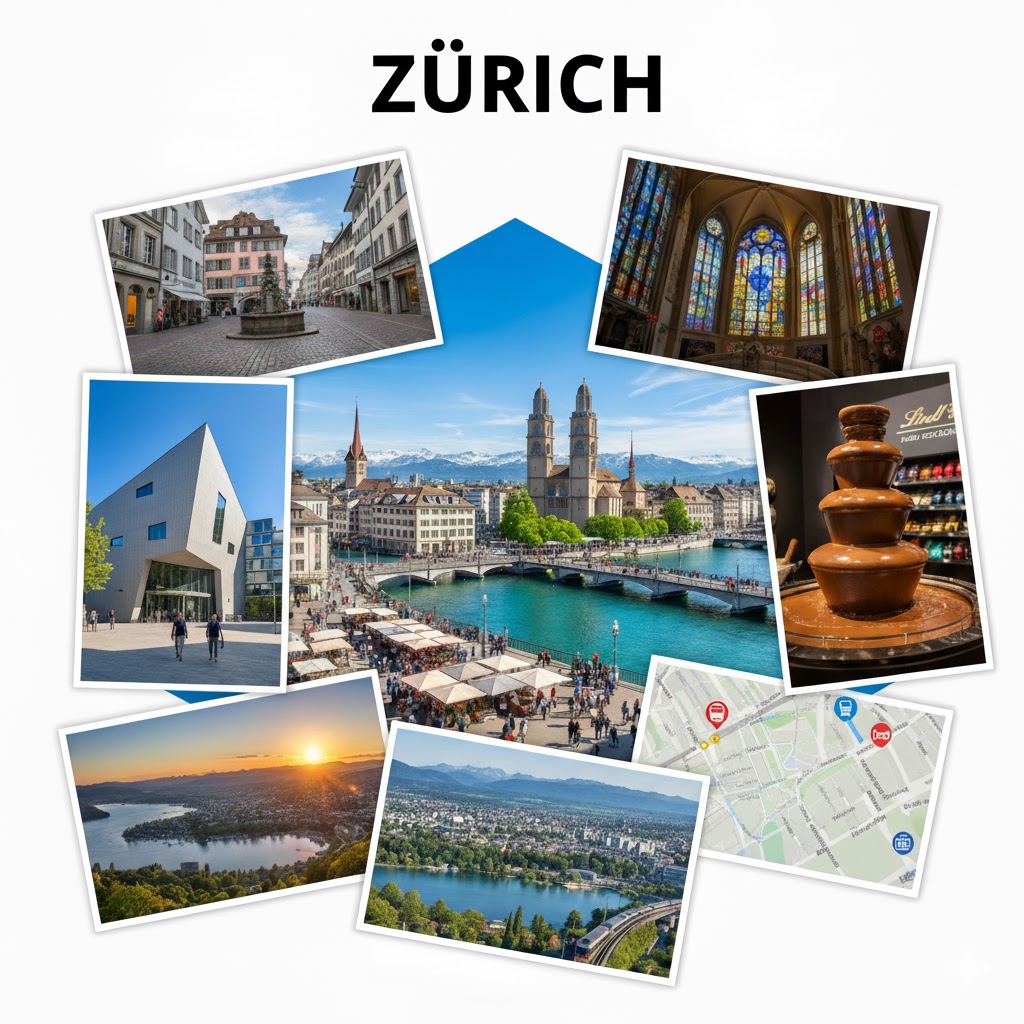
- Altstadt (Old Town): With its cobblestone streets and historic buildings, the Altstadt forms the historical heart of Zurich and must be explored on foot. This area combines impressive examples of Gothic architecture with modern art galleries.
- Lindenhof: This hill in the heart of the historic city center offers spectacular views of the Limmat River and the Old Town. It has been an important meeting point since the city’s founding.
- Grossmünster Church: This iconic Romanesque cathedral is one of the most important structures defining Zurich’s skyline.
- Fraumünster Church: An impressive example of Gothic architecture, particularly famous for the signature stained-glass windows by the artist Marc Chagall. A must-see for art lovers.
- Bahnhofstrasse: One of the world’s most famous and luxurious shopping streets. It is home to global fashion brands and jewelry stores.
2. Culture, Art, and Thematic Experiences
- Kunsthaus Zürich (Zurich Art Museum): Operating since 1910, this museum is one of Switzerland’s most important art museums. It houses an extensive collection of Swiss art from the Middle Ages to the present day. Zürich Card holders may receive discounts here.
- Lindt Home of Chocolate (Chocolate Museum): An important thematic attraction for chocolate enthusiasts. Located in Kilchberg, this museum offers the opportunity to experience the history and making of chocolate.
3. Nature, Scenery, and Day Trips
- Uetliberg Mountain Peak: The mountain overlooking Zurich offers a perfect view of the city and its surroundings. Access to the summit is provided by a train journey, and the Zürich Card eliminates the cost of the train ticket.
- Lake Zurich (Zürichsee): The lake in the middle of the city is a major center for swimming, boat tours, and walking during the summer months. Bürkliplatz square is a resting area with lake views, and the Saturday morning open-air market is ideal for mingling with locals.
- Day Trips: Zurich’s central location facilitates day trips. Travelers can explore areas like Heidiland and Liechtenstein or alpine regions such as Grindelwald and Interlaken from Zurich.
IV. Zurich Accommodation Prices: Where Can I Find the Cheapest Hotels?
The accommodation strategy in Zurich must be based on finding the best price-performance ratio against the high Swiss Franc.
Zurich Accommodation Options: Comparative Budget Guide
Accommodation Type | Avg. Price (CHF/Night) | Cheapest Season | Cheapest Day | Main Budget Advantage |
|---|---|---|---|---|
Hostel Dorm Bed (Ultra-Budget) | 20 – 45 CHF | Always | Always | Absolute price lowest cost. |
Hostel Private Room/Guesthouse | 105 – 140 CHF | Winter (February/December) | Wednesday | Comfort of a dorm bed/Private space. |
3-Star Hotel (Mid-Range) | 140 CHF Avg. (110–215 CHF) | February (~110 CHF) | Wednesday | Favorable price outside the business travel period. |
Serviced Apartment (HITrental) | 105 CHF+ | All Year | Discount for weekly rent | Opportunity to save on food costs with kitchen access. |
Budget-Oriented Accommodation Addresses and Links
Segment | Property Name | Address (80XX Zurich) | Starting Price (CHF) | Associated Link (Representative Booking Page) |
|---|---|---|---|---|
Ultra-Budget (Center) | Oldtown Hostel Otter | Muhlegasse 13, 8001 Zurich | 45 CHF (Dorm) | |
Ultra-Budget (Outskirts) | Zurich Youth Hostel | Mutschellenstrasse 114, 8038 Zurich | 48 – 53 CHF | |
Smart Budget Hotel | MEININGER Hotel Zürich Greencity | Brandschenkestrasse 25, 8002 Zurich | 25 CHF+ (Private Room/Dorm) | |
Smart Mid-Range (Apartment) | HITrental City-Apartments | Central Station Area | 105 CHF+ | |
Luxury (Reference) | The Dolder Grand | Kurhausstrasse 65, 8032 Zurich | 540 CHF+ (Low Season) |
V. When and How Should I Visit Zurich? (Final Tips)
Even though one’s mind might be taken by the beauty of Bern, when the issue is spending a night or two here, we must remain grounded. As an immigrant dealing with the low wage reality of Switzerland, I know this country shows no mercy to tourists either. We detailed the true face of salaries in this country in our article Switzerland’s Minimum Wage and Average Salary: Facts and Illusions. Here are the accommodation and average expense estimates from the perspective of an immigrant who takes the budget seriously:
Zurich is known worldwide as one of the cities with the highest cost of living. This financial reality makes visiting the city not just a trip, but a serious task that requires meticulous strategic planning for cost-conscious travelers. As an immigrant who fought the battle for survival on a low wage in this city, I know that the Zurich accommodation market is crazy due to seasonality and especially corporate demand seen on Thursdays and in May. Therefore, flexibility should be your biggest budgeting tool here. If you truly want to make an affordable visit, you must establish a strategy that immediately controls fixed expenses (transportation, museums). This ensures that you can quickly access key spots like Altstadt or Uetliberg while staying in more affordable areas, thus protecting your budget.
- Summary for Maximum Efficiency: Travelers staying three days or longer should purchase the 72-hour Zürich Card. The trip should target the cheapest periods, such as February or December. Weekday planning (especially stays including a Wednesday) significantly reduces costs, while weekends outside the corporate holiday period offer the best deals.
- Cost Synergy: The kitchen facility offered by serviced apartments can completely eliminate the cost of daily dining out. This provides a synergistic optimization for both the accommodation and food budget. The itinerary should be balanced by prioritizing free cultural exploration points.