Sustainable Tourism: How Switzerland Travels in Harmony with Nature
focusAnalysis: Green Infrastructure Foundation, Environmental Awareness, and Immense Demand Despite High Cost
Switzerland has positioned sustainable tourism not merely as an environmental necessity but as the cornerstone of national competitiveness and long-term economic resilience. The country’s strategy focuses on preserving natural treasures while promising visitors a holistic experience that offers “more awareness, depth, and enjoyment.” Since settling in Switzerland, I had never viewed the situation through a tourist’s lens; but I was surprised that the tourism infrastructure is so immense and the demand so high, despite such high costs.
The key success factor of this model is that environmental protection has become a consciousness gained through education—more a societal reflex than an effort.
✅ Quick Summary Table
The key success factors and outcomes of Switzerland’s sustainability model:
Strategic Pillar | Key Implementation | Outcome / Economic Output |
|---|---|---|
Green Mobility | SBB Trains (100% Renewable Energy) | Made low-carbon travel the most attractive option. |
Meta-Governance | Swisstainable Program (External Audits) | Standardizes sustainability efforts, increases trust. |
Local Preservation | Car-Free Villages (Zermatt, Mürren) | Promotes high-quality, slow travel. |
Economic Return | Public Investment Return | 1 CHF public investment yields 6 CHF regional economic benefit. |
🎯 Main Definition:
Switzerland’s sustainable tourism model is a globally pioneering, integrated approach combining environmental, social, and economic dimensions through the national Swisstainable program, which positions environmental awareness as an enrichment of the experience, supported by the SBB’s highly efficient, 100% renewable energy infrastructure.
✅ Key Information:
Switzerland’s commitment to sustainability is the natural outcome of decades of public policy and infrastructure investment.
The Quality Framework Behind the Cost
High transport and living costs are a direct reflection of the quality of infrastructure and services. The fact that high costs are invested back into service quality maintains the system’s power and is the primary reason for continuous tourism demand. However, as a resident of Bern, I still find this high cost challenging.
Europe’s Water Tower and Legal Framework
The fact that the country holds about 6% of the continent’s fresh water reserves demonstrates that environmental management is a national necessity, not just marketing. Furthermore, the Federal Council has decided that the country must achieve Net-Zero emissions by 2050. This legal framework mandates structural transformation for all sectors, including tourism.

✅ Detailed Guide:
🚦 Green Mobility Backbone: SBB’s Unrivaled Success
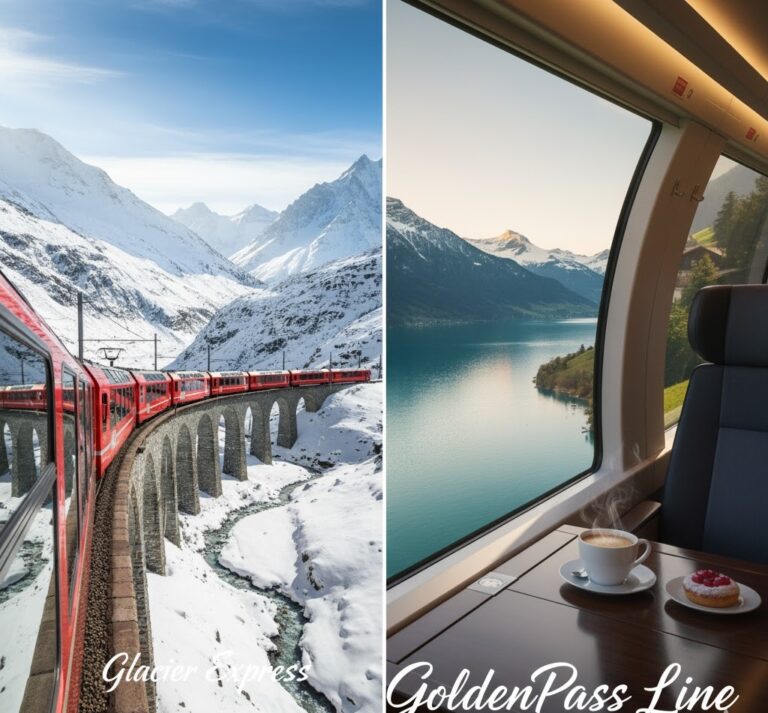
Switzerland’s sustainable tourism model is entirely built upon a highly efficient and nearly carbon-free public transport infrastructure.
Operating on 100% Renewable Energy
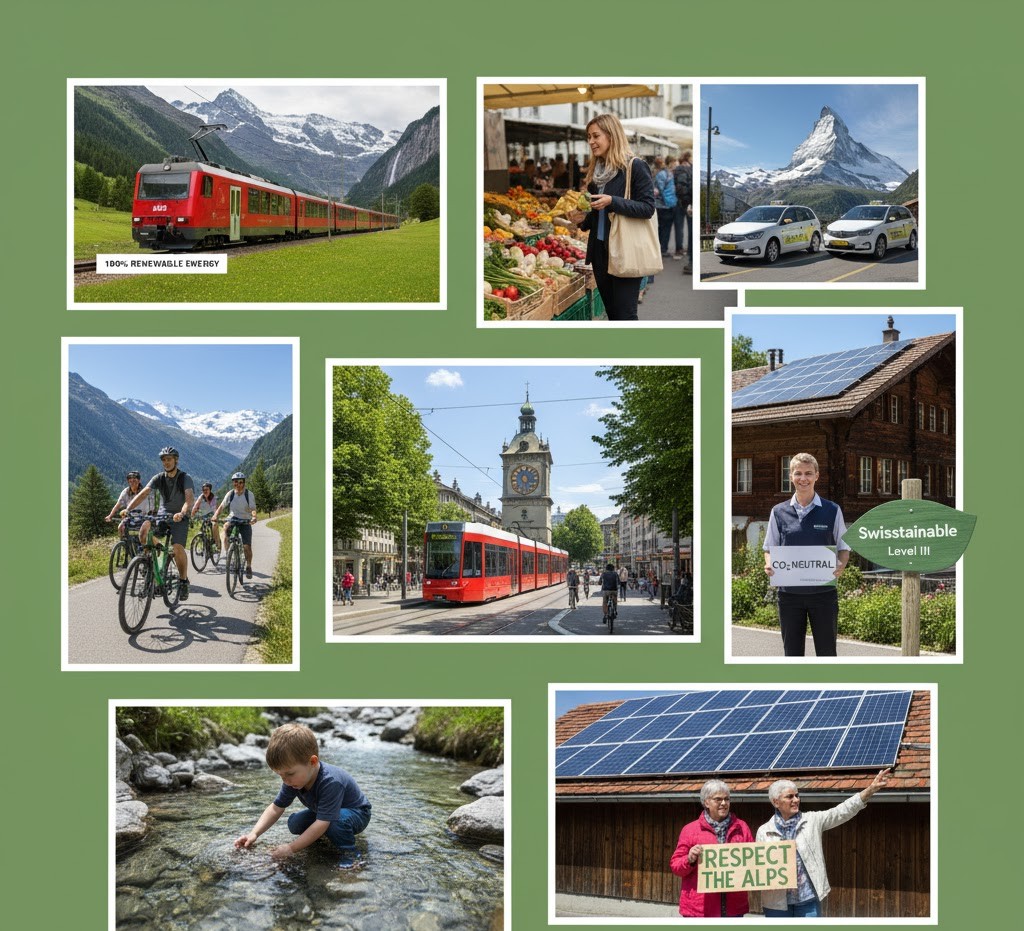
The Swiss Federal Railways (SBB) trains operate entirely on electricity generated from 100% renewable sources, including hydropower from domestic power plants. This is the most striking and surprising fact for travelers. SBB uses only 5% of the total energy consumption of road transport while covering 18% of the country’s passenger traffic and 38% of its freight traffic. The punctuality of this transport is unparalleled and stems from the priority given to environmental protection.
Swiss Travel Pass and Integrated Travel
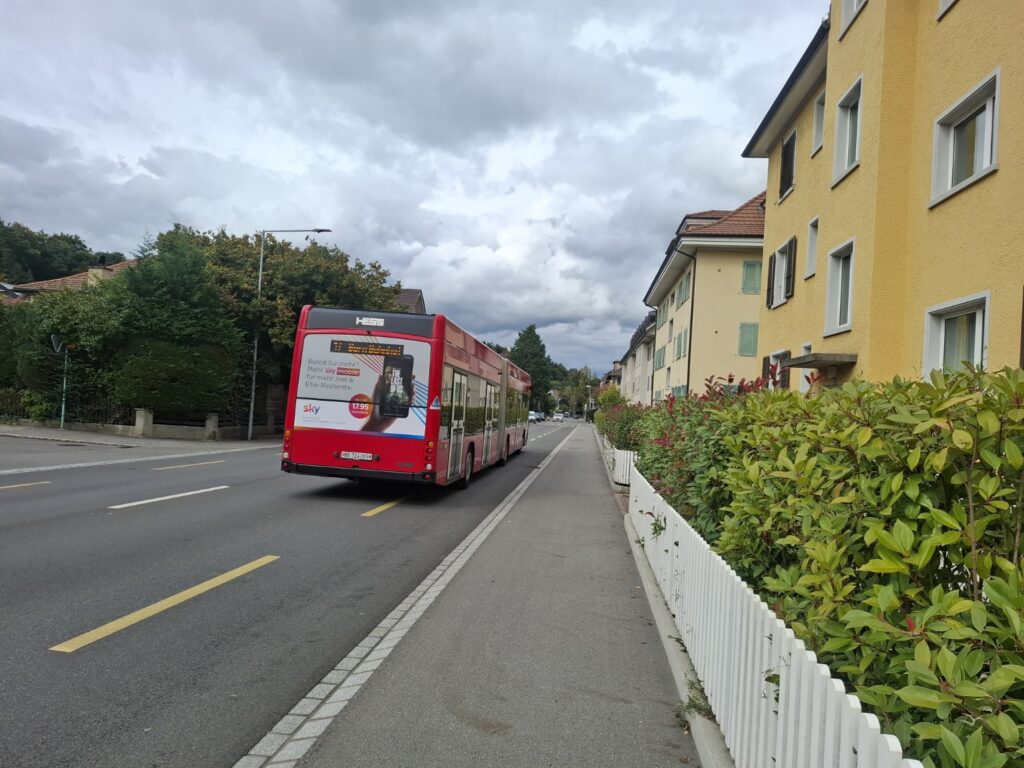
The technical success of the infrastructure is supported by integrated systems like the Swiss Travel Pass, which combines train, bus, boat, and urban transport on a single ticket. This makes low-carbon travel the most logistically attractive option. To learn all the details of Switzerland’s public transport culture, you can find out more by reading our article [Public Transportation in Switzerland: Swiss Travel Pass and the Culture of Mobility].
🔗 Swisstainable Program: Transparency and Reliability
Swisstainable is a national umbrella brand established by Switzerland Tourism to standardize sustainability efforts. To get detailed information about the program and examine the commitment levels, visit the official website of Swisstainable.
- Audit and Trust: The meta-governance system recognizes internationally proven certifications like Green Globe and ibex fairstay. Reaching the highest level, Level III (Leading), requires businesses to hold a third-party audited certification covering all dimensions of sustainability, requiring compliance with international standards like ISO 14001.
⛰️ Car-Free Village Models and Local Value Creation
Keeping popular Alpine villages like Zermatt, Mürren, and Wengen closed to personal vehicle traffic (Car-Free) is the most tangible evidence of the Swiss sustainable tourism strategy.
- Multimodal Transitions: The system requires tourists to leave their vehicles at transfer hubs (like Täsch) and utilize mandatory multimodal transitions (train, cable car, electric taxi). This conscious strategy offers a sustainable alternative to mass tourism. To learn more about the charm of these unique Swiss villages, you can find out more by reading our article [Switzerland’s Most Beautiful Mountain Villages: Lauterbrunnen, Zermatt and Grindelwald].
- Integrated Energy Infrastructure: The Car-Free policy covers not only transport but also the energy needs of settlements. Regional heating networks in places like Saas-Fee and carbon-neutral development projects like Andermatt operate on 100% renewable energy.
✅ Experience / Recommendation Section:
focusAnalysis: Environmental Respect Gained Through Education and the Key to Integration
As a pizzaiolo living in Bern, the point I learned to appreciate most after settling in the country is that environmental protection starts with education and has become an instinctive movement rather than an effort. This instinctive respect is closely related to Switzerland’s social order and cultural norms.
- Bridge from Sustainability to Integration: This environmental ethic shapes not only tourism policies but also social cohesion. Swiss parks commit to accessible tourism by guaranteeing accessibility for everyone, including people with disabilities, thereby targeting social inclusivity. Therefore, my key sentence for immigrants and newcomers will always remain constant: To adapt to this country’s philosophy and embrace the local culture, the primary key to integration must be prioritizing respect for nature and the effort to learn the language.
- Rules and Societal Reflex: The consciousness of protecting the environment and order forms the basis of the Swiss rules of life. To examine in more detail how these rules are reflected in social life, you can find out more by reading our article [Swiss Rules of Life: Order, Silence, and Adaptation Guide].
✅ Table of Economic and Social Contribution to Sustainability
The following table summarizes the impact of the sustainability strategy on economic efficiency and social benefits:
Dimension | Key Indicator | Data / Target | Policy Tool |
|---|---|---|---|
Economic Contribution | Share in GDP and Employment | Approx. 3% of GDP, 150,000+ full-time jobs | Federal Tourism Strategy |
Regional Value Creation | Return on Public Investment | 1 CHF public investment yields 6 CHF economic benefit | New Regional Policy (NRP) |
Local Identity | Product and Service Quality | Swiss Parks Product Label | Marking and Certification |
Social Inclusivity | Access and Equal Opportunity | Accessible tourism for people with disabilities | Awareness and Education |
✅ Conclusion:
Switzerland’s model of travel in harmony with nature is built upon an integrated system that systematically combines the environmental, economic, and social dimensions of sustainability. The success of this model stems from the coordinated work of three main pillars: an unrivaled green infrastructure foundation like the SBB’s 100% renewable energy operation, a reliable meta-governance platform like Swisstainable, and local value creation strategies that yield a 6 CHF regional benefit per 1 CHF invested. Switzerland’s lesson is that sustainability should be marketed not as a restriction, but as a deeper and more authentic cultural experience.