Switzerland’s Most Beautiful Waterfalls: A Wet Route from Rhine to Lauterbrunnen & Budget Guide
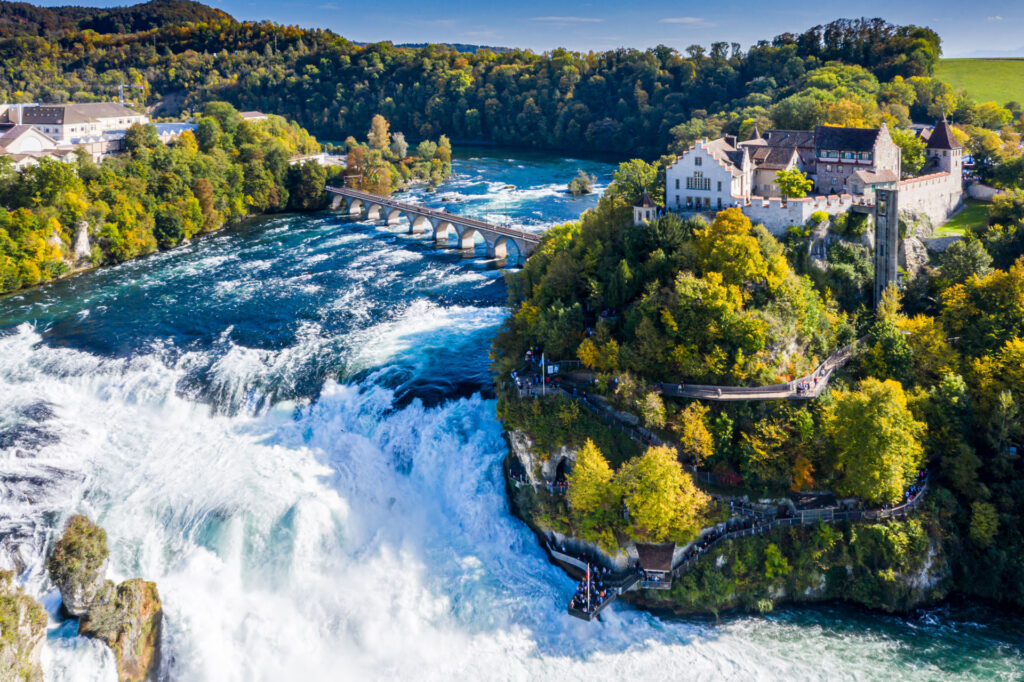
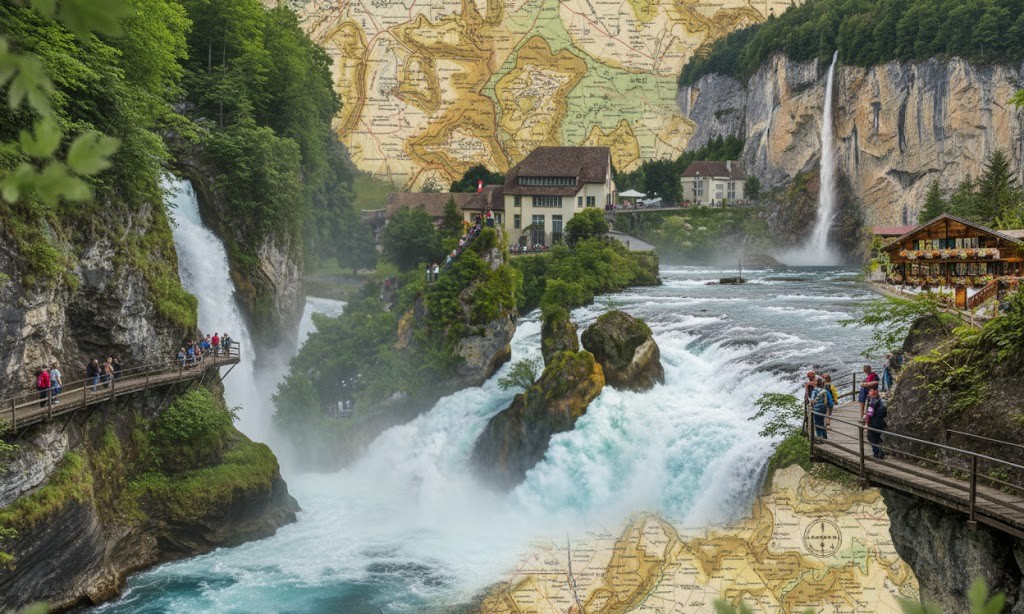
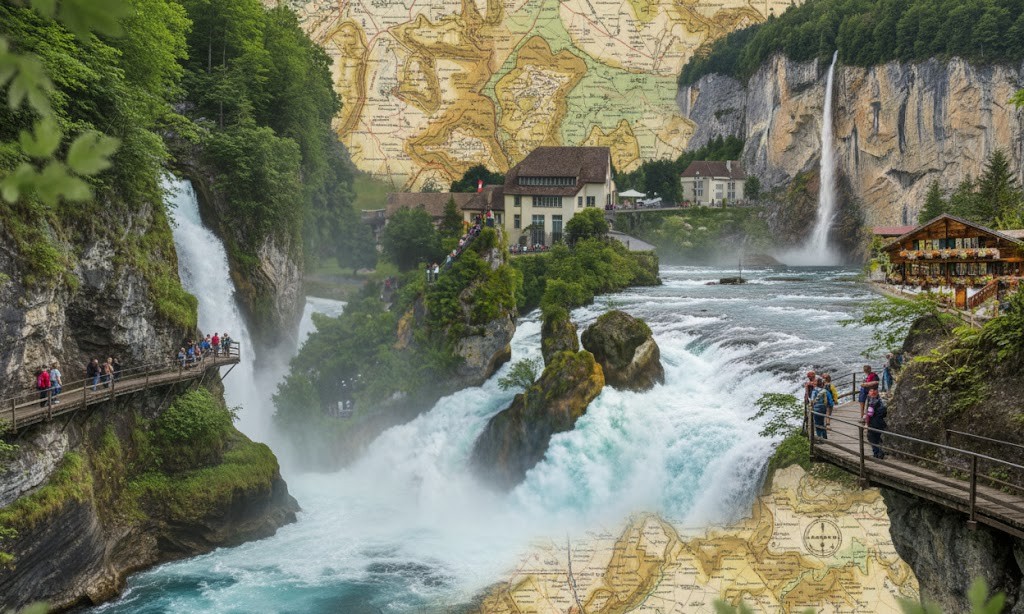
I will never forget the day I visited the Rhine Falls in Schaffhausen during my first year in Switzerland. The rumble I heard from the parking lot sounded like a freight train running underground. When I walked down to the riverbank and watched that massive body of water (600,000 liters per second!) crashing against the rocks, I had to scream at my friend just to be heard: “This isn’t just water, this is pure power!”
Switzerland isn’t just the land of chocolate and watches; it is also the “Water Castle of Europe.” Here, glacial meltwater from the Alps transforms into elegant “bridal veils” tumbling down thousands of meters or massive “water monsters” that make entire valleys tremble.
If you want to feel the force of nature, get a little wet, and take fantastic photos on your Swiss trip, you are in the right place. In this guide, I’ll show you how to avoid tourist traps and get the best views for the best price. Put on your raincoat, let’s go!
1. The Giant of the North: Rhine Falls (Rheinfall) 🌊
This isn’t just a waterfall; it’s like an ocean overflowing. It holds the undisputed title of Europe’s largest waterfall (in terms of volume and width).
- Why Go? Watching the water isn’t enough; you have to feel it.
- Best Time: May and June (snowmelt makes the water volume peak).
How to Visit? (Budget-Friendly Tactics)
The Rhine Falls has two banks, and the experience is completely different:
- The North Bank (Free & Panoramic): The Neuhausen side. Entrance is free! You can walk along the river promenade and take great wide-angle photos.
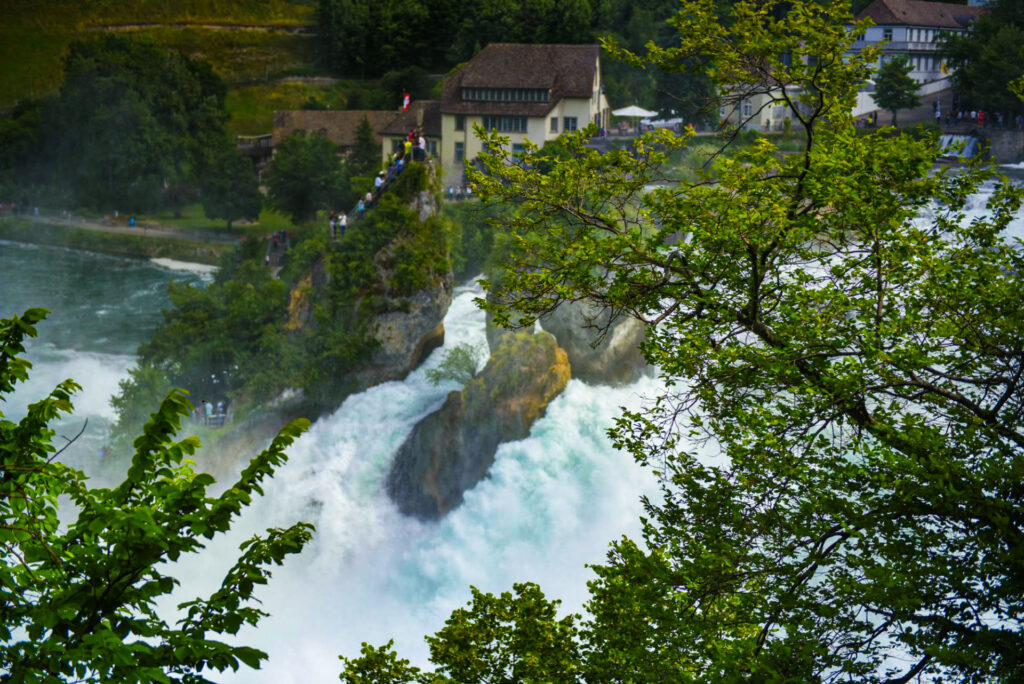
- The South Bank (Paid & Adrenaline): The Laufen Castle (Schloss Laufen) side. There is an entrance fee here (Adults ~5 CHF), but it is worth it. Why? Because the “Känzeli” platform hovers directly over the falls. Feeling the vibration under your feet is priceless.
💡 Tip from the “Expat Dad”: If you want to take a boat tour, the Yellow Line (Line 1) is the most popular because it takes you to the rock in the middle. But if you are on a tight budget, the Red Line (Line 2) just ferries you across—you still feel the power of the water, and it’s much cheaper.
To better understand the general geographical structure of the country, check out our article: [Everything You Need to Know About Switzerland — The Comprehensive Guide].
2. Lauterbrunnen Valley: The Dream of 72 Waterfalls
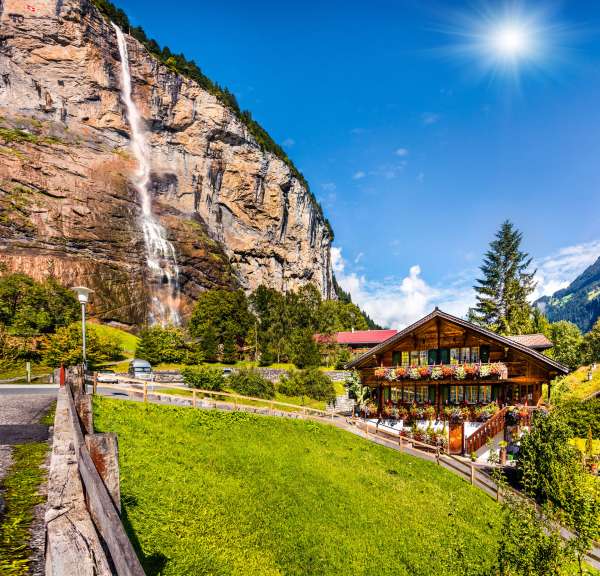
This is the place that reportedly inspired J.R.R. Tolkien’s “Rivendell” in The Lord of the Rings. Waterfalls plunging from 1,000-meter vertical walls turn this valley into a fairy-tale landscape.
Staubbach Falls: The Village Icon
You see this thin, towering waterfall as soon as you enter the village. It falls from a height of 297 meters, and the water often turns into mist before it hits the ground (hence the name Staub, meaning dust).
- Cost: Free! In summer, you can hike up through a gallery to stand behind the waterfall.
Trümmelbach Falls: The Monster Inside the Mountain
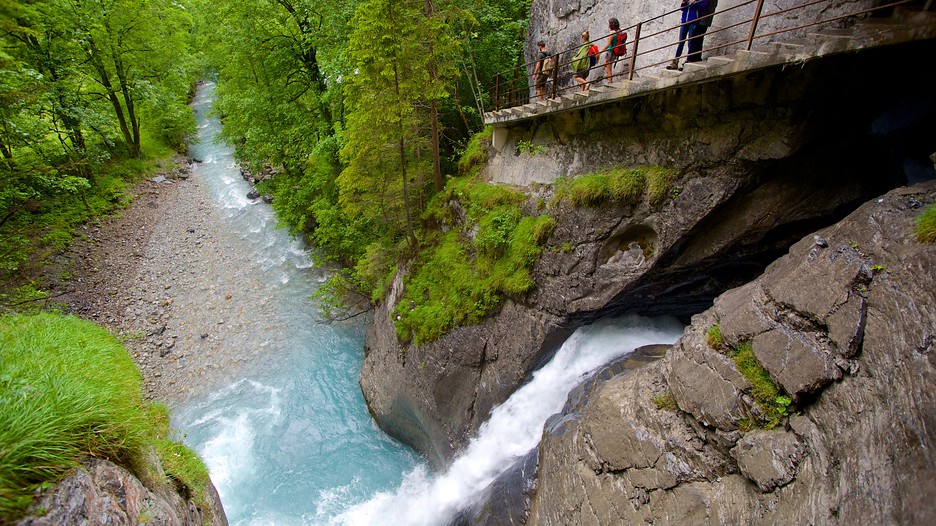
As elegant as Staubbach is, Trümmelbach is wild. This waterfall is not outside, but inside the mountain! The meltwater from the Jungfrau glaciers carves through the heart of the rock here.
- The Experience: You take a tunnel lift inside the mountain. It is dim, loud, and wet. You can literally see how the water corkscrews through the rock.
- Warning: Children under 4 are not allowed (due to the noise).
- Entrance: ~14-16 CHF (Swiss Travel Pass is not valid).
For more on the villages in this region, read: [Switzerland’s Most Beautiful Mountain Villages: Lauterbrunnen, Zermatt, and Grindelwald].
3. Hidden Gems & Literature: Giessbach and Reichenbach
If you want to escape the crowds and find some history and peace, Lake Brienz is your destination.
- Giessbach Falls: It tumbles into the lake in 14 steps. The best feature: You can walk behind the waterfall. The view from the terrace of the historic Grand Hotel Giessbach (free to visit) is food for the soul.
- Reichenbach Falls: Sherlock Holmes fans know this place well. This is where the famous detective fell to his “death” while fighting Professor Moriarty. A nostalgic funicular takes you up.
4. Swiss Waterfalls: Budget and Logistics Table
I’ve put together this table to help you plan your trip while protecting your wallet.
Waterfall | Region | Entrance Fee (2025 Est.) | Best Transport | Kid-Friendly? |
|---|---|---|---|---|
Rhine Falls | Zurich / Schaffhausen | North: Free / South: ~5 CHF | Train (Neuhausen Rheinfall) | Yes (North Bank) |
Staubbach | Lauterbrunnen | Free | Train + Walk | Yes |
Trümmelbach | Lauterbrunnen | ~15 CHF (No Swiss Pass) | Bus | No (Under 4 banned) |
Giessbach | Brienz | Free (Funicular ~14 CHF) | Boat (Most scenic) | Yes |
Foroglio | Ticino | Free | Bus + Walk | Yes |
Seerenbach | St. Gallen | Free | Car + Hike (Challenging) | Medium (No strollers) |
To manage your budget and get an idea of living costs in Switzerland, our guide will help you: [Life in Switzerland: The Realistic and Comprehensive Daily Life Guide].
5. The Pearl of the South: Foroglio and Ticino Waterfalls
When you cross to the southern side of the Alps, into the Italian-speaking canton of Ticino, the landscape changes. Granite stone houses (Rustici) and roaring waterfalls define the scenery.
Foroglio Waterfall (Val Bavona):
This place looks like a movie set but with a Mediterranean flair. In the stone village at the foot of the 110-meter waterfall, there is no electricity grid (only solar power). Eating Polenta at the restaurant facing the falls is a Ticino classic.
- Getting There: Take the bus from Locarno. The road is winding, but the view is worth it.
Want to explore this region in more detail? Read our article: [The Dual Identity of Ticino: Italian Soul, Swiss Order, and the Lugano & Locarno Guide].
Conclusion: Which Waterfall is For You?
- “I just want to take a photo and drink coffee”: Then head to Staubbach or Giessbach.
- “I want adrenaline and to feel the power of the water”: Choose Rhine Falls (Känzeli platform) or Trümmelbach.
- “I am looking for silence and a hike”: Then Foroglio or Seerenbach is ideal.
Remember, Swiss waterfalls roar in the spring (May-June) and calm down by late summer. Plan accordingly and definitely pack a raincoat. Safe travels!