Zurich: Historical Origins, High Quality of Life, and Calm Beauty Through an Immigrant’s Eyes
The Origin and History of Zurich’s Name
The name Zurich is derived from the Celtic word “Turicum.” This name originates from the customs post established during the Roman Empire, in 15 BC, where the Limmat River flows out of Lake Zurich. In my opinion, this historical role is a very important detail that points to the origins of the city’s character as a trade and finance center.
focusAnaliz: World Standard, Respect for Nature, and the Tranquility Brought by High Cost
Zurich is Switzerland’s largest city and economic engine. The city’s dynamism and its global effectiveness make it Switzerland’s most important showcase. The fact that it frequently ranks high on the lists of the world’s most livable cities is proof of the quality of life offered in return for the high cost.
I would say it is one of the most beautiful cities I have ever seen. It is clearly a city above world standards, and generally a place where both the people and the administration approach nature and its structure with respect. This situation is reflected in our ** ultimate guide to living and working in Switzerland, which offers an overview of all topics.**
Details on Zurich’s Administrative Structure: If you want more detailed information about the administrative structure, population, and languages of Switzerland’s 26 cantons, you can consult our article Switzerland’s 26 Cantons: Guide To Administration, Population, And Languages.
Canton Zurich Basic Demographic Data (Approximate)
Feature | Data | Description |
|---|---|---|
Cantonal Population | ~1.57 million | The most populous canton in Switzerland. |
City Population | ~440 thousand | The dynamic center of the city. |
Official Language | German | The Zurich German dialect (Züritüütsch) is used in daily life. |
Foreign Population Rate | ~32% (in the city) | High rate of international migration. |
A. History, Panorama, and Iconic Structures
There are many points in Zurich that define the city’s skyline and tell its history:
- Lindenhof: Located in the heart of the historic city center, this hill offers magnificent views of the Limmat River and the Old Town. In my personal opinion, you should take your first look at the city from here.
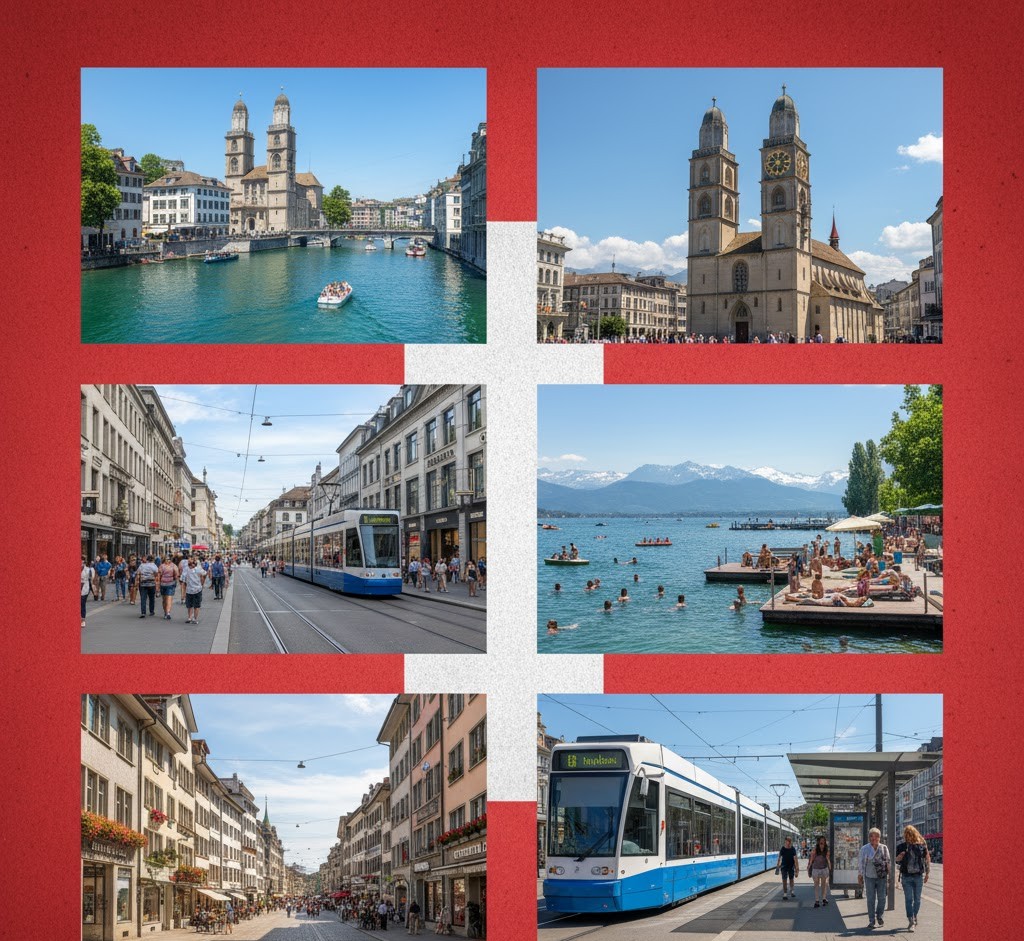
- Grossmünster and Fraumünster Churches: These iconic Protestant churches reflect the city’s historical role in the Reformation movement. Climbing the Grossmünster tower is one of the best ways for budget-conscious travelers to enjoy the city view.
- Bahnhofstrasse: It is one of the world’s most famous and luxurious shopping streets. It hosts global fashion brands and jewelry stores. I am of the opinion that this is the place where income inequality and financial power in Zurich are most visibly manifested.
- Uetliberg: The city’s local mountain. This nature escape, easily accessible from Zurich, offers a bird’s-eye view of the entire city.
B. Finance, Luxury, and Culinary Culture
Zurich’s tourist appeal is not limited to history; it is rather closely interwoven with luxury and nature:
Lindt Home of Chocolate: The Lindt Home of Chocolate Museum is a popular stop for chocolate lovers and the center of the cultural delicacies we examined in Swiss Chocolate and Cheese Culture: From the Peaks of the Mysterious Alps to a Global Flavor Empire
Lake Zurich (Zürichsee) and the Limmat River: The lake, situated in the middle of the city, is an important center for swimming, boat tours, and walking in the summer months. Quaibrücke and other bridges offer unique vantage points that combine lake and mountain views.
Transportation and Life Balance: Time and Cost Management in Zurich
Zurich possesses one of Switzerland’s best public transportation systems (ZVV) in terms of efficiency and organization.
The Illusion of Transportation and the Real Cost: Trams, buses, and trains provide punctual and rapid access to every point within the city and the canton. In my opinion, the convenience this system offers is commendable. However, there is an illusion here: Although the public transportation system is expensive, owning a vehicle in Zurich is both a waste of time and costs far more than a ZVV card. Considering the difficulty of finding parking as well as insurance, tax, and fuel costs, public transport is the most logical and economical way to navigate the city. According to my observations, owning a vehicle for city travel is unnecessary and significantly costly. We covered this cost balance in detail in our ** Switzerland’s Public Transport: Swiss Travel Pass and the Culture of Mobility article.
The Balance of Life: The Price Paid: Although Zurich offers high salaries and career opportunities, housing costs and the pace of life are higher compared to quieter and more humane cities like Bern. In my personal opinion, this situation is the price paid for the amenities Zurich offers. This is fundamentally a topic we examined in detail in our article on ** Cost of Living in Zurich: The Heart of Global Finance and Quality of Life.