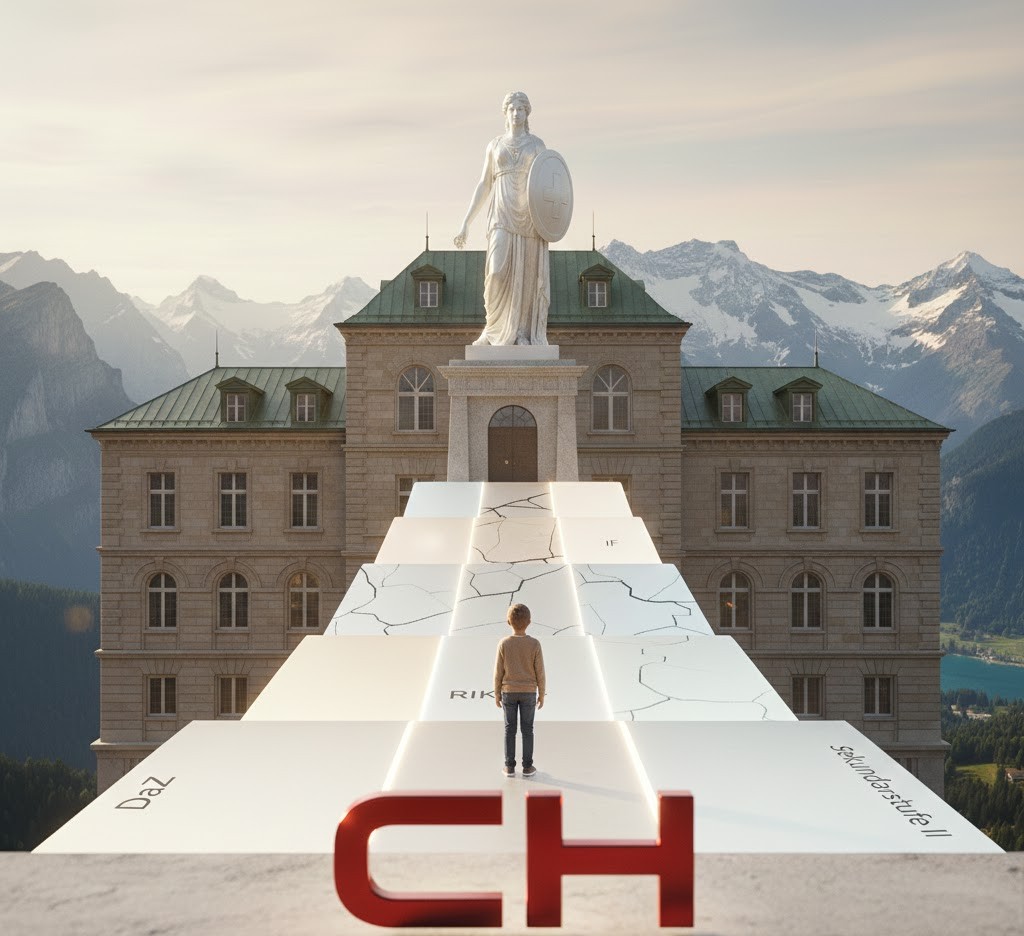
Guide to Education for Immigrant Children (Canton of Bern Model): Integration, DaZ Courses, and Structural Adaptation

🧭 Bern Canton Education System: Hidden Hurdles and Practical Guidance
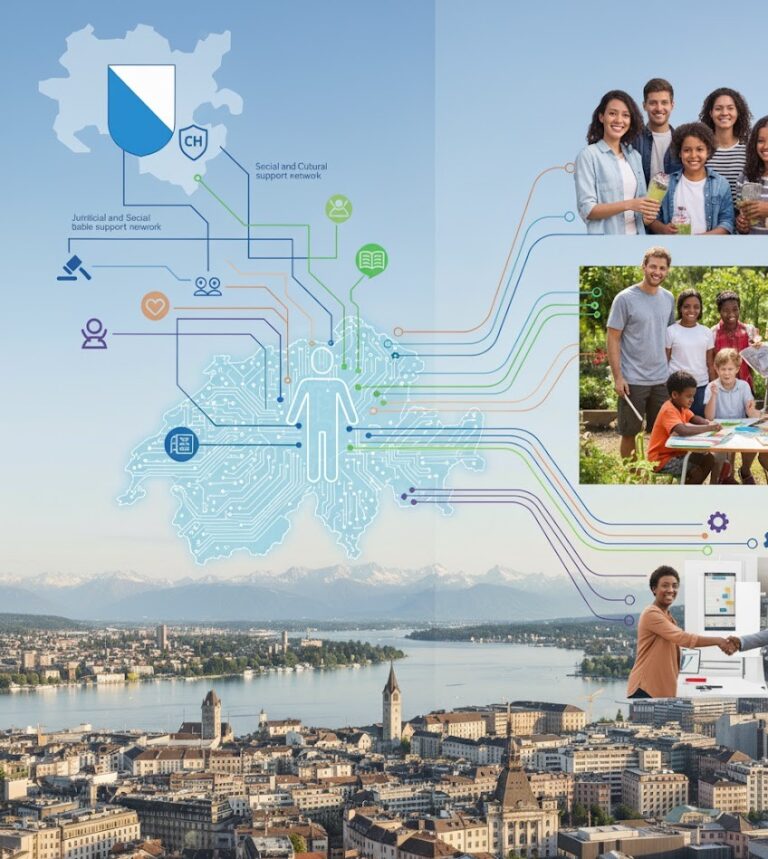
focusAnalysis: The system in the Canton of Bern for ensuring immigrant children’s participation in education looks excellent on paper: structural supports like DaZ, RIK+, and IF have transformed integration from a temporary project into a permanent system investment. However, as I experienced firsthand in Bern, there is such a thing as a “postal code lottery” in Switzerland. The reason for this lies in the autonomy of the 26 cantons, which are responsible for organizing and financing education.
This is the hidden face I criticize: while the state offers great educational incentives on one hand, it simultaneously complicates immigrants’ lives with a rigid and scrutinizing attitude in bureaucratic and social services. Although the cantonal framework is inclusive, the structural difficulties in the transition to Secondary Level II—which hold back the children of workers in the low-wage sector due to a lack of cultural and financial capital—represent a fundamental problem that needs a solution. Our goal is to provide families with a clear roadmap to overcome these hidden hurdles.
🏛️ Overview of Switzerland’s Basic Integration Mechanisms
Mechanism | Purpose | Responsibility for Implementation | Level of Cantonal Difference |
|---|---|---|---|
DaZ / FLS (Second Language) | Addressing inadequacy in the language of instruction (German/French). | Cantonal Education Directorates (Mandatory) | Duration and Intensity of Support |
HSK (Home Language and Culture) | Maintenance of the mother tongue and cultural ties. | External Providers (Consulates/Associations) | Legal Status and Inclusion on the Report Card |
HarmoS Concordat | Harmonization of school structure and duration between cantons. | Conference of Cantonal Directors of Education (EDK) | Advisory only |
🎯 Core Definition:
The integration of immigrant children into the Swiss education system is a complex, layered process based on mandatory DaZ/FLS language support and HSK cultural education, aiming for equal opportunity despite structural difficulties like secondary stratification, even though cantonal federalism leads to varying implementation.
✅ Fundamental Information
Basic education in Switzerland is mandatory and free for all children between 4 and 16 years old. However, the implementation of the right to education plays a significant role in legal status. For example, school programs for children residing in federal asylum centers can be restricted.
⚖️ Cantonal Sovereignty and Limits of Coordination
Since education is entirely the responsibility of the cantons, integration policies emerge as a mosaic. Although the EDK attempts to ensure cantonal harmony through agreements like the HarmoS Concordat, the decisions made remain advisory, causing implementation to vary from canton to canton. This is a fundamental necessity created by the federal structure of Switzerland.
🚨 The Critical Breaking Point After Age 16
Since compulsory education ends at 16, the process afterward represents the most challenging phase of integration. Late-arriving adolescents must learn the local language and compensate for academic gaps before starting vocational training (Secondary Level II). This delays their entry into the labor market. Therefore, Residence Permits B, C, L and rights after age 16 are crucial at this breaking point.
✅ Detailed Guide
📌 Language Support as the Responsibility of All Teachers
DaZ programs (German as a Second Language) are the cornerstone of immigrant student integration. The DaZ policy of the Canton of Bern aims to distribute the responsibility for language acquisition from special courses to all teachers (sprachsensibler Fachunterricht principle).
- Implementation: DaZ is offered integrated with regular classroom instruction in kindergarten, or through participation in Intensive German Courses (IK DaZ) followed by support in the regular class at the primary/secondary level.
- Late-Arriving Adolescents (RIK+): The Regionaler Intensivkurs PLUS (RIK+) is designed for immigrant youth aged 13 to 17 with gaps in literacy or schooling, preparing them for Bridging Offers (Brückenangebote) at Secondary Level II.
🏰 Cultural Identity and Inclusive School System
Beyond linguistic adaptation, the Canton of Bern fosters cultural identity and addresses pedagogical needs within an inclusive framework.
- HSK Lessons: Kurse in heimatlicher Sprache und Kultur (HSK) are promoted based on academic findings that a strong first language contributes to cognitive development.
- Structural Inequality: Early placement decisions and subsequent guidance (Gymnasium/Vocational School) determine long-term career trajectories. The structural difficulties in these transitions arise because the lack of cultural capital in parents’ homes causes children who overcome the language barrier to be steered onto paths below their potential. We can examine the extent of these structural difficulties in our integration philosophy.
✅ Experience / Suggestion: focusAnalysis
As an immigrant living in Bern, who speaks Italian but was obliged to learn German, I see the effectiveness of the structural support (DaZ/IF) in the system. The legal guarantee of funds is a major success. However, the core conflict is that the inequality in academic achievement stems not from teacher discrimination (which research refutes) but from the lack of parental capital, which affects the children of workers in the low-wage sector.
In school meetings that determine children’s academic trajectory, it is vital that immigrant families fully understand their rights and the system. Therefore, the canton’s encouragement to use qualified intercultural interpreters is extremely valuable. You can view this service, the most ethical and correct way to overcome the language barrier, in the Canton of Bern integration guide.
✅ Adaptation Roadmap
- Grasp the Historical Roots: Internalize that Confoederatio Helvetica is more than just an abbreviation; it is a deep historical identity based on the Helvetii tribe and the Sworn Alliance of 1291.
- Internalize Linguistic Neutrality: Understand the philosophy of remaining neutral between four languages and apply this to the discipline and respect you encounter in the workplace. You can check the code of the discipline of the work culture in detail in our article.
- Identify CH Codes: Know that the CH abbreviation determines global and local usage in financial transactions (CHF) and digital media (** .ch**).
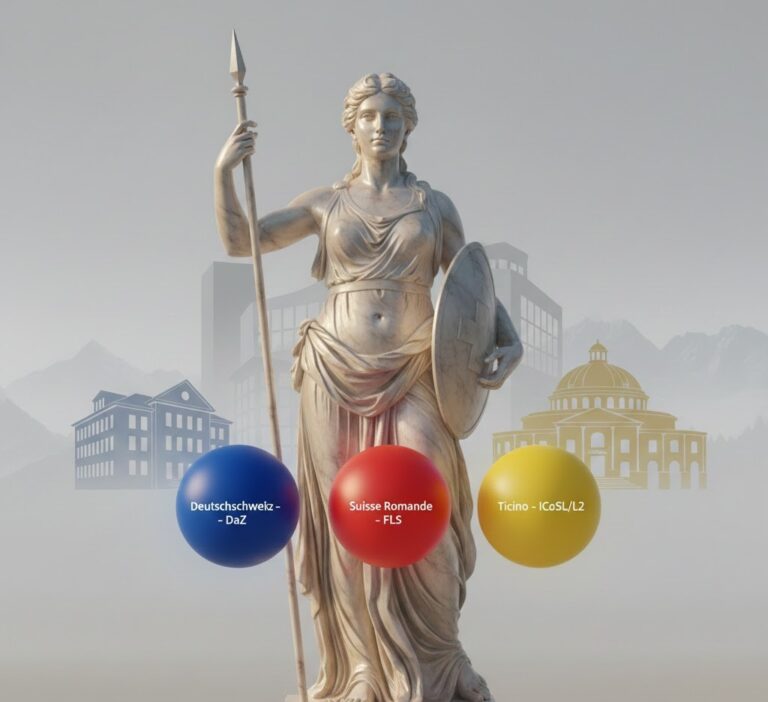
- Recognize Helvetia Symbolism: Show respect for the national identity by perceiving the Helvetia figure on the Swiss Franc as a representation of the country’s ancient spirit of independence and resistance.
✅ Cost / Duration Table
Program | Age Range | Duration / Mandatory | Average Cost (for Teacher Training) |
|---|---|---|---|
Kindergarten | Children who have turned 4 | Mandatory Entry Age (as of August 1st) | Covered by cantonal budget |
DaZ Intensive Course (IK DaZ) | Primary/Secondary Level | Generally two years of support duration | Covered by cantonal budget |
RIK+ | 13–17 years (Late Arrivals) | Regional intensive preparation (Transition to Sec II/BPI) | Covered by cantonal budget |
DaZ Teacher Training | – | 8 days mandatory professional development | Approx. 1,800 CHF (Costly and Mandatory) |
❓ Frequently Asked Questions (FAQ)
❓ Question: Why doesn’t the CH abbreviation use one of Switzerland’s official languages?
✅ Answer: The abbreviation Confoederatio Helvetica (CH) is derived from Latin, a language that is not the mother tongue in any canton, to maintain linguistic neutrality between the four official languages. This is a result of the philosophy of strengthening national unity.
❓ Question: Where does the word “Helvetica” originate?
✅ Answer: The word “Helvetica” originates from the Helvetii, a powerful Celtic tribe that lived on the present-day Swiss Plateau in the 1st century BC. The area was named “Helvetia” by the Romans after the conquest.
❓ Question: Where is the CH code used today?
✅ Answer: The CH code is widely used today, particularly as the international vehicle registration plate, the top-level domain (.ch), and the international code for the currency Swiss Franc (CHF).
✅ Alternatives
Potential name alternatives for Switzerland, instead of the Latin name, would have been:
- Eidgenossenschaft: (German) Sworn Brotherhood/Confederacy. This is the oldest historical name but would have favored the German-speaking cantons.
- Union Suisse: (French) or Unione Svizzera: (Italian) Names considered during the modernization process, but which carried the risk of linguistic conflict.
The choice of Latin is the clearest proof of the country’s philosophy to hold the multilingual structure together.
✅ Recommendations / Tips
- Establish Historical Connection: When visiting Switzerland, pay attention to the Latin inscriptions on official buildings like the Federal Palace in Bern; this strengthens your connection to history. You can view the details of historical architecture here.
- Note the Helvetica Font: Notice the Helvetica typeface (especially on public transport) in everyday life. This typeface is a reflection of the Swiss values of clarity, order, and discipline.

✅ Conclusion
Confoederatio Helvetica is far more than just a Latin abbreviation for Switzerland; it is a timeless statement that honors the Celtic roots, ensures neutrality between the four official languages, and represents stability, order, and respect as a federal state. This name also summarizes the just and integrative governing philosophy that underlies the discipline and order. The deeper analysis of the philosophy behind this order is highlighted in our article.
How do you personally perceive the impact of this Latin name and the multilingual order underlying it on your life in Switzerland? Share your comments and experiences with us below!