More Than Just a Language Test in Switzerland: Language as the Foundation for Successful Integration, Residence, and Costs
focusAnalyse: From Legal Obligation to Personal Liberation – Language Learning as a New Beginning
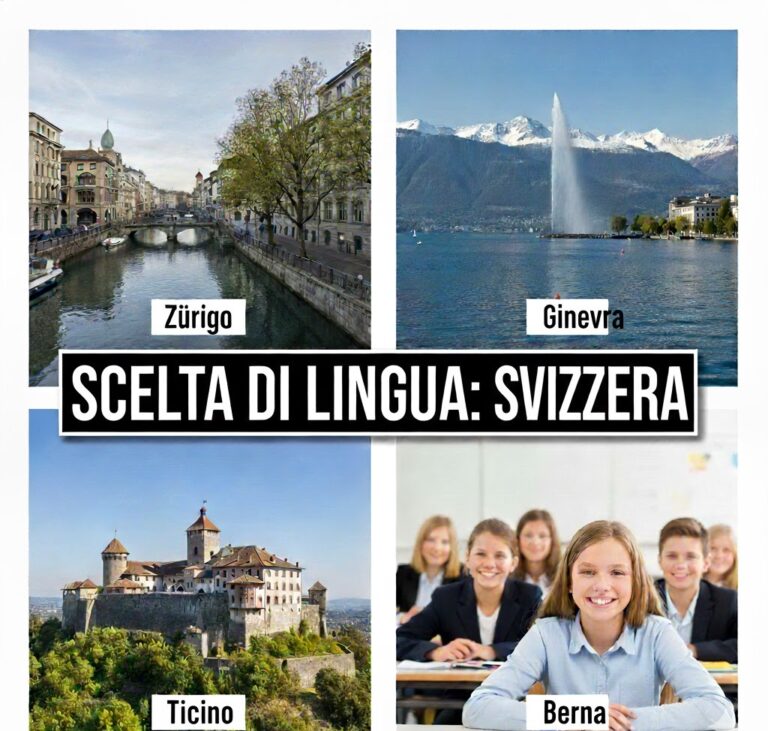
Switzerland is not just a country offering economic opportunities to immigrants; it also possesses a unique social structure with four official languages, countless dialects, and cultural boundaries specific to its cantons, such as the Röstigraben. If you are curious about Switzerland’s complex language map and the linguistic structure of the 26 cantons, you can become more familiar with this topic. The key to successful integration within this complex structure often lies far beyond the minimum language level (A2/B1) required at the federal or cantonal level. Language is not merely a simple communication tool but a cultural code that opens the doors to insular communities.
Considering all the responsibilities of life and the missions imposed on people, a person who is forced to leave their country and live in another, regardless of age, starts life anew and is like a newborn baby who only knows the alphabet of the visited country. This is where a brand new process begins, requiring patience and perseverance. What I strongly recommend is learning the language. Because learning a language will create a tremendous positive impact on the individual themselves, not just the society you settle into. Especially in a country like Switzerland, where the government and non-governmental organizations guide individuals towards cheap and free courses, and with the support of technology and artificial intelligence, overcoming this process is, in my view, much easier today.
✅ Quick Summary Table
Focus Point | Mandatory Minimum Level | Critical Level for Integration | Legal Basis |
|---|---|---|---|
Permit Renewal/C Permit | A2 Written, B1 Oral (Varies by Canton) | B2 (Beginning to understand local dialects) | Foreign Nationals and Integration Act (AIG/FNIA) |
Personal Development | Exam-Focused | Daily Life and Workplace Communication | Self-Confidence and Social Participation |
Critical Threshold | Passive Comprehension | Active Participation and Dialect Awareness | Cantonal Integration Agreements |
🎯 Main Definition:
Beyond being a legal requirement for residence permit and naturalisation processes, the language test in Switzerland is, according to my experience, the fundamental integration tool for immigrants that breaks social isolation, builds self-confidence, and enables active participation in the cultural identities of the country’s four linguistic regions.
✅ Essential Information: The Legal Framework and Psychological Burden
Language proficiency is not just a matter of a certificate; it is the concrete application of the Swiss Government’s integration policy.
- Legal Obligation: The compulsory nature of language proficiency is closely related to the tightening of the country’s migration and integration policies, particularly after the mid-2000s. With the Foreign Nationals and Integration Act (AIG/FNIA), which came into force in 2018, these requirements have become stricter in processes such as extending residence permits and transitioning to the C permit. For more information, read this guide for more details.
- Purpose: The main goal of the law is to reduce the immigrant’s dependence on the state and ensure the protection of the country’s Willensnation (Nation of Will) identity. This requires not only knowing the language but also a willingness to adapt to the country’s way of life.
- External Source: [You can view the text of the Foreign Nationals and Integration Act (AIG/FNIA), which came into force in 2018.]
- Psychological Burden: The obligation to know the language begins much earlier than the legal paperwork. Trying to understand local dialects in daily life—at the bank, the post office, or even in neighbourly relations—is the first and heaviest personal burden on immigrants. This obligation is a mechanism that prevents the individual from self-isolating and necessitates active participation in the social environment.
✅ Detailed Guide: Unlocking the Codes of Language and Culture
Strategies and cultural details that take language learning in Switzerland beyond legal necessity and accelerate integration.
📌 Two Keys: Language and Respect
Swiss integration policy is based on the premise that integration is not solely the immigrant’s responsibility but a two-sided process that also requires the local population to be open to foreigners. However, language proficiency is the tangible proof of the immigrant’s desire to walk this two-way street.
🗣️ The Dialect Shock and Three Critical Thresholds for Social Adjustment
The situation with Swiss German (Schwiizerdütsch) is, in my opinion, particularly difficult. While legal exams are conducted in Standard German (Hochdeutsch), daily communication, work life, and neighbourly relations are carried out in dialects.
- 1. The Effort to Understand: I have come to know the local community well, and I can say that their approach to you doesn’t change much even if you don’t speak the language. However, when they instinctively try to explain something to you, they can inadvertently make you feel stupid, from my own observation.
- 2. Absence of Malice: This is not due to any malice on their part but, I believe, means that people who do not speak and do not want to learn the language negatively affect them too.
- 3. Personal Impact: This situation can cause anxiety or a lack of self-confidence in the individual. Therefore, in my view, the key words are Language and Respect; the rest will follow naturally.
💰 Tips for Accessing Free and Discounted Courses
The cost of language learning in Switzerland can be significantly reduced thanks to support provided by cantons and municipalities:
- Cantonal Support: Especially for holders of B/C Residence Permits, cantons offer discounted or free courses within the scope of integration programs. These courses teach not only the language but also the local culture and political structure.
- Cost Comparison: For a more detailed comparison of this support and costs, check out this guide.
- NGO Opportunities: Caritas, HEKS, and other local associations offer very affordable lessons to low-income immigrants or those who sign an integration agreement.
📚 Exam Types and My Bern Experience
Since I live in Bern, I had to meet the German language requirement. Obtaining my residence permit through marriage (2015) means I personally experienced this legal process.
- Mandatory Levels: B1 written and B2 oral proficiency are usually required for both the C Permit and Naturalisation.
- Recommended Exam: Widely accepted exams are telc, Goethe-Zertifikat, and FIDE. FIDE has gained popularity because it focuses specifically on language proficiency in Swiss daily life.
✅ Experience / Recommendation Section: Three Vital Language Lessons
focusAnalyse: The Bern German Struggle and the Milan Consulate Contradiction
- Vital Lesson (Federalism): In my opinion, having to meet the German language requirement in Bern despite my Italian knowledge is the most concrete example of federalism in Switzerland: Where you live matters more than which language you are comfortable in.
- Vital Lesson (Communication Speed): I overheard at a restaurant that many of our colleagues initially struggled to understand German letters from government offices. In my personal experience, what accelerates the language learning process is not the formal language Standard German (Hochdeutsch), but the dialect used in daily communication with neighbours and colleagues.
- Vital Lesson (Cultural Icebreaker): My suggestion is to start listening to local dialects like Bärndütsch in Bern or Züritüütsch in Zurich, rather than just focusing on the mandatory exams at first. Furthermore, in my opinion, this small effort is the biggest gesture that breaks the ice between you and the local people.
Step 1: Determine the Correct Language and Level
Determine your legal goals (transition from B to C permit or naturalisation) and precisely learn the minimum written and oral levels required by the respective canton.
Step 2: Apply for Subsidised Courses
Contact the integration offices in your canton to research discounted or free course options. My advice is to make sure these courses also teach the local culture and political system.
Step 3: Dialect Exposure Strategy
While studying Hochdeutsch for the exam, increase your exposure to the local dialect in daily life. As someone living in Bern, watching TV programs with subtitles, actively listening to conversations at work, and especially listening to local radio stations will speed up your passive understanding of the dialect.
Step 4: Exam and Integration Agreement
Once you reach the required legal level, take accepted exams like FIDE or telc. Remember that some cantons will evaluate not only the exam but also your compliance with the integration agreement.
✅ Cost / Fee / Duration Table
The following table summarises the potential costs and durations of the language learning process in Switzerland, considering the budget of an individual in the unskilled/low-wage sector (near minimum wage), as required by our manifesto.
Item | Description | Average Cost / Duration (Budget Near Minimum Wage) |
|---|---|---|
Cantonal Subsidised Course (A1-B1) | 1 module (40–60 hours). With cantonal support. | 150 – 400 CHF (3 Months) |
Private Language School Course (A1-B1) | Standard full-price course cost. | 800 – 1,200 CHF (3 Months) |
FIDE / telc Exam Fee | Fee for the single exam required for the residence permit. | 250 – 350 CHF |
Duration to Reach B2 Level | From beginner to B2 (Average, with intensive study) | 1.5 – 2 Years |
Duration of Integration Agreement | Cantonal monitoring and support process. | Generally 2 – 5 Years |
❓ Frequently Asked Questions (FAQ)
❓ Should Dialect or Standard Language be Learned First?
In my observation, the priority should always be the Standard Language (Hochdeutsch/Français) to meet legal requirements. However, it is vital to start learning the dialect (through passive listening) simultaneously for integration and social acceptance.
❓ What if I lacked Language Proficiency when Renewing my Permit?
The new law (AIG/FNIA) carries the risk that the B permit will not be extended or the transition to the C permit will be rejected if language proficiency cannot be proven. In this case, the canton requires you to sign an Integration Agreement and mandates you to learn the language within a specified period.
❓ Do the same rules apply in an Italian-speaking Canton (Ticino)?
Yes, the rule is the same, but the language is Italian. Based on my experience, regardless of where you live in Switzerland, there is an obligation in the legal process to learn the official language of the canton.
✅ Alternatives: Using Technology and Artificial Intelligence
The language learning process is no longer limited only to courses. Modern tools offer strong alternatives, especially for those with limited time:
- AI-Powered Applications: You can create practice texts and role-playing scenarios, and even study dialect variations using AI tools like ChatGPT.
- Online Tandem Partners: Free language exchange platforms offer the opportunity to practice speaking with native speakers of one of Switzerland’s official languages. In my opinion, this is the most effective and cheapest practice method.
- Foreign Films and Music: Use local television and radio as active learning tools to build upon your existing language knowledge.
✅ Recommendations / Tips
- Emotional Resilience: View language learning not as a “legal duty” but as a personal gift. Don’t be afraid to make mistakes, as this is a natural part of your “new beginning.”
- Turn on the Dialect Radar: Make a small list of idiomatic dialect phrases used at your workplace or in your neighbourhood and focus on understanding them.
- Caution with Official Correspondence: Especially in Bern, always seek support from an expert (immigrant associations) to understand the language of letters from the government; do not rely entirely on translation apps.
✅ Conclusion: Language is the Insurance for High Quality of Life
In Switzerland, language is not just a requirement for a residence permit; it is an insurance that increases an individual’s social capital and enables them to fully benefit from the country’s high quality of life. According to my experience, language proficiency that goes beyond legal requirements reduces the immigrant’s dependence on the state, boosts personal self-confidence, and transforms them from a passive immigrant into an active citizen of the Willensnation.
Take Action: Remember, you are not alone on this journey, and every step you take is a personal success story. Share this article on social media to spread this important message, or share your own integration experiences in the comments to inspire other readers!