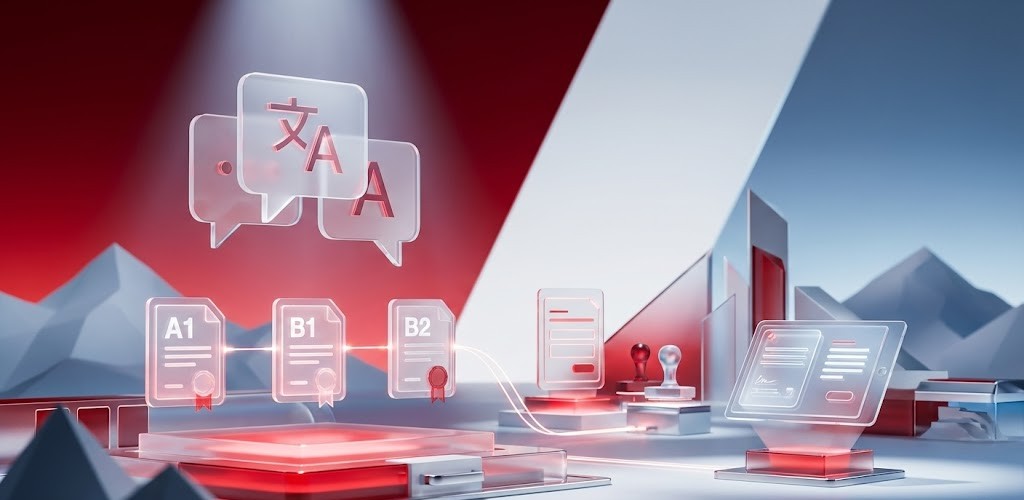
Swiss Language Certificates: What A1, B1, and B2 Levels Mean for Residency

focusAnalysis: Does Your Certificate or Your Fluency Speak in Switzerland?
Anyone considering moving to Switzerland or settling here permanently will inevitably face the language learning requirement alongside the bureaucratic paperwork. As an immigrant, I experienced this myself: although I speak Italian, since I settled in Bern in 2015, I had to meet the German language requirement. This shows how personal these bureaucratic hurdles can be, and how the law is equally applied to everyone. The state is not just looking for a certificate on paper, but your genuine intent to participate in society.
So, what exactly do levels like A1 or B2 mean, and which level opens which door? It is an integration ladder, and each rung determines how independently you can live your life. Remember, language is not just a formal requirement; even if you work in a low-wage sector (like me in the kitchen), it is the fundamental key to the human connection you build with your local boss or your neighbors. This article sincerely explains the purpose of language certificates, why they are demanded, and how they will guide you through this exhausting process.
Mandatory Language Levels in Swiss Immigration Procedures: Quick Summary Table
Swiss authorities increase language proficiency expectations in parallel with the progression of your legal status (from B to C Permit, and then to naturalization). This table summarizes the role of the three most commonly requested CEFR levels in relation to legal status.
Level | Speaking/Oral Proficiency | Written Proficiency | Legal Significance (What is it used for?) |
|---|---|---|---|
A1 | Beginner | Beginner | Proof of commitment to integration in initial applications for a Residence Permit (B) or family reunification. |
A2 | Basic Knowledge | Basic Knowledge | Minimum Written Requirement for the C Permit/Citizenship (Understanding simple forms). |
B1 | Intermediate | Basic Knowledge | Minimum Oral Requirement for C Permit (Permanent Residency) and Citizenship (Ability to conduct independent interviews). |
🎯 Main Definition:
Language certificates (A1, B1, B2) are official documents proving the level of adaptation of immigrants to Swiss society as required by the Foreign Nationals and Integration Act (AIG); these levels establish the mandatory thresholds (minimum B1 for speaking, A2 for writing) for the renewal of residence permits and the application for citizenship.
✅ Basic Information
The proof of your language proficiency in Switzerland is generally assessed according to the Common European Framework of Reference (CEFR) standards, which categorize skills from A1 to C2. Swiss authorities require immigrants seeking to renew their permit or embark on the Swiss C Permit Requirements and the Path to Citizenship to demonstrate proficiency in the official language of their canton (German, French, or Italian). Following a 2023 Federal Court decision, the requirement to submit a language certificate has become an almost exceptionless rule, including for EU/EFTA citizens.
✅ Detailed Guide: Language Levels and Their Legal Functions in Switzerland
📌 A Level: Survival and First Steps (A1 and A2)
The A level represents the most basic user level and generally forms the initial expectation for newcomers to Switzerland.
- A1 Level (Beginner): This shows your ability to understand basic greetings, directions, and very simple sentences. Legal Function: It is often accepted as a starting point or a demonstration of the commitment to language learning in initial residence permit applications. This level is the first practical step for those looking for a Step-by-Step Guide to Moving to Switzerland.
- A2 Level (Basic Knowledge): You can now handle daily routines, fill out simple forms, and describe your surroundings at a basic level. Legal Function: A2 is the minimum written (reading and writing) proficiency determined at the federal level for the C Permit and Citizenship. This means you are expected to be able to read and understand simple official mail, invoices, and basic documentation.
💰 B Level: Threshold of Independence and Permanence (B1 and B2)
The B level is the linchpin for permanent settlement and full integration in Switzerland, proving that you are an independent user.
- B1 Level (Threshold Level): This is the first step of the “Independent User” level. You can understand long conversations on topics like work, school, or leisure, and you can articulate your hopes and goals. Legal Function: B1 is the mandatory minimum Oral (Speaking) proficiency for the C Permit and Citizenship. It is crucial for being able to conduct interviews with authorities and discuss complex topics like constitutional values and local traditions convincingly.
- B2 Level (Independent Use): A user at the B2 level can understand the main content of complex texts and follow specialized discussions in their field. Legal Function: Although not a federal minimum, B2 is a strategic advantage for academic careers, high-level professions, or in cantons that use their right to tighten requirements. It gives you an upper hand in Job Search Strategies in Switzerland and mitigates risks in your application process.
🚦 Proving Language Competence: FIDE and Other Certificates
To prove your language competence, you can use the Swiss-specific FIDE test (Français, Italiano, Deutsch en Suisse) or internationally recognized certificates.
- FIDE Test: Designed specifically for Swiss immigration procedures, it measures local and official communication scenarios and offers the highest guarantee of acceptance for C Permit and Citizenship applications.
- International Certificates: Goethe or TELC for German, DELF for French, and CELI for Italian are also accepted. You must check the official list of the State Secretariat for Migration (SEM) to ensure your certificate is currently recognized.
✅ Experience / Recommendation Section: focusAnalysis
As someone who lives and works in the kitchen in Bern, I fulfilled the German language requirement and quickly realized that German knowledge is mandatory in Bern, even though I speak Italian. So, this country expects you to speak the language of the region you move to. When dealing with Language Integration in Switzerland, you must focus on your canton’s official language.
The language certificate serves as a shield especially for immigrants working in low-wage sectors (Working Poor). As we always emphasize in cost and salary analyses, if your language skills are inadequate, your job prospects narrow, and your risk of relying on social welfare increases. The B1 level is not just a prerequisite for settlement but also the proof of your economic independence.
However, my personal focusAnalysis is this: Language is a very strong and key factor for full integration, but it is not sufficient on its own. You should not just take the certificate and step aside. You must use the confidence gained from the certificate to actively participate in social life, join local clubs, and attend neighborhood events. When we ask, What is Integration in Switzerland?, you realize the answer is more than just a language course.
✅ Adaptation Roadmap
- Determine Canton’s Language: Focus on learning the official language of the canton where you reside. Remember: I had to learn German, not French, in Bern.
- Target the B1/A2 Threshold: Your first goal must be to reach the B1 Oral and A2 Written levels required for the C Permit and Citizenship. This is the fastest way to secure your legal status.
- Choose Certificate Type: Opt for the FIDE test, which offers the highest guarantee of acceptance in Switzerland, or an internationally recognized certificate like Goethe/DELF/CELI.
- Prove Social Participation: Don’t stop at language courses. Join local clubs and participate in voluntary activities. This will be the physical proof of your commitment to integration in interviews.
- Research Cantonal Tightening: Before applying, check if your canton has the right to demand a higher level (like B2) than the federal minimum to manage risk.
✅ Fee / Duration Table
Proving language proficiency usually requires taking an exam. Do not forget the free or very low-cost courses offered by the state and NGOs. Here are the average costs and duration for the most common language exams and courses in Switzerland:
Exam/Course Type | Average Cost (CHF) | Estimated Duration (Depending on Level) |
|---|---|---|
FIDE Test | 250 – 350 | Single session (Usually 1.5 – 2 hours) |
Goethe/DELF/CELI (B1) | 180 – 300 | Varies per exam |
Paid Language Courses (A1 to B1) | 2,500 – 4,500 | Can take an average of 6 – 12 months |
State/NGO Supported Courses | Free or Very Low Cost | Limited spots and longer duration (12 – 18 months) |
❓ FAQ (Frequently Asked Questions):
❓ Question: If I have a B Permit, do I have to get a language certificate?
✅ Answer: Definitely yes. The new regulations of the 2019 Foreign Nationals and Integration Act made demonstrating integration efforts (including language learning) mandatory even for B Permit renewals. Failure to show effort risks the withdrawal of your permit. A level of A1 or A2 is generally an expectation during B Permit renewals.
❓ Question: Why is B1 for Speaking and A2 for Writing sufficient for the C Permit? Why not B1 for both?
✅ Answer: There is a strategic reason for this. Swiss authorities believe that the Speaking (B1) level is necessary for full participation in social and community life (conducting interviews, participating in discussions). However, a basic reading/writing comprehension (A2) is deemed sufficient for participation in political and social life. The key is that you must be able to understand basic official documents (ballot papers, official notices).
❓ Question: I earned a university degree abroad; does that count as proof of language proficiency?
✅ Answer: Mostly no. Following the 2023 Federal Court decision, almost everyone must now prove their language competence. Unless your education was completed in an official language region (e.g., German-speaking region), you will most likely still need to present a language certificate (FIDE or an internationally recognized exam).
✅ Alternatives
In addition to the standard certification routes (FIDE, Goethe, etc.), some cantons (rarely, mostly in smaller communes) may offer alternative ways to prove your proficiency:
- Integration Interviews: For some immigrants who have lived in Switzerland for a long time but cannot provide a certificate, an intensive integration interview with communal authorities may be deemed sufficient. Both your language skills and knowledge of Swiss culture are tested.
- Supporting Documents: Completed school or job training in the relevant language (German, French, Italian) can be accepted as written proof of proficiency. However, this is at the discretion of the canton, and typically an external document for the B1 Oral level is still required.
✅ Recommendations / Tips
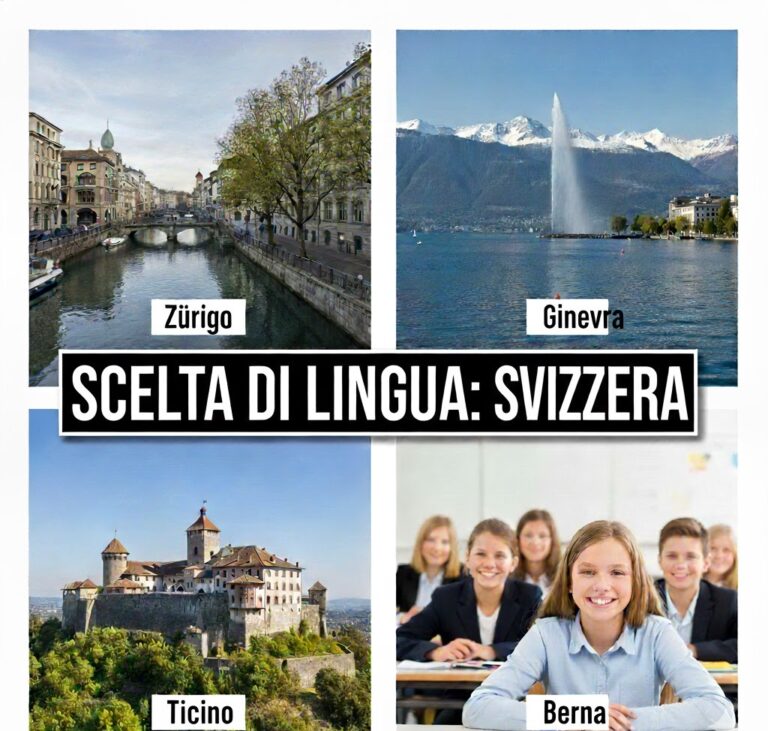
- Language Selection Strategy: We know Switzerland has four official languages (German, French, Italian, Romansh), but for legal processes, always focus on the main language of your canton. Remember that Romansh is also an official language accepted for naturalization.
- Language Advantage in the Job Market: Even working in the kitchen like me, having a B1 or B2 level ensures better communication with colleagues and supervisors. This gives you an advantage in Job Search Strategies in Switzerland and in salary negotiations.
- Focus on Oral Skills: Given the legal minimum requirements (B1 Oral, A2 Written), prioritize developing your speaking (oral) skills, as they are crucial for daily life and official interviews. The A2 Written level is comparatively easier to achieve.

✅ Conclusion
The language certificate requirement in Switzerland is more than just paperwork; it is the most official way to prove that you are an independent, active, and respectful participant in Swiss society. Moving from A1 to the B1/A2 threshold is the mandatory integration ladder for renewing the B Permit, obtaining the C Permit, and ultimately becoming a citizen. The investment in language learning is your most crucial investment in your legal permanence in this country.
Sources
All legal and technical references cited in this article are based on high-authority official sources such as the State Secretariat for Migration (SEM) and Federal Court decisions.