Switzerland Rent Prices: Average Housing Costs by Canton
focusAnaliz: Rental Market Dynamics: The Dictatorship of Vacancy Rates and the Cost Split of the Three Regions
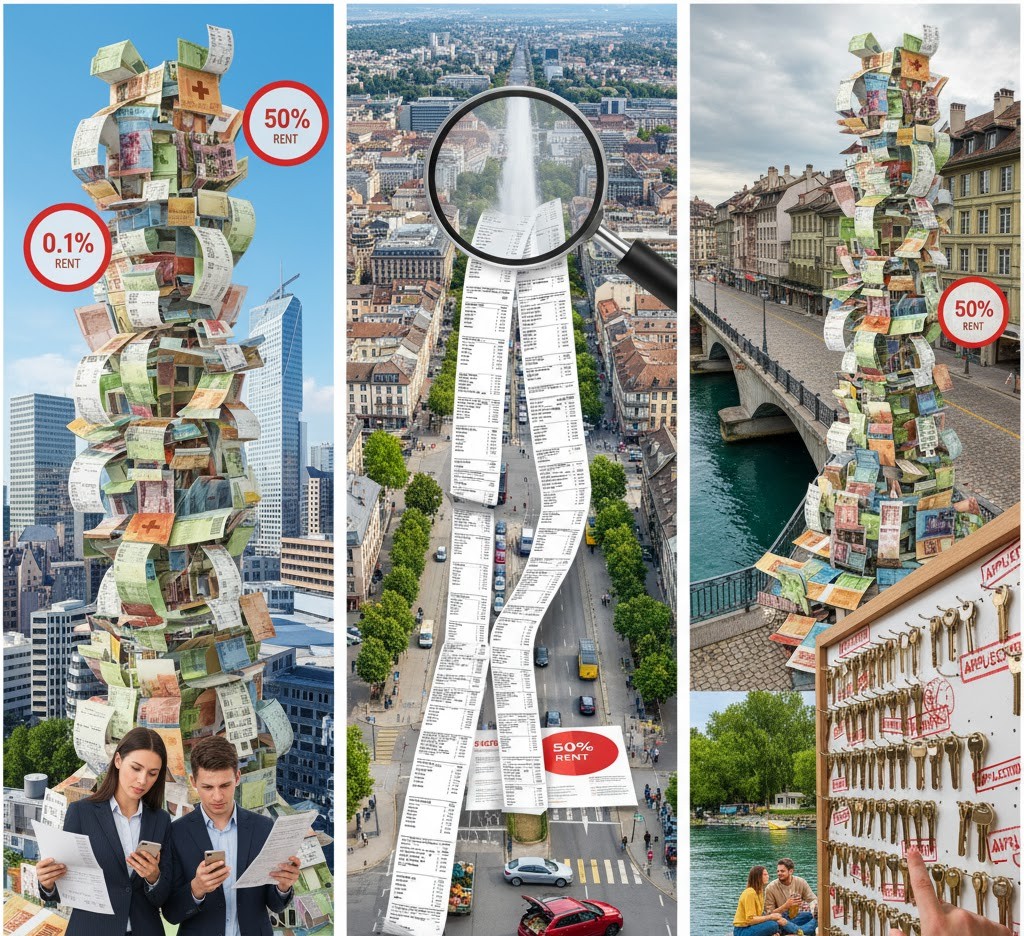
The most brutal reality hitting an immigrant’s budget planning in Switzerland is the potential for rent to swallow half or more of their salary. Housing costs, often considered a luxury in other countries, become a mandatory expense here. In my observations, the fundamental dynamic behind these exorbitant rental prices is the combination of slow construction and the low vacancy rate protected by local administrations. When the vacancy rate drops below 1.5%, the market essentially establishes a dictatorship, and prices soar.
In this article, we will analyze in depth how housing costs diverge, not just in major cities, but across the cantons, by examining the German, French, and Italian-speaking regions separately. The rental market is more than just prices; it includes practical challenges like the housing search process and security deposit obligations. To learn the practical steps for navigating the high-priced housing market, you should check out our article [SWISS RENTAL HOUSING GUIDE: CONTRACT, DEPOSIT, AND HOUSE HUNTING TACTICS], which will light your way.
1. Key Dynamics Determining Rental Prices
The cost of rent in Switzerland is tied to geography, economics, and culture.
- Cantonal Economic Appeal: Cantons like Zurich (Finance), Geneva (Diplomacy), and Basel (Pharma) naturally have high rents because they attract high-salaried professionals.
- Vacancy Rate: As long as the national average vacancy rate (the ratio of empty apartments to total housing stock) remains below 1.5%, landlords drive rents up. In major centers like Zurich, this rate is around 0.1–0.2%, which pushes prices to exorbitant levels.
- Reference Interest Rate: The reference interest rate set by the Swiss National Bank forms the legal basis for determining rents. When this rate rises, landlords have the legal right to increase rents. Source: BFS Housing Prices and Rent Indices
2. Regional Comparison: Rental Prices in the Three Language Regions
The rental market operates with different dynamics across Switzerland’s three main language regions.
City/Region | Canton | Language Region | Cost Level | Avg. Gross Monthly Rent (3.5 Room Apt., CHF) |
|---|---|---|---|---|
Zurich | ZH | German | High (Finance) | 2,500 – 3,500 |
Geneva | GE | French | High (Diplomacy) | 2,300 – 3,300 |
Zug | ZG | German | High (Low Tax) | 2,600 – 3,800 |
Bern | BE | German/Bilingual | Medium/Balanced | 1,900 – 2,800 |
Basel-Stadt | BS | German | Medium/High (Pharma) | 1,800 – 2,700 |
Lucerne | LU | German | Medium | 1,700 – 2,400 |
Lausanne | VD | French | Medium/High (Education) | 1,900 – 2,600 |
Lugano | TI | Italian | Medium/Balanced | 1,600 – 2,500 |
Aarau/Aargau | AG | German | Medium/Affordable | 1,500 – 2,200 |
- Seeking Balance: Bern, the capital, offers more balanced prices compared to major centers. Its rent is more reasonable than Zurich or Geneva. You can find the cost analysis for Bern in our article [COST OF LIVING IN BERN].
- Peak Costs: If you want to see the detailed impact of rent differences on salaries in Zurich and Geneva, you can take a deeper look at the Zurich market in the article [ZURICH COST OF LIVING: THE HEART OF GLOBAL FINANCE AND QUALITY OF LIFE CENTER].
3. Cantonal Ranking by Price Categories (Deep Dive)
Cantons have a sharp hierarchy regarding cost of living and rent:
- Highest Cost Cantons (The Peak): Zurich, Geneva, Zug, Schwyz, Basel-Stadt. The burden of rent and income tax (except Zug) is heaviest here.
- Medium and Balanced Cantons: Bern, Vaud (Lausanne), Basel-Landschaft, Lucerne.
- Most Affordable Cantons (Relatively): Jura, Neuchâtel, Fribourg, Valais. However, this often means lower job opportunities and salary potential.
4. Strategies to Reduce Rental Prices
The only way to reduce rental costs in Switzerland is to move away from city centers or popular cantons. Remember, these high prices are only part of Switzerland’s general cost of living. For our general guide addressing cost items from a broader perspective, you must check out the article [HOW EXPENSIVE IS LIFE IN SWITZERLAND? 2025 UPDATED COST GUIDE].
- Necessity of Acting Fast: One of the most important tactics for finding a home is being quick. Otherwise, securing the desired home becomes very difficult, and you might be forced to rent places deemed suitable by real estate agents, rather than those you chose yourself.
- Real Estate Agent Pressure: If you ask me, one of the main factors contributing to the high prices is the high commission and processes implemented by real estate agents. Switzerland is a country that attracts immigrants, which is true; but there is also a large group that seeks to exploit this fact.
- Cross-Border Living (Frontalier): Living in border cities like Geneva (France) and Basel (Germany/France) and working in Switzerland is the most radical way to reduce rent expenses by 30% to 50%.
- Social Housing/Shared Living (WG): Limited cooperative apartments (Genossenschaftswohnungen) or shared living (WG/Colocation) can cut rent in half.
Conclusion: Rent is the Most Demanding Area of Financial Discipline
The Swiss rental market represents the biggest financial obstacle in an immigrant’s adaptation process. The cost of rent directly affects your ability to stay in the country and save money. This reality is a disappointment for foreigners who expect rents to be proportional to their salaries. The rental market may not treat you fairly, but you can overcome this dictatorship using your financial intelligence and strategic planning. Choosing the right canton is the start of your financial success in Switzerland.