Social Life in Switzerland: Neighbours, Festivals, and Leisure Activities
focusAnaliz: Contrary to Belief, Trust, Neighbourly Confidence, and the Sacred Planning of Time
Swiss Social Life may have a high threshold for newcomers. It focuses on planned and quality time rather than spontaneous visits. Although neighbourly relations may initially seem distant and formal, this is a reflection of a social protocol built on trust and respect.
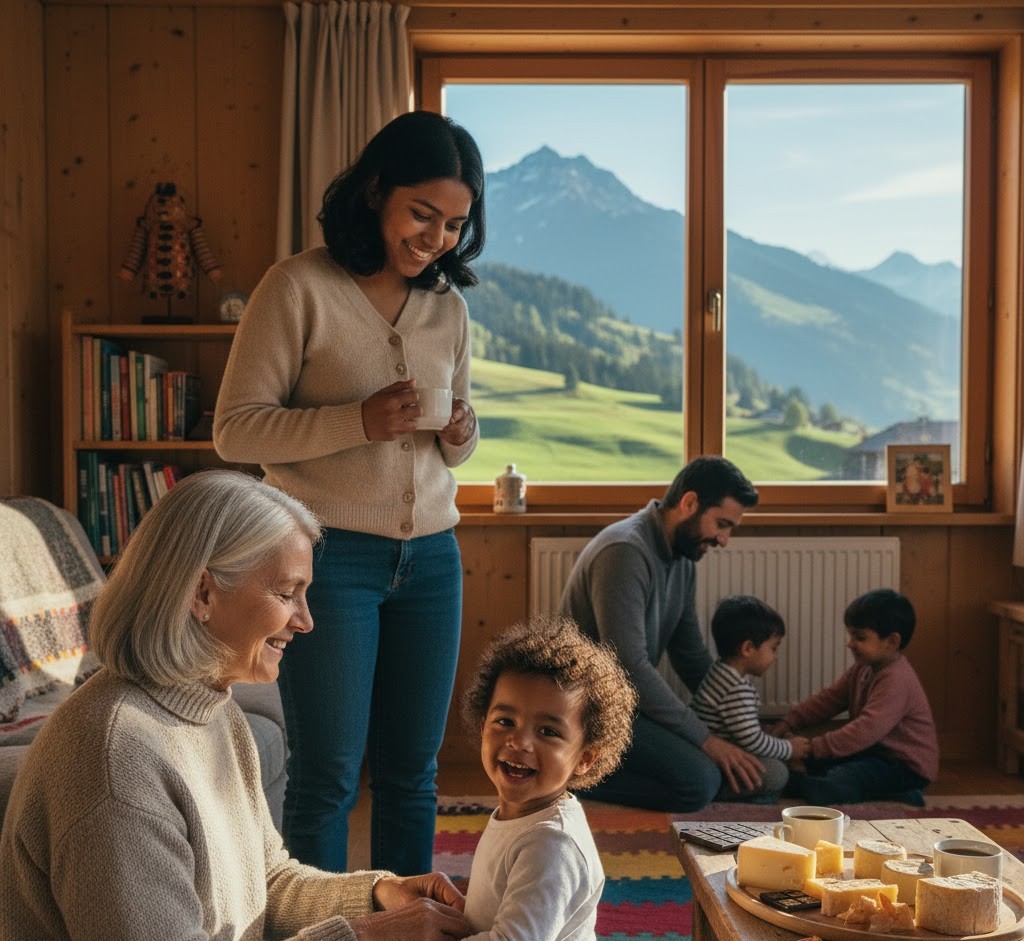
Based on my personal observation, making friends with a Swiss person is like an investment; it takes time, requires patience, and demands you prove your sincerity. However, once you enter that inner circle, you gain loyal and reliable friendships that can last a lifetime. My neighbours, the majority of whom are Swiss, are truly good people and very warm. Their perspective on my children is something that makes me immensely happy. I also thought they were cold and distant, but I found that they are genuinely warm. They gladly help when you need it; in fact, there were times when we even entrusted our youngest child to them. My neighbour Silvia even changed my youngest child’s diaper until our appointment was over. I can say that making friends is easy, provided one is not prejudiced or sullen.
This guide will explore the silent protocols of Swiss social life, the strength of the Verein culture, and the traditional festivals that define Swiss identity.
1. Social Protocol: Respect, Distance, and Trust
Social communication in Switzerland is more distant and formal than in other cultures. This formality is important to prevent misunderstandings.
- Greetings: A firm handshake and eye contact are essential when meeting someone new. Using the surname (Herr/Frau or Monsieur/Madame) is common until intimacy is established. The three-cheek air kiss is only done among close friends and family.
- The Silent Contract: In public spaces and transport, speaking softly is a sign of respect. Loud phone calls or laughing are frowned upon. This silent contract is an extension of the rules we detailed in our article [SWISS RULES OF LIFE: SILENCE, ORDER, AND ADAPTATION GUIDE].
- The Small Talk Myth: Contrary to belief, based on my experience, this is a myth. People can engage in polite conversation, even if distant, during a first meeting. This is not rudeness, but an expression of respect for personal space and time.
2. Leisure and Club (Verein) Culture
Switzerland is a country of clubs (Verein), with over 80,000 clubs covering everything from amateur sports to fire departments. Joining a club is the most effective way to meet Swiss people.
- Community Ties: Joining a Verein is a great way for newcomers to meet locals, practice the language, and explore community ties. Clubs are open to foreign members and usually require an annual membership fee.
- Nature and Outdoor Activities: Swiss people spend a great deal of their leisure time in nature. Hiking (Wandern), cycling, and skiing are the most popular activities. This passion is a natural result of the immense geography we covered in our article [SWITZERLAND’S HIDDEN MAP: ALPINE MYTH, MITTELLAND ECONOMIC HEARTLAND, AND TICINO GATEWAY].
3. Festivals and Traditional Rituals
Festivals and traditional rituals celebrated throughout the year offer excellent, informal opportunities to participate in social life.
- Fasnacht (Carnival): These are the largest public festivals, held in Catholic regions like Basel and Lucerne, celebrated with masks and music. Social rules temporarily relax during these events.
- Sechseläuten (Zurich Spring Festival): A traditional Zurich festival celebrating the arrival of spring by burning a giant snowman effigy (the Böögg). The time it takes for the Böögg’s head to explode is considered a prediction of how warm the summer will be.
- 1st August (National Day): The only federal public holiday, celebrated with fireworks and communal barbecues (Grillieren).
4. Traditional Bonds and Holiday Discipline
- Shared Culture: Social gatherings and festivals in Switzerland often revolve around traditional food and drink. National symbols like cheese and chocolate are central to socialization. For more information, you can examine our article [SWITZERLAND’S CHOCOLATE AND CHEESE CULTURE: FROM THE MYSTERIOUS ALPS TO A GLOBAL FLAVOR EMPIRE].
- Holiday Discipline: This contains perhaps the most valuable view on holidays I have ever seen. Holidays are immensely valuable periods for the Swiss. Planning is done months in advance, and this discipline is a truly beautiful thing; at the very least, it can be seen as valuing the vacation time itself.
- Cost-Oriented Socializing: The high cost of living (e.g., the price of a coffee) makes socializing expensive. Consequently, individuals often turn to cooking at home or engaging in free outdoor activities, rather than socializing outdoors.
Conclusion: Swiss Social Life, though initially defined by distant protocols, harbors deep trust, respect, and mutual help beneath the visible coolness. Finding this warmth is particularly possible in neighbourly relationships. Discovering these cultural codes is the key to unlocking the richness of Swiss social life.