The 26 Cantons of Switzerland: The Grand Tour & Budget Strategy (2026)
When I first moved to Switzerland, I looked at the map and thought, “Tiny country, I’ll be done in a week.” I quickly realized how wrong I was. Switzerland isn’t a homogeneous nation; it’s a confederation of 26 distinct micro-states, 4 languages, and countless cultures. You drive through a tunnel, and the language switches from German to Italian; you cross a hill, and Protestant simplicity gives way to Catholic pageantry.
If you limit your 2026 Swiss trip to just the “Golden Triangle” (Zurich, Lucerne, Interlaken), you are missing 80% of this country’s soul. To understand the roots of this political and cultural diversity, I recommend reading our article [The Geographical Structure of the 26 Cantons: A Guide to Administrative and Cultural Differences].
This guide is designed to turn you from a “tourist” into a “strategist.” From the wild horses of the Jura to the palm trees of Ticino, from the stubborn traditions of Appenzell to the luxury streets of Geneva—I will show you how to navigate all 26 cantons while professionally managing your budget (and the merciless Swiss Franc).
Are you ready? Our Pan-Helvetic journey begins.
🗺️ Chapter 1: Strategic Logistics and Transport Matrix
Improvising in Switzerland can get expensive. Touring 26 cantons is a serious operation. Here are the raw numbers:
Train or Car?
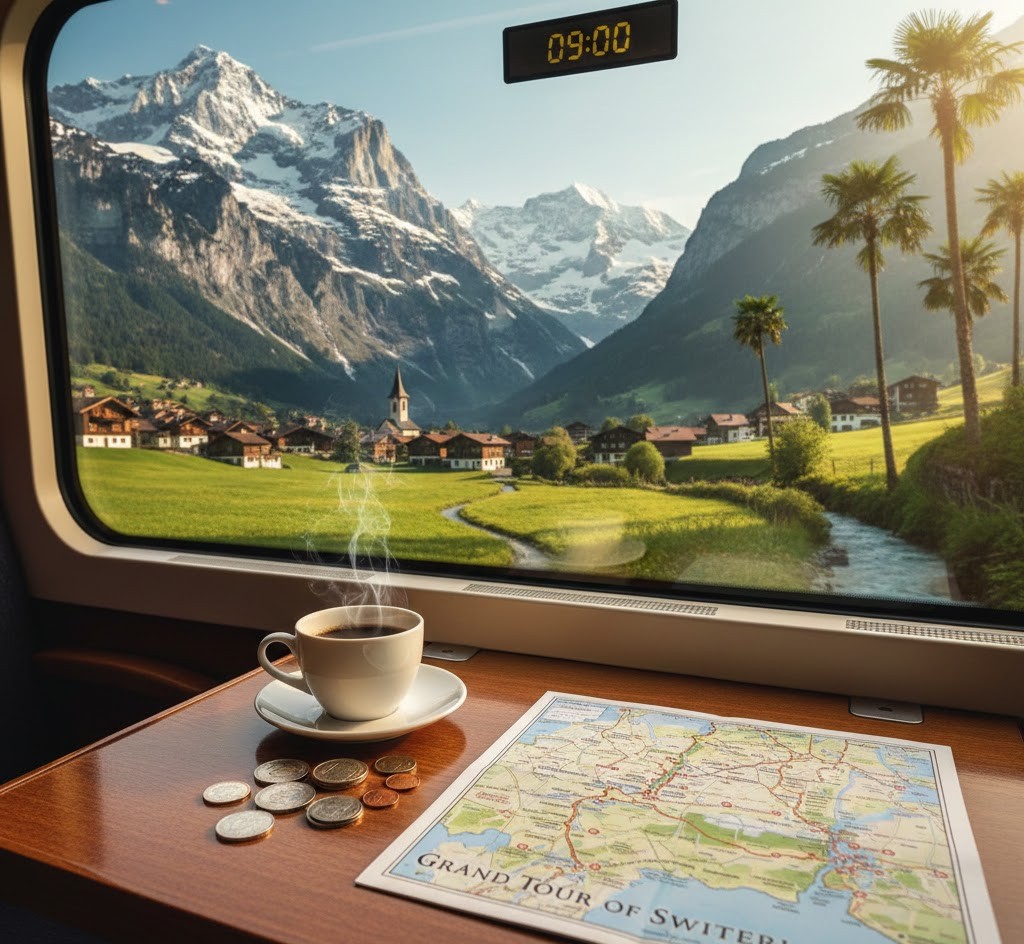
For a “Grand Tour” covering 26 cantons, my answer is definitive: Train (Swiss Travel Pass).
- Hidden Costs: Even though petrol prices have stabilized (~1.80 CHF/L), the real enemy is parking. A day of parking in the center of Zurich or Geneva costs between 40-60 CHF. On a 20-day tour, you don’t want to spend 1,000 CHF just on parking fees.
- Tunnel Traps: To cross the Lötschberg (Bern-Valais) by car, you have to load your vehicle onto a train (~27 CHF one way). At the Gotthard Tunnel, traffic jams of 2-3 hours are standard in summer. Trains bypass these obstacles.
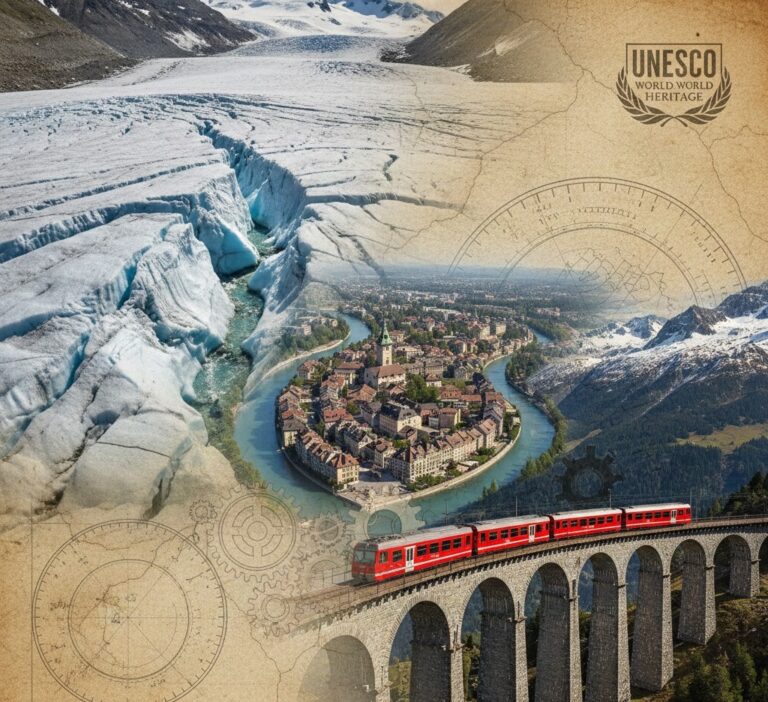
- The View Factor: Routes like the Bernina or Glacier Express are invisible from the road. The best views in Switzerland belong to the railways.
Budget Realities (Per Person & Day)
These figures are not a “survival budget,” but a “pleasure budget.”
- Backpacker: 110-150 CHF (Hostel + Supermarket food + Hiking + Saver Day Pass)
- Comfort (Mid-Range): 270-380 CHF (3* Hotel + 1 Restaurant/day + Swiss Travel Pass)
- Luxury: 900+ CHF (5* Hotel + Fine Dining + Private Transfer)
For more details on budget management and supermarket prices, check out our guide: [Life in Switzerland: The Realistic and Comprehensive Daily Life Guide].
🏭 Chapter 2: Northeast Switzerland (Industry, Textiles, and Waterfalls)
This is the economic engine of Switzerland, but nature is equally generous here.
1. Zurich (ZH): More Than Just Finance
Don’t mistake Zurich for just a city of bankers. It’s a city that swims in the river in summer and indulges in art galleries in winter.
- Don’t Miss: The view from Lindenhof hill over the city (free). The boutiques under the viaducts in Zurich-West.
- Taste: Zürcher Geschnetzeltes (creamy veal) at Zeughauskeller. Portions are huge; sharing one portion between two people is common (and not shameful in Switzerland).
2. Schaffhausen (SH): The Power of the Rhine
- Don’t Miss: The Rhine Falls (Rheinfall). Europe’s largest waterfall. Take the boat to the middle rock and feel the roar. Details in our article: [Switzerland’s Most Beautiful Waterfalls: A Wet Route from Rhine to Lauterbrunnen].
- Hidden Gem: Stein am Rhein. The building facades are covered in frescoes; it feels like an open-air museum.
3. Thurgau (TG): The Apple Paradise
This is the orchard of Switzerland (affectionately called “Mostindien” or Cider-India).
- Experience: Cycling along Lake Constance (Bodensee). Rent a bike at an SBB station and drop it off at another.
- Taste: Freshly squeezed apple juice (Süssmost).
4. St. Gallen (SG): The City of Knowledge
- Must See: Abbey Library (Stiftsbibliothek). When you enter this Rococo-style library, it will take your breath away. You enter wearing special felt slippers.
- Local Law: Never put mustard on a St. Gallen Bratwurst! It is an insult to the locals and instantly reveals you as a tourist.
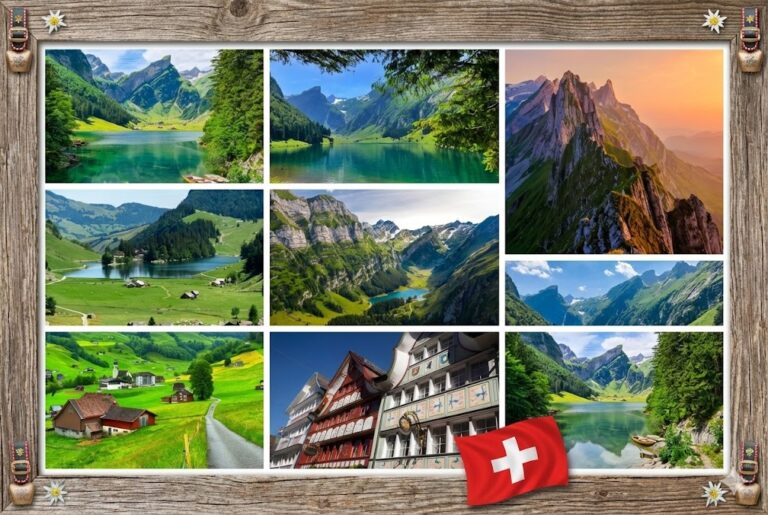
5. & 6. Appenzell Innerrhoden (AI) & Ausserrhoden (AR)
The “Shire” of Switzerland. The place where direct democracy (voting by raising hands in the town square) still lives.
- Route: Cable car to Ebenalp, hike to the cliffside Aescher guesthouse, and descend to Seealpsee.
- Taste: The most pungent cheese in Switzerland, Appenzeller Käse.
7. Glarus (GL): Industry and Mountains
- See: Klöntalersee. This fjord-like lake and its reflections are a dream for photographers.
- History: Glarner Schabziger. Visit the factory of Switzerland’s oldest branded product—a green herb cheese.
⛰️ Chapter 3: Alpine Peaks and Southern Warmth
The region where geography changes most dramatically. From glaciers to palm trees.
8. Graubünden (GR): The Giant with 150 Valleys
The largest and wildest canton. Three languages are spoken here (German, Italian, Romansh).
- Don’t Miss: The Engadin valley and the fairytale houses of Guarda. Swimming in Caumasee (entrance fee, but worth it). More on lakes: [The Most Beautiful Mountain Lakes in Switzerland: No Photoshop, But Hypothermia Guaranteed].
- Culinary: Capuns. Spätzle dough wrapped in chard leaves with dried meat. A mountaineer’s meal that keeps you full.
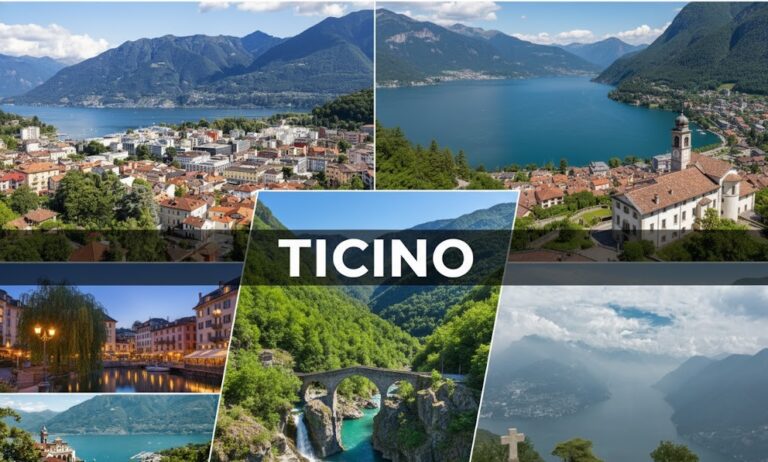
9. Ticino (TI): The Italian Dream
After the tunnel, the sun comes out, the language turns Italian, and life slows down.
- Route: The “Roman Bridge” (Ponte dei Salti) in Verzasca Valley. The water is so clear you can see the bottom (but it’s freezing!).
- Food & Drink: Polenta and Merlot in a Grotto (stone tavern). Don’t look for luxury restaurants; the flavor is in the Grottos. Detailed guide: [Ticino’s Double Identity: Italian Soul, Swiss Order].
10. Uri (UR): The Land of Legends
The home of William Tell and guardian of the Gotthard.
- See: Devil’s Bridge (Teufelsbrücke). On the way to Andermatt, a legendary bridge wedged between steep cliffs.
🛡️ Chapter 4: Central Switzerland (The Heart of the Confederation)
The soil where Switzerland was founded in 1291.
11. Schwyz (SZ): The Namesake
- Adrenaline: Stoos Funicular. Ride the steepest funicular in the world (110% gradient) to the car-free village.
- History: Museum of the Swiss Charters of Confederation. See the founding document of Switzerland.
12. & 13. Nidwalden (NW) & Obwalden (OW)
- NW: Stanserhorn. Ride the Cabrio cable car (open upper deck) and feel the wind on your face.
- OW: Titlis. Home to the rotating Rotair gondola and a glacier cave.
14. Luzern (LU): The Showcase of Tourism
The postcard city everyone knows.
- Classic: Chapel Bridge (Kapellbrücke).
- Museum: Swiss Museum of Transport (Verkehrshaus). Switzerland’s most popular museum; plan a full day.
15. Zug (ZG): Cherries and Wealth
- Taste: Zuger Kirschtorte (Cherry Cake). Caution, the alcohol content is high!
- View: Sunset on Lake Zug, one of the most romantic moments in Switzerland.
🎨 Chapter 5: Northwest Switzerland and Jura (Culture and Nature)
16. & 17. Basel-Stadt (BS) & Basel-Landschaft (BL)
- Activity: In summer, float down the Rhine with a Wickelfisch (waterproof bag). A Basel tradition. You can buy the bag at any pharmacy.
- Culture: Fondation Beyeler. The perfect harmony of art and architecture.
18. Aargau (AG): Castles and Water
- History: Habsburg Castle. The dynasty that shaped European history originated here.
- Relaxation: Baden. You can bathe for free in the public thermal pools on the banks of the Limmat river.
19. Solothurn (SO): The Baroque Pearl
- Curiosity: The city’s obsession with the number “11”. There are 11 churches, 11 fountains, 11 towers.
- Nature: Verena Gorge (Verenaschlucht). A mystical gorge reachable on foot from the city.
20. Jura (JU): The Wild West
Switzerland’s youngest and most remote canton.
- Discovery: Etang de la Gruère. A peat bog lake where you feel like you’re in Canada.
- Culinary: Tête de Moine cheese. It is not sliced, but scraped into “rosettes” using a Girolle.
21. Neuchâtel (NE): The Watch Valley
- Nature: Creux du Van. The “Grand Canyon” of Switzerland. A massive natural amphitheater.
🍷 Chapter 6: The French West and the Capital
22. Vaud (VD): The Riviera
- View: Lavaux Vineyards. Hike through the UNESCO-listed terraces and taste Chasselas wine.
- History: Chillon Castle (Montreux). This lakeside castle inspired Lord Byron.
23. Geneva (GE): The World Stage
- Science: CERN. Visit the Globe of Science and Innovation (reservation mandatory).
- Neighborhood: Carouge. The “Italian” quarter of Geneva. Sardinian architecture and bohemian cafes.
24. Fribourg (FR): The Cultural Bridge
- Culinary: Gruyères. The fairytale village with the famous cheese and castle. Here you eat Fondue Moitié-Moitié (Half Vacherin, Half Gruyère).
25. Bern (BE): Capital and Peaks
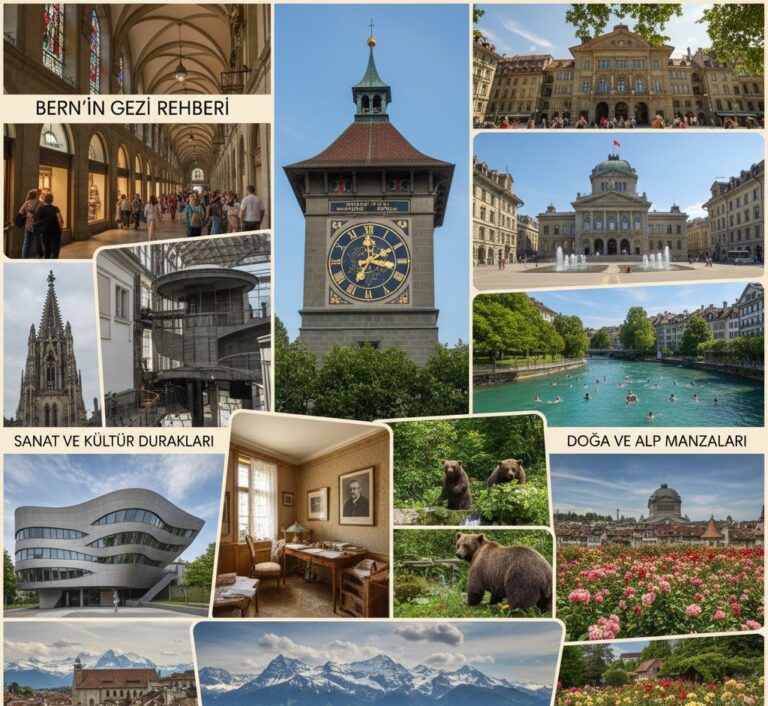
- City: The Old Town (Altstadt) is a UNESCO World Heritage site. Visit the Bear Park (BärenPark).
- Mountain: Lauterbrunnen. The valley of 72 waterfalls. More about the villages in this region: [The Most Beautiful Mountain Villages in Switzerland: Lauterbrunnen, Zermatt, and Grindelwald].
26. Valais (VS): King of Peaks
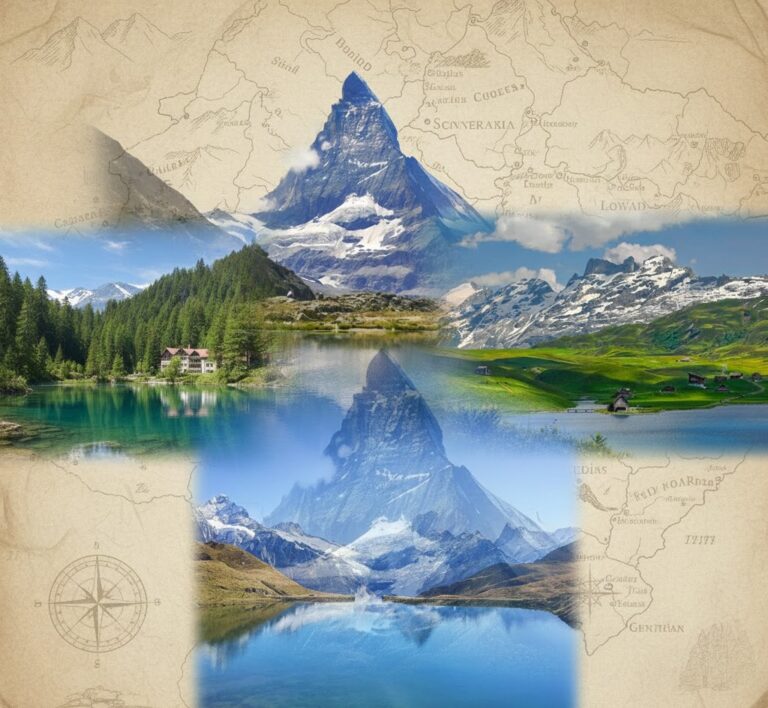
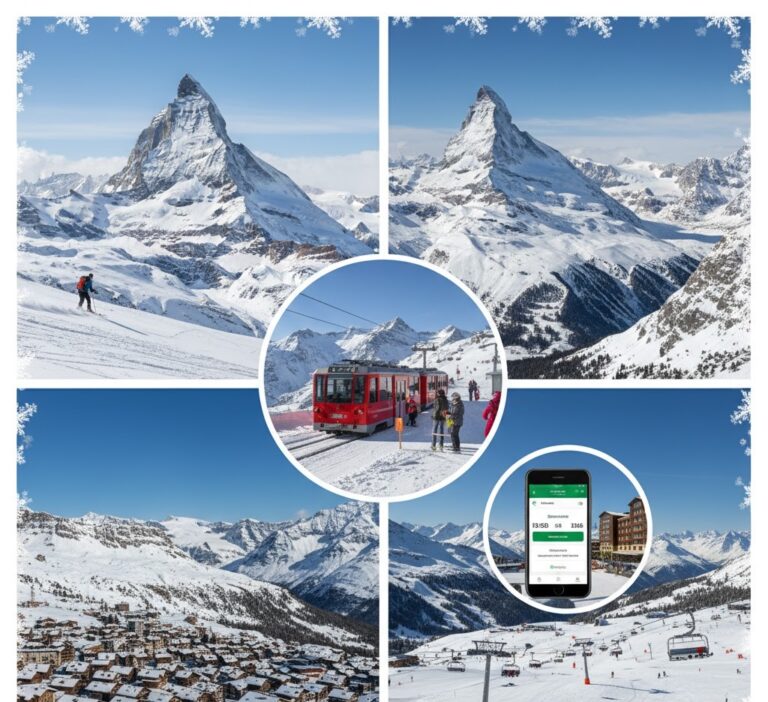
- Icon: Zermatt & Matterhorn. Zermatt is car-free; accessible only by train.
- Culinary: Raclette. The ritual of melting cheese and scraping it onto potatoes originated here.
🛑 Chapter 7: Travel Operation: Budget, Transport, and Logistic Tactics
Here is the information that turns your trip from a nightmare into a success story.
1. Transport and Ticket Hacks
- Saver Day Pass: If your route is fixed, buy the ticket 60 days in advance via the SBB app. You can snag a day pass worth 100 CHF for as low as 52 CHF. It covers almost all trains, buses, and boats.
- EasyRide Function: Activate “EasyRide” in the SBB app, hop on, and hop off. The system automatically calculates the cheapest ticket combination for the day. Don’t waste time with ticket machines.
- Half-Fare Card (Halbtax): If you are staying longer than a month or traveling frequently (without a Travel Pass), buy this card for 120 CHF. All tickets cost half price for a year.
2. Food, Drink, and the Art of Saving
- The “Äss-Bar” Concept: Look for “Äss-Bar” in major cities like Zurich or Bern. Bakeries sell fresh goods from the previous day here at half price. Huge sandwiches for 2 CHF.
- 5:00 PM Discounts: In Coop and Migros supermarkets, fresh food (sandwiches, salads, bread) is discounted by 25% or 50% shortly before closing time or on Saturday evenings. Look for orange stickers.
- Too Good To Go: Download this app. You can pick up leftovers from luxury hotel buffets or restaurant meals for a ridiculous 5-8 CHF as a surprise box.
3. Reservations and Timing
- “Dynamic Pricing” on Cable Cars: Tickets for Zermatt or Jungfraujoch are like airline tickets. The price changes based on weather and demand. If the sun is shining, the price goes up. Choose early mornings or weekdays.
- Restaurant Etiquette: Dinner time in Switzerland is 6:30 PM – 8:00 PM. Most kitchens close after 9:00 PM. If you get hungry at night, you stay hungry.
- Sundays: Sunday in Switzerland is a “dead” day. Shops are closed. Only supermarkets in train stations are open, but they are expensive. Do your shopping on Saturday.
4. Tech and Connectivity
- Adapter: The Swiss socket (Type J) is different from the European one (Type F). Thick German Schuko plugs do not fit! Flat Europlugs fit. Definitely bring an adapter.
- Offline Maps: Since Switzerland is not in the EU, roaming fees can be astronomical. Download Google Maps “Offline” or use a local e-SIM (like Digital Republic).
With this guide, you will not only enjoy beautiful views in the 26 cantons but also use the system like a local (“Eidgenosse”). Safe travels!