The Geographical Structure of the 26 Cantons: A Guide to Administrative and Cultural Differences in the Alps, Jura, and Mittelland Regions
Introduction: One Country, Three Distinct Worlds
The size of the Swiss Confederation is measured not by its surface area, but by the administrative and cultural diversity it has created. For an immigrant, the green and white spaces you first see on the map actually represent three completely different geographical, cultural, and even bureaucratic ways of life. This guide leads you through the foundations of Swiss geography—the Alps, Jura, and Mittelland regions—explaining how these structures shape your daily life, your integration process, and the cantonal administrative mindset.
Lessons from Immigration: The Immense Impact of a Tiny World
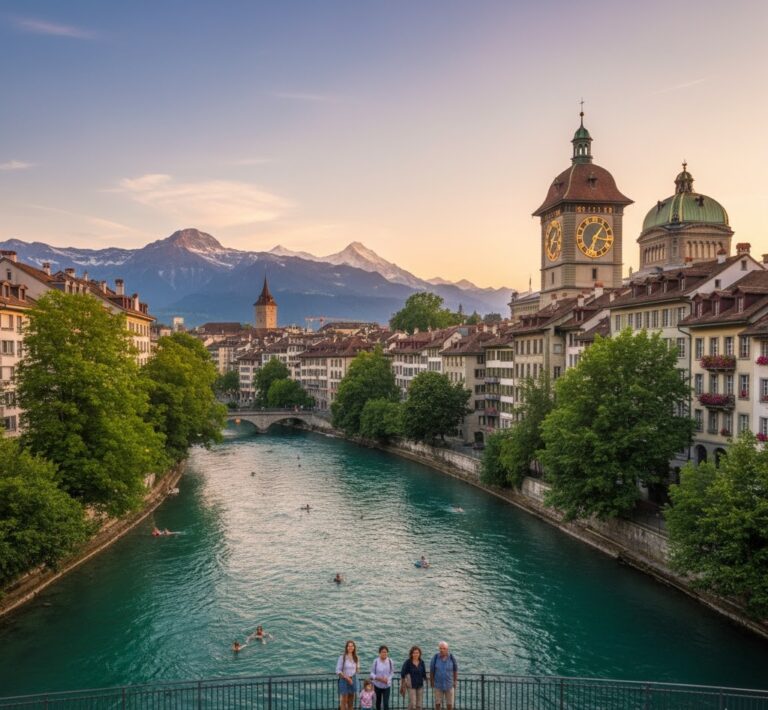
When I first arrived in Switzerland, what intrigued me most, as you mentioned, was how this tiny country managed to establish such a colossal system, thanks to the perfect beauty of its geography. What looked like a small dot on the map quickly became a massive world in my eyes; but this magnitude didn’t just stem from the majesty of the Alps. My initial shock living in Bern was discovering that just 100 kilometers away, with the change in landscape, the pace of people’s speech, grocery prices, and even school holidays changed dramatically. This transition between the gentle, rolling Jura hills and the sharp, isolated world of the Alps showed me firsthand: Switzerland is not just one country, but a confederation housing 26 different administrations and cultures. This guide is your compass to unravel the administrative complexities hidden behind that geographical beauty.
1. Three Principal Geographical Regions Shaping the Confederation
Despite Switzerland’s small size, its geographical structure is divided into three main regions: the Alps, the Mittelland (Central Plateau), and the Jura Mountains. The separation between these regions is not limited to natural scenery; it deeply influences historical, economic, and cultural development. If you wish to start with a more general and deep dive into the administrative structure of Switzerland, you can check our article Everything You Need to Know About Switzerland — The Comprehensive Guide.
The Alpine Region: Two-Thirds of the Area, One-Fifth of the Population
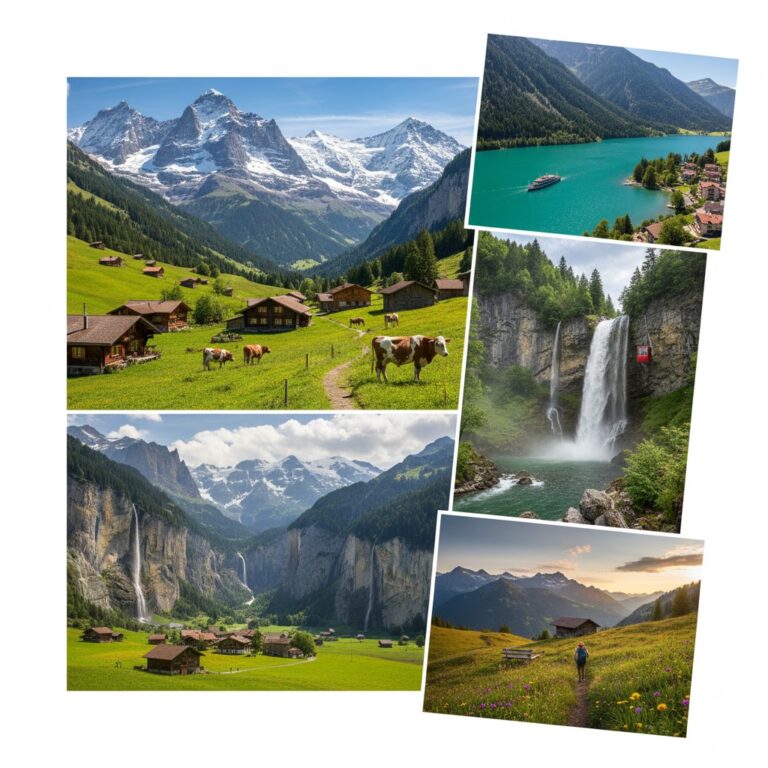
The Alpine Region covers approximately 60% of Swiss territory and is the most sparsely populated and geographically challenging area of the country. It is home to legendary tourist centres such as Zermatt, Interlaken, and the Jungfraujoch.
- Geographical Features: Dominated by high peaks, glaciers, deep valleys, and steep slopes.
- Cultural Influence: Local dialects are strong due to isolation. Traditional livestock farming and tourism are the main sources of income.
The Mittelland (Central Plateau): The Heart of the Economy
The Mittelland lies between the Alps and the Jura Mountains, covering about 30% of the country’s area but hosting two-thirds of the population. It is the centre of the country’s economic, administrative, and transportation network.
- Geographical Features: Dominated by hilly areas, lakes, and extensive agricultural lands.
- Cultural Influence: This is the most cosmopolitan and densely populated region of Switzerland. Industry, finance, and education (centres like Zurich, Bern, Geneva) are concentrated here.
The Jura Region: The Geography of Silence and Borders
The Jura Mountains extend along the French border, forming Switzerland’s northwestern boundary. This is a quieter area with less industrialization compared to the Mittelland.
- Geographical Features: Rolling, forested hills and valleys.
- Cultural Influence: It is the historical centre of the watchmaking industry (Jura and Neuchâtel). It is a transition region where the French language is strongly rooted.
2. The Influence of Geography on Administration and Cultural Life
In Switzerland, geography is not just scenery; it is a factor that determines your form of government, your child’s language of education, and your tax burden. Geographical division has led to the deepening of federalism.
Differences in Education and Language Management
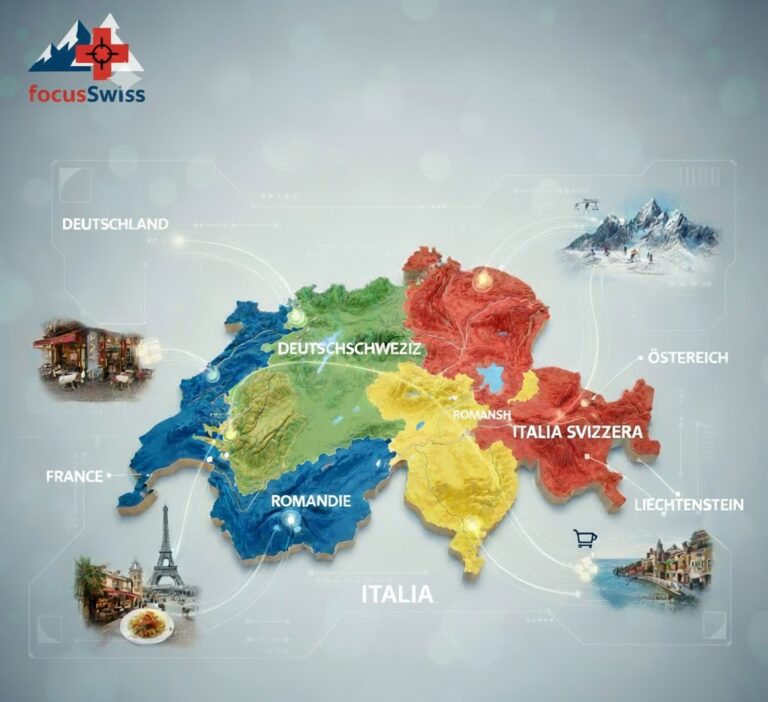
Geographical location directly determines which language is officially accepted and how the school system operates. For example, some smaller cantons in the Alpine Region (like Graubünden) are places where Romansh struggles for survival. My obligation to learn German in Bern stemmed from the proximity of the western Mittelland to the German-French language boundary (the Röstigraben). This is crucial when an immigrant is drawing the linguistic map of the integration process. The article Language Integration in Switzerland: Choice Between German, French and Italian details the impact of this division on language.
Bureaucratic Speed and Approach
As a general observation, the central and densely populated cantons in the Mittelland (Zurich, Geneva) have a faster but more institutional bureaucracy. In contrast, bureaucratic processes in smaller cantons in the Alps or Jura (Appenzell Innerrhoden, Jura) may be slower, but you usually encounter a more personal approach. By reading the article 26 Cantons, 26 States: Distribution of Authority and Critical Differences in the Swiss Federal Structure, you can see how geography influences the division of authority.
3. Immigrant Perspective and Adaptation by Region
For an immigrant considering settling in Switzerland, knowing the advantages and disadvantages offered by the geographical regions is critical. You can get a broader overview of these lifestyles by checking out our content Life in Switzerland: The Realistic and Comprehensive Daily Life Guide .
The Alpine Region: Natural Beauty and High Costs
- Suitable for: Those who love nature sports, enjoy an isolated life, and find work in sectors such as tourism, winter sports, or hydropower.
- Challenges: Transportation difficulties in winter, limited social life, and less job diversity than in the Mittelland.
- Culture Note: English is widespread due to tourism, but local dialects are crucial for mingling with local life.
The Mittelland: Center for Career and Fast Living
- Suitable for: Ideal for those aiming for careers in finance, technology, international organizations, and education, who prefer a fast and cosmopolitan life.
- Challenges: High rental costs, especially around Zurich, and the difficulty of finding housing. To understand the financial burden this region imposes, we recommend reading our article How Expensive Is Life in Switzerland? 2025 Current Cost Guide.
- Culture Note: The public transportation system (SBB) is excellent, and the rhythm of life is based on punctuality. Our HUB article The New Immigrant’s Map of Switzerland: A Guide to Visa, Bureaucracy, and Integration Success contains details on your adaptation process to this center.
The Jura Region: Tranquility and Industrial Heritage
- Suitable for: Attractive for cross-border commuters planning to work near the French border, or those seeking work in the watchmaking industry or smaller industrial sectors.
- Challenges: Transportation networks are less dense than in the Mittelland, and job opportunities are sectorally limited.
- Culture Note: The influence of French is high, and neighborly relations are more traditional. This region is a good alternative for those looking to escape the hustle of the Mittelland.
4. Common Geographical and Cultural Mistakes
Immigrants often make mistakes due to the differences arising from Switzerland’s geographical structure:
- Underestimating Geographical Isolation: Finding renting a house in the Alpine valleys attractive but ignoring how long commuting to work takes in winter. Mobility is directly proportional to geography.
- Assuming Language Flexibility: Trying to find work in the French-speaking Jura while only speaking German, or vice versa. Language integration between cantons must be taken seriously.
- Neglecting Cantonal Tax Differences: Moving to a different canton (e.g., Schwyz) solely for lower taxes, without considering the difficulties that will arise in the rest of life (commuting time, school system). Every region has its own rules of life; our Swiss Rules of Life: Order, Silence, and Adaptation Guide will guide you on these matters.
Conclusion: Administration Adapts to Geography
The geographical structure of the 26 Swiss Cantons offers a richness that extends from the majestic peaks of the Alps to the dense economic centers of the Mittelland. This geography has also shaped the country’s administrative structure, ensuring that each region retains its own language, tax system, and cultural rhythm. For an immigrant, this means not just choosing a landscape, but choosing which administrative and lifestyle package to adapt to. Let this comprehensive guide be a key for you to unlock the cultural and administrative codes behind the geographical differences.
Frequently Asked Questions (FAQ)
Q: What is the most expensive and the cheapest geographical region in Switzerland?
A: The Mittelland is generally the most expensive region due to high density and being the economic center (especially Zurich and Geneva). Cheaper regions are usually found in the Jura and some isolated Alpine valleys, but job opportunities are more limited there.
Q: How long does it take to travel from the Mittelland to the Alps or Jura regions?
A: Thanks to the excellent public transportation network (SBB), it is possible to reach tourist centers in the Alps or Jura regions from the major cities of the Mittelland (Bern, Zurich) in 1 to 2.5 hours by train.
Q: Does the choice of geographical region affect my immigration status?
A: No, the geographical region itself does not directly affect your residence permit type (B, C), but the specific bureaucratic rules, waiting times, and integration requirements of the chosen canton (e.g., Canton of Zurich or Canton of Ticino) can influence it.
Q: Are there French-speaking cantons in the Alpine Region?
A: Yes, there are French-speaking (Valais, southern Vaud) and Italian-speaking (Ticino) areas in the western and southern parts of the Alpine Region. The Alps do not exclusively mean German-speaking high mountains.