What is Integration in Switzerland? Official Programs and Societal Expectations

From Legal Necessity to Contractual Performance: The Two Faces of Integration
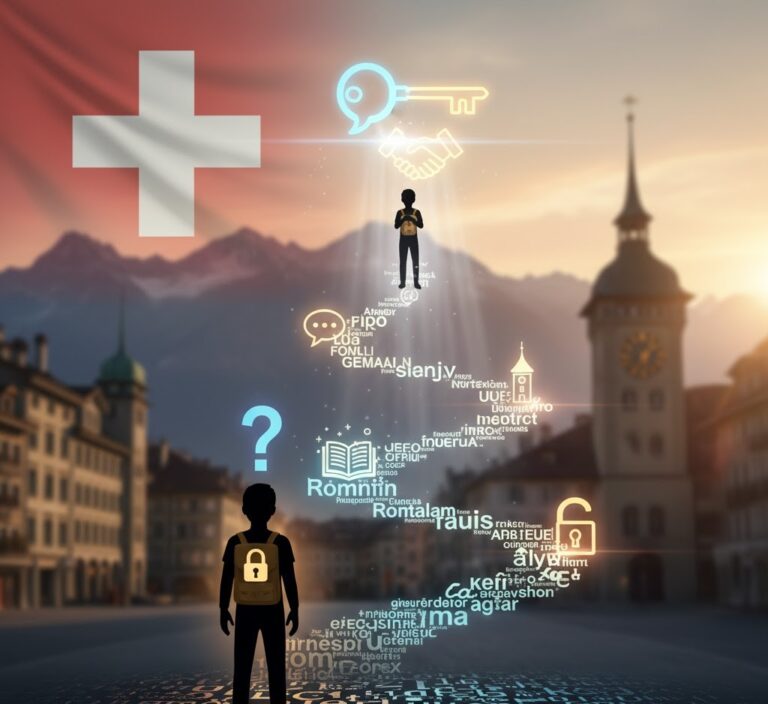
When you examine the integration calendar in Switzerland, you see that the country is not only a financial hub but also a vibrant and meticulous cultural mosaic. The process of adaptation in Switzerland is a complex and multilayered set of expectations that transcends geographical and linguistic boundaries.
focusAnaliz: Although integration is legally defined as a mutual process, the psychological cost in daily life is high. The feeling of being treated like a fraud by banks (as evidenced by the blocked Twint account) is a systemic reflection of the distrust towards immigrants. While the state imposes the duty of integration, it ignores that active workers struggling to survive sometimes deserve more empathy, like people who find it hard to even drink a glass of water. As soon as the system labels a low-wage worker who resorts to social aid as an individual failure, the actual failure lies with the system. This article aims to shed light on the true face of integration—under distrust and high expectations.
✅ Quick Summary Table
The key requirements and critical success areas of Swiss integration:
Criterion Area | Requirement Level | Critical Challenge Point |
|---|---|---|
Legal Compliance | Adherence to Laws and Integration Agreements | Non-compliance affects residency status. |
Language Proficiency | Oral B1, Written A2 (Fide Certified) | Dialect barrier (Bärndütsch) in Swiss German areas. |
Economic Integration | Financial Stability, Independence from Social Aid | Absence of debt collection records (Betreibungen). |
Cultural Conformity | Civisme (Civic Duty), Social Order | Strict cultural codes like punctuality and Sunday quiet hours. |
🎯 Core Definition:
Integration in Switzerland is a performance-based, reciprocal adaptation process with legal consequences, standardized by the Foreign Nationals and Integration Act, Cantonal Programs, and the Fide language system, requiring the active participation of foreign individuals in the country’s economic, social, and cultural life.
✅ Essential Information
The foundation of Switzerland’s integration policy arises from the complex structure of its federal system.
Mutual Responsibility and Legal Basis
The philosophical foundation of Swiss integration rests on the principle of mutual responsibility: the active willingness of the foreign national to participate and the willingness of the resident Swiss population to accept. The legal basis is determined by the Foreign Nationals and Integration Act (FNIA), which directly links the continuity of your residence permit to your performance in fulfilling integration obligations.
Federalism and Role Distribution
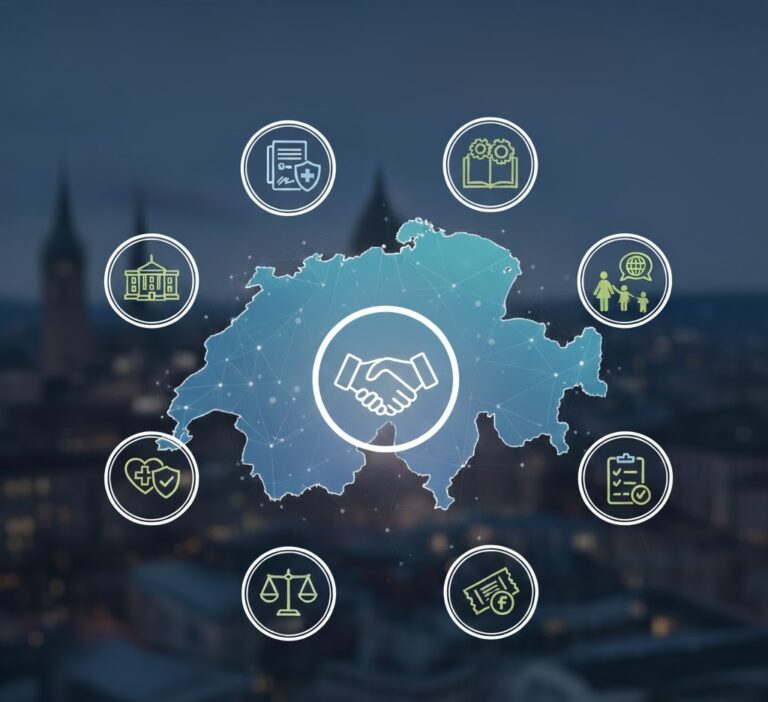
The administration of integration is distributed across three levels:

- The Confederation (Federal Level): Establishes the basic legal framework and financially supports the Cantonal Integration Programs (KIPs).
- The Cantons (26 Administrative Units): Are responsible for the implementation of programs, developing strategies tailored to local circumstances, and concluding binding Integration Agreements (Integrationsvereinbarungen).
- The Municipalities (Local Authorities): Are the most fundamental units responsible for the practical implementation of services on the ground.
This hierarchical structure makes integration a contractual obligation whose non-fulfillment can lead to legal consequences.
✅ Detailed Guide
📌 Legal Necessities and the Cantonal Lottery
The Cantonal Integration Programs (KIPs), introduced in 2014, are jointly financed by the Confederation and the cantons. Since KIPs grant cantons autonomy in adapting to local conditions, there can be disparities in social and professional integration between cantons. This situation is often referred to as a “postcode lottery” for immigrants. Non-compliance with the binding integration agreements made through these programs may negatively affect your residence status.
💰 Economic Performance and the Immigration Paradox
The Swiss labor market is governed by a Two-Door Model, which prioritizes EU/EFTA citizens. For third-country nationals, the system is stricter, allowing the admission of only a limited number of highly qualified workers who benefit the general economy.
This creates a paradox: The state demands financial independence for residency, yet even highly qualified immigrants may struggle with career advancement due to the rigidity and priority rules of the labor market. Although I live in Bern, even when visiting centers like Zurich, Basel, Geneva, I find that high salaries only counterbalance high expenses. In our guide to the cost of living, you can find out more about why you realistically need one and a half salaries per household.

🚦 Language Integration and Cultural Criteria
Language proficiency is the most fundamental prerequisite for integration and remaining in the country, occurring in two phases:
- Official Language: The Fide system standardizes language competence at the federal level, setting the minimum standard at written A2 and oral B1.
- Hidden Barrier: In German-speaking Switzerland (Deutschschweiz), understanding the local dialect (Schwiizerdütsch) is essential for social acceptance and daily life. Although the official language is High German, the majority of social interaction occurs in the dialect. You can find out more details about Swiss languages here.
✅ Experience / Suggestion Section: The Reality of Cost and the Dialect Contradiction
focusAnaliz: The advantage I gain from the stable rents in Bern quickly evaporates when I visit centers like Zurich, Basel, Geneva, seeing that general costs remain high. The fact that one and a half salaries per household is necessary is not just a perception but a compulsory target for legal stability. Indeed, the slightest need for social aid can constitute a major obstacle in the legal integration process.
I experienced the most contradictory aspect of integration in the social hierarchy of language: You learn High German for officialdom, but you can experience a momentary drop in self-confidence leading to a sense of shame when faced with the difficulty of Bärndütsch in social settings. However, learning the language is the biggest step towards integration and, most importantly, the greatest demonstration of one’s self-respect.
✅ Adaptation Roadmap
Strategic steps that international professionals seeking long-term residency and naturalization in Switzerland should follow:
- Prioritize Financial and Legal Impeccability (Makellosigkeit): Make absolute financial and legal impeccability your top priority for maintaining your residence permit and naturalization. Avoid applying for social aid and prevent any debt collection records (Betreibungen) from occurring.
- Two-Tier Language Strategy: Rapidly achieve official language proficiency (written A2 / oral B1) through Fide-certified courses. In German-speaking areas, actively seek ways to expose yourself to the local dialect (Bärndütsch).
- Internalize Cultural Norms: Social acceptance depends on how quickly and meticulously you adopt the norms of civisme (civic duty). Take punctuality, adherence to neighborhood laws, and Sunday quiet hours seriously. Read our comprehensive guide to societal rules.
- Actively Build Social Capital: To overcome labor market difficulties and closed social circles, build active social networks and community ties through voluntary activities.
✅ Cost / Time Table
Critical Time and Qualification Data for Naturalization and Integration Processes:
Item | Requirement | Duration / Level |
|---|---|---|
Ordinary Naturalization Residency Requirement | Total residency in Switzerland | At least 10 years |
Simplified Naturalization Residency Requirement | Total residency in Switzerland (via marriage) | At least 5 years |
Minimum Language Proficiency | Fide Passport (Written / Oral) | A2 (Written) / B1 (Oral) |
Milan Consulate Process | Visa for Family Reunification (Estimated Waiting Time) | Approximately 2 months |
❓ FAQs (Frequently Asked Questions)
Question: What is the most critical requirement for naturalization in Switzerland?
Answer: The most critical requirement for naturalization is financial impeccability. The applicant must prove financial stability, have no record of debt collection (Betreibungen), and demonstrate permanent independence from social aid. This is the most concrete evidence of adherence to the social contract.
Question: Why is language integration in Switzerland a two-tier challenge?
Answer: Language integration is a two-tier challenge. The first tier is the Standard German (A2/B1) competence for official procedures, standardized by the Fide system. The second tier is the understanding of the local dialect (Schwiizerdütsch) in German-speaking areas, which is required for social acceptance and daily life. This dialect barrier is a hidden obstacle that delays social integration.
Question: How does non-compliance with the Integration Agreement affect my residence status?
Answer: Integration Agreements are legally binding. Non-compliance can lead to your residence status being negatively affected or renewal procedures being complicated. You can find more information about your residence permits here.
✅ Alternatives
In addition to the official programs, there are alternative and complementary ways to support and accelerate the integration process:
- Non-Governmental Organizations (NGOs): Organizations like Caritas and HEKS/EPER offer vital support for social counseling and access to work and education.
- Voluntary Activities: Volunteering in sports clubs or local charities is the most effective way to gain access to closed social circles. Volunteering quickly builds your social capital.
- Entrepreneurship Networks (e.g., SINGA): These promote entrepreneurial skills and professional networks for individuals with refugee and migrant backgrounds, encouraging equal participation in the local economic ecosystem.
✅ Recommendations / Tips

- Prioritize Financial Impeccability: Make the avoidance of social aid and debt collection records an absolute top priority.
- Strategically Use Volunteering: Choose voluntary roles that align with your professional goals to simultaneously expand your professional network.
- Train Your Ear for Dialect: After achieving the official B1 level, actively seek ways (local media, local clubs) to expose yourself to the local dialect like Bärndütsch for social acceptance.
- Plan According to the 1.5 Salary Reality: Plan your household income according to this economic reality to ensure a good standard of living.
✅ Conclusion
Swiss integration, despite its official definition of mutual respect, is a contractual, performance-based process that demands a high level of continuous compliance from you. To succeed, it is necessary to maintain not only financial independence and legal impeccability but also to constantly earn a sense of belonging through meticulous cultural behavior (civisme). This meticulous roadmap will help you not only live in Switzerland but also protect your financial and social strength against the system’s limitations. To avoid getting lost in this complex integration process, don’t forget to read our other articles containing detailed analyses and personal experiences.
Sources:
Text | URL |
|---|---|
Official Swiss Integration Policy and Programs | https://www.sem.admin.ch/sem/en/home/integration-einbuergerung.html |
Local Integration and Welcome Guide (e.g., Uster/Zurich Canton) | https://www.uster.ch/_docn/3229000/Broschuere_Welcome_to_Uster_Englisch.pdf |
Swiss German Dialects: Social Barrier or Identity | |
Federal Act on Foreign Nationals and Integration (FNIA) | https://www.fedlex.admin.ch/eli/cc/2007/758/en?version=20250527 |